
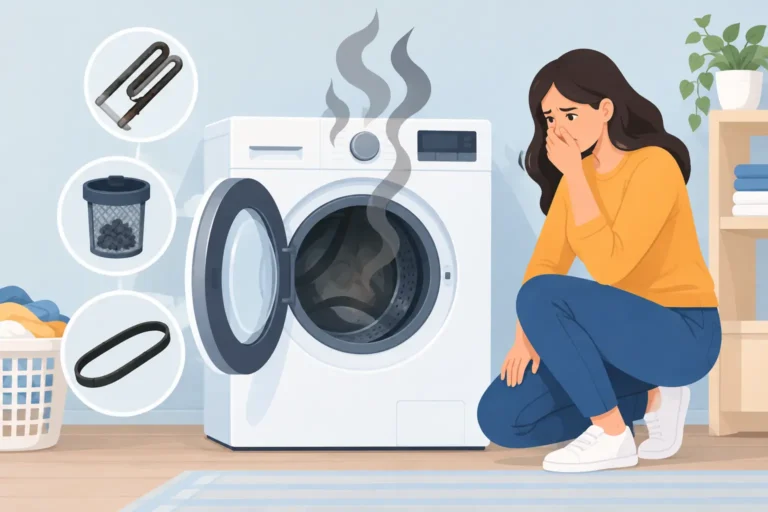
A burning smell during laundry is not a problem to wash away and revisit later. If you are asking why washer smells burnt, the safest first step is to stop the cycle, turn the machine off, and unplug it if you can do so without reaching near water or damaged wiring. A washer may have a repairable issue, but continuing to run it can turn a worn part into a larger failure or, in rare cases, create a fire risk.
The smell itself offers a useful clue. Burnt rubber often points to a belt, pulley, or overloaded drive system. A sharp electrical or plastic smell can indicate overheating wiring, a motor problem, or a failing control component. Either way, the washer deserves prompt attention before the next load piles up.
Why a washer smells burnt: the most common causes
Washers contain moving parts, electrical connections, and components that work hard during the spin cycle. The source of a burning odor depends on the washer model, its age, and when the smell appears.
A slipping belt or worn drive components
Many older top-load washers use a drive belt to transfer power from the motor to the transmission or drum. When that belt becomes loose, cracked, glazed, or misaligned, it can slip against the pulley and produce a hot rubber smell. You may also hear squealing, notice that the basket does not spin normally, or find the clothes much wetter than usual at the end of the cycle.
Not every washer has a belt. Many newer machines use direct-drive motors instead. Still, those models can develop related problems with a worn clutch, drive coupler, pulley, or other moving component. A technician can identify which system your washer uses and whether the damaged part is worth replacing.
An overloaded washer
A comforter, several heavy towels, or a load packed tightly to the top can put too much strain on the motor and drive system. The washer may struggle to start spinning, stop mid-cycle, or give off a brief hot odor as components work beyond their normal load.
One oversized load does not always mean something is broken. However, a burning smell should never be considered normal, even if the load was heavy. Remove some items, allow the washer to cool, and avoid restarting it until you have checked for obvious trouble. If the smell returns with a normal-size load, schedule service.
A motor that is overheating
The washer motor must work hardest when the drum is agitating or spinning a wet load. If the motor is aging, blocked from proper airflow, or being forced to work against a mechanical problem, it can overheat. The odor may smell like hot electrical insulation, plastic, or a faint chemical smell rather than rubber.
A failing motor may also hum without moving the basket, trip the breaker, stop during spin, or work inconsistently. In some cases, the motor has a built-in thermal protector that shuts it down until it cools. That does not solve the underlying cause. Repeated overheating can damage the motor further and may affect connected electrical parts.
Something stuck in the pump or drain system
Coins, small socks, hair accessories, and other items can make their way into the washer drain pump or hose. A pump that is blocked or jammed may strain as it tries to drain water, producing heat and sometimes a burning odor. You might hear grinding, rattling, or humming, and water may remain in the tub after the cycle.
Do not tip the washer or take apart the pump unless you are comfortable handling standing water and appliance components. Even a small blockage can be difficult to reach, and forcing the machine through another drain cycle can damage the pump motor.
Worn bearings, a seized pulley, or drum resistance
If the basket does not turn freely because of failing tub bearings, a seized pulley, or another source of resistance, the motor has to work much harder than it should. This often becomes most noticeable in the high-speed spin cycle. The washer may roar, grind, shake excessively, or leave dark rubber residue beneath the machine.
These repairs vary widely in scope. Replacing a pulley or belt may be straightforward, while major bearing or tub work can be more involved. Clear diagnosis matters because a repair decision should be based on the exact failed part, not just the smell.
Damaged wiring or a failing control board
A burnt electrical smell deserves extra caution. Loose wiring connections, damaged wire insulation, a shorted motor connection, or a failing electronic control board can all create heat. You may notice flickering display lights, error codes, an unresponsive control panel, or a washer that starts and stops unexpectedly.
If you see smoke, sparks, melted plastic, or discoloration around the outlet, unplug the washer only if it is safe to do so. Then turn off power at the circuit breaker and arrange professional service. Do not plug the washer into another outlet to test it.
What to do when your washer has a burning smell
Start by stopping the machine. Cancel the cycle, turn it off, and unplug it if the cord and outlet area are dry and accessible. If the washer is smoking, sparking, or the smell is strong and worsening, shut off power at the breaker instead. Keep children and pets away from the appliance.
Once the washer has cooled, look for simple signs without disassembling anything. Check whether the load was unusually heavy, whether the machine is sitting on a rug that blocks airflow, or whether an item is trapped between the basket and tub. Look around the floor for black dust, rubber pieces, leaking water, or an obvious burning mark. Do not remove panels or touch wiring unless you are trained to do so.
It is also helpful to remember when the odor started. Did it happen while filling, agitating, draining, or spinning? Did the washer make a new noise? Was the laundry load unusually large? These details help a repair technician narrow down the cause quickly and can reduce diagnostic time.
Do not confuse a burnt smell with a musty washer odor
A musty or sour smell usually comes from detergent buildup, moisture, and bacteria inside the tub, gasket, detergent drawer, or drain system. It is unpleasant, but it is different from a hot rubber or electrical burning smell.
For a musty washer, cleaning the gasket and dispenser, using the washer’s cleaning cycle, and leaving the door or lid open between loads can help. For a burnt odor, cleaning products will not fix the problem. The washer should remain off until the source has been checked.
Can you keep using the washer?
It depends on the cause, but the practical answer is usually no until the smell is diagnosed. A brief rubber odor from a single overloaded load may not mean the washer needs a major repair. Still, restarting the machine right away makes it harder to know whether the issue was overload-related or a failing component.
Avoid repeatedly resetting the washer, running an empty cycle to “see if it clears,” or ignoring a smell that comes back. A belt can snap, a pump can fail completely, and an overheating motor can damage surrounding parts. For renters, reporting the problem promptly also helps protect the appliance and prevents a small issue from becoming a tenant emergency.
For property managers and laundromat operators, a burnt smell should be treated as an out-of-service issue. One unreliable machine can interrupt laundry access, create complaints, or lead users to force another cycle. Fast diagnosis protects equipment uptime and helps prevent a more expensive failure across a busy property.
When repair makes sense and when replacement may be better
Many causes of a burning smell are repairable, especially when the washer is otherwise in good condition. Belts, pumps, drive components, wiring connections, and certain motor-related parts can often be replaced for less than the cost of a new machine.
The decision changes when a washer has multiple major problems, extensive tub or bearing damage, repeated electronic failures, or an expensive repair on a machine near the end of its expected service life. The right choice depends on the model, age, repair cost, and how reliable the washer has been. A good service visit should give you a clear explanation of the issue and practical repair-versus-replacement guidance, not pressure to make a rushed decision.
For homeowners and property managers in Long Beach, Murrieta, Menifee, and Temecula, Don’s Appliances can inspect the washer, explain what caused the odor, and provide clear, honest pricing before work moves forward. A burning smell is your washer’s way of asking for attention. Turning it off early and getting the right diagnosis can protect your home, your laundry routine, and your budget.