
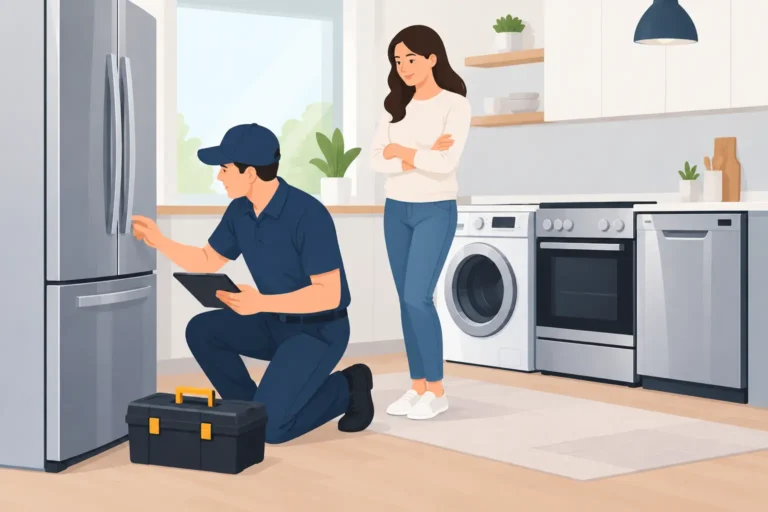
A refrigerator that is warming up, a washer that will not drain, or an oven that stops heating can throw off an entire day. This appliance diagnostic visit guide explains what a professional visit should look like, what you can do before the technician arrives, and how to make a confident repair decision without guessing at the problem.
A good diagnosis is more than a quick look at an error code. The goal is to identify the actual cause of the failure, explain the options in plain language, and help you protect your home, schedule, and budget.
Before the Appliance Diagnostic Visit
A little preparation can help the visit go more smoothly, especially when the appliance is in a tight laundry closet, a busy kitchen, or a tenant-occupied unit. You do not need to take anything apart or try to repair the machine yourself. In fact, opening panels, moving a heavy appliance, or working around gas, electricity, or water lines can make a problem worse or create a safety risk.
Instead, make the appliance accessible. Clear laundry baskets, stored items, cleaning supplies, or cookware away from the front and sides when possible. If the machine is built in or difficult to reach, simply let the service company know when you schedule. That gives the technician a better idea of what may be needed for the visit.
It also helps to write down what you have noticed. Include when the problem started, whether it happens every time, any sounds or smells, displayed error codes, and anything that changed just before the failure. For example, a dishwasher that leaks only during the drain cycle points to a different set of possible causes than one that leaks as soon as it fills.
If you have the model number, keep it handy. It is often found on a label inside a refrigerator compartment, around an oven door frame, on a washer lid or door opening, or along the side of a dishwasher door. A clear photo works well too. The model number helps confirm compatible parts and can save time if a repair is recommended.
Protect food, floors, and safety first
Some appliance problems should not wait for a regular routine. Move perishable food to a cooler or another refrigerator if yours is not holding a safe temperature. If a washer, dishwasher, or refrigerator is leaking, shut off the water supply if you can do so safely and place towels around the area.
For a burning smell, sparks, smoke, a repeatedly tripped breaker, or a suspected gas issue, stop using the appliance. Turn it off or unplug it only if it is safe to do so, and follow appropriate emergency procedures for a gas smell. A diagnostic visit is meant to solve appliance trouble, but immediate hazards always come first.
What Happens During a Diagnostic Visit
A respectful technician should begin by listening. The details you share about a dryer that runs but does not heat, a refrigerator that cycles constantly, or a washer that leaves clothes soaking wet are useful clues. Even a problem that seems small, such as an occasional grinding noise, can help narrow down the inspection.
The technician will typically check the appliance’s basic operation, connections, controls, and visible components before testing likely failure points. Depending on the appliance, that may include checking power supply, water flow, drainage, temperatures, ignition, heating, sensors, door switches, belts, pumps, motors, or electronic controls.
This process takes longer than a glance because symptoms can overlap. A refrigerator that is not cooling may have a dirty condenser area, an airflow issue, a failed fan, a defrost problem, a control issue, or a sealed-system concern. Replacing the first part that seems possible is not a careful diagnosis. Testing helps avoid spending money on the wrong repair.
Some intermittent issues need extra patience. If an oven works most of the time but fails after it has been running for 20 minutes, or a washer only stops during large loads, the technician may need to recreate the conditions as closely as possible. Your notes can be especially valuable in these cases.
Expect a clear explanation, not pressure
Once the cause is identified, you should receive a straightforward explanation of what failed, what the repair involves, and what the expected cost will be. Ask questions until the recommendation makes sense. A trustworthy service visit should leave you informed, not rushed into a decision.
If a part must be ordered, the technician should explain the next step and what to expect for scheduling. Some common repairs can be completed during the first visit when the needed part is available. Others require a return appointment, particularly for specialized or premium-brand components.
At Don’s Appliances, the focus is on clear, honest pricing and practical recommendations. Friendly technicians should respect your home and schedule while giving you the facts you need to choose the right path.
Repair or Replace? Use the Right Questions
There is no single age at which every appliance should be replaced. A well-maintained appliance may be worth repairing, while a newer one with a major component failure may not be. The right choice depends on the type of appliance, the repair cost, its overall condition, parts availability, and how reliably it has been performing.
Start with the scope of the repair. A worn door seal, drain pump, heating element, thermostat, or ignition component can often be a sensible repair when the rest of the appliance is in good shape. A major compressor issue, extensive rust, repeated electronic failures, or several costly repairs in a short period may change the calculation.
Consider the disruption too. For a family refrigerator, an inoperable range, or a rental-unit washer, getting reliable service restored quickly has real value. For property managers and laundromat operators, downtime can mean tenant complaints, lost laundry revenue, and more staff time spent coordinating around a problem. The least expensive option today is not always the lowest-cost choice over the next several months.
Ask the technician whether the repair addresses the root cause or only the immediate symptom. Also ask whether related parts are showing wear, how long the repair is expected to last, and whether a warranty applies. Don’s Appliances backs qualifying work with a one-year warranty and a 100% customer-satisfaction commitment, which can offer useful peace of mind after the visit.
Questions Worth Asking During the Visit
You do not need appliance expertise to have a productive conversation. A few practical questions can make the recommendation much easier to evaluate:
- What is causing the appliance to fail?
- Is this repair likely to restore dependable operation?
- What is the total expected cost, including parts and labor?
- Does the repair require a return visit or a special-order part?
- Is there anything I can do to help prevent this problem from returning?
For landlords and property managers, it is also useful to ask how quickly the unit can be returned to service and whether the repair can be coordinated around tenant access. For coin-operated laundry equipment, ask about the likely operational impact, parts lead time, and steps that may reduce future downtime.
After the Repair Is Completed
Before the technician leaves, confirm that the appliance has been tested and that you understand any normal startup delays. A refrigerator may need time to pull down to temperature. A washer may need a full cycle to confirm a load-related issue is gone. An oven should be checked carefully for proper heating, while a dishwasher should be observed for leaks and draining.
Keep your service paperwork and any warranty information. If the technician recommends simple care, such as cleaning a dryer vent, avoiding overloaded washer loads, replacing refrigerator water filters on schedule, or keeping dishwasher spray arms clear, follow through when you can. Basic maintenance cannot prevent every failure, but it can reduce strain on hardworking appliances.
Most importantly, do not wait until a small warning becomes a flooded floor, spoiled groceries, or a stack of laundry that cannot be ignored. A timely diagnostic visit gives you clear answers, practical options, and a better chance of getting your household or property back to normal with less stress.
