
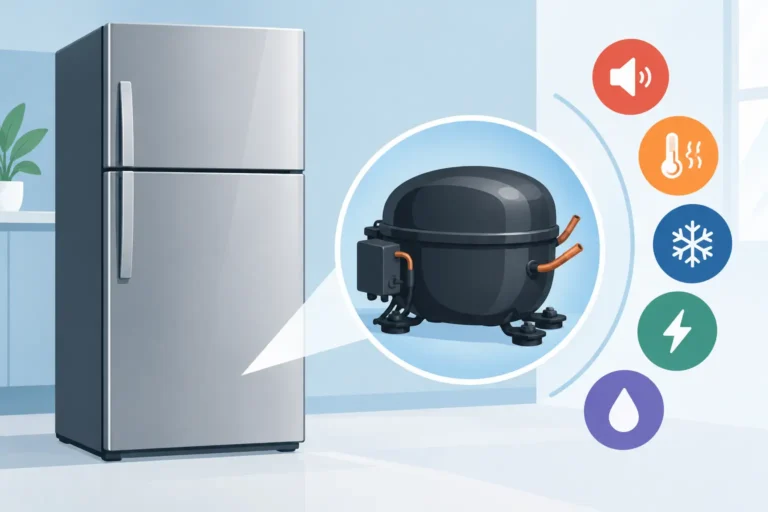
A refrigerator that suddenly feels warm is more than an inconvenience. It can mean a grocery cart full of food is at risk, meal plans are interrupted, and you are left wondering whether the appliance needs a repair or replacement. While several parts can cause cooling trouble, knowing the top compressor failure signs can help you act quickly and avoid guessing.
The compressor is often called the heart of a refrigerator because it circulates refrigerant through the cooling system. When it cannot do its job, the refrigerator may struggle to hold a safe temperature or stop cooling altogether. However, a warm refrigerator does not automatically mean the compressor has failed. A dirty condenser, faulty fan, bad relay, defrost problem, or control issue can create similar symptoms. That is why a hands-on diagnosis matters before spending money on a major repair.
Top Compressor Failure Signs to Watch For
The refrigerator is warm, but the lights still work
Interior lights and a working display only confirm that electricity is reaching the refrigerator. They do not confirm that the cooling system is operating. If the fresh-food section is warm and the freezer is also softening or thawing, the compressor may not be running correctly.
Start by checking the temperature settings and making sure the doors are closing fully. If settings are normal and the unit has had several hours to recover after a door was left open, continuing warmth deserves prompt attention. Move perishable food to another refrigerator or an ice chest while the issue is being checked.
You hear clicking every few minutes
A repeated click from the rear or lower section of the refrigerator is one of the more familiar compressor-related symptoms. The compressor may be trying to start, shutting off, and trying again. This can happen when the compressor is failing, but it can also point to a less expensive start relay or overload protector problem.
That difference is significant. Replacing a relay is very different from replacing a sealed-system component. Avoid assuming the worst based on the clicking sound alone, but do not ignore it either. Repeated start attempts can leave the refrigerator without reliable cooling.
The compressor is unusually hot to the touch
It is normal for a refrigerator compressor to feel warm during operation. It should not be so hot that you cannot comfortably touch the area around it for more than a moment. Excessive heat may mean the compressor is overworking, struggling to start, or dealing with a problem elsewhere in the cooling system.
Before calling for service, make sure the refrigerator has breathing room around it and that dust has not built up behind or beneath the unit. Poor airflow can raise operating temperatures. If cleaning and proper clearance do not improve performance, a technician should evaluate the appliance.
The refrigerator runs constantly without getting cold enough
A refrigerator will run longer on a hot Southern California day, after a large grocery load, or when doors are frequently opened. Constant operation becomes a concern when the appliance still cannot reach or maintain safe temperatures.
A failing compressor is one possible cause, especially when both compartments are too warm. But worn door gaskets, clogged condenser coils, evaporator fan trouble, or a defrost failure can also make the appliance run excessively. The pattern matters: nonstop running plus poor cooling is more urgent than long run times alone.
You hear buzzing, humming, or a strained sound
Most refrigerators hum quietly when the compressor runs. A new, louder hum, a vibrating buzz, or a sound that seems strained can signal that something is not operating normally. If the sound comes with poor cooling, clicking, or unusual heat, it is worth scheduling a diagnostic visit.
Do not try to silence the noise by moving or tilting the refrigerator while it is plugged in. Make sure it is level and not touching cabinets or a wall, since simple vibration can create noise. If the sound continues after those checks, leave the diagnosis to a qualified appliance technician.
Frost patterns look unusual inside the freezer
A frost-covered freezer wall or heavy ice buildup can prevent proper airflow and make a refrigerator seem like it has a compressor issue. On the other hand, certain uneven frost patterns can be associated with sealed-system concerns, including low refrigerant or compressor performance problems.
This is one reason visual clues are useful but not definitive. Defrost issues are often repairable and can mimic more serious failures. A technician can inspect the evaporator area and test the system rather than recommending a compressor based on frost alone.
The compressor is silent when the refrigerator should be cooling
If the refrigerator is warm and you hear no hum from the compressor area, the compressor may not be receiving power, may have overheated, or may be unable to start. A control board, thermostat, relay, wiring problem, or electrical supply issue can also be involved.
Check that the refrigerator is firmly plugged into a working outlet and that the circuit breaker has not tripped. Beyond those basic checks, avoid removing rear panels or testing electrical components yourself. Refrigerators contain electrical parts and a sealed refrigerant system that require proper tools and training.
What to Do When You Notice Compressor Trouble
First, protect your food. Refrigerated perishables should be kept at 40 degrees Fahrenheit or below, while frozen foods should stay at 0 degrees Fahrenheit. If the refrigerator is warming up, minimize door openings and move milk, meat, leftovers, and other temperature-sensitive items to a reliable cold space as soon as possible.
Next, give the appliance a quick, practical check. Confirm that the temperature controls were not bumped, doors are sealing, and vents inside the refrigerator are not blocked by containers. If accessible, look for heavy dust around the condenser area. Unplug the refrigerator before cleaning and use care around coils and wiring.
Then pay attention to the timeline. Did the unit stop cooling after a power outage? Is it clicking? Is only the refrigerator section warm while the freezer remains cold? These details help a technician narrow down the cause and can make the service visit more efficient.
Compressor Repair or Refrigerator Replacement?
A compressor repair is not always the best answer, and an honest recommendation depends on the appliance. Age, brand, overall condition, repair cost, parts availability, and the condition of other major components all matter. A relatively newer refrigerator in good shape may be worth repairing. An older unit with multiple developing issues may be better replaced, especially if the repair approaches a substantial portion of the cost of a comparable new model.
There is also a middle ground that homeowners often miss. A refrigerator showing compressor-like symptoms may actually need a relay, fan motor, thermostat, defrost repair, or condenser cleaning. Those repairs can be far more affordable than a compressor replacement. Clear testing prevents a household from replacing an appliance unnecessarily.
For rental properties and commercial laundry-adjacent break rooms, timely diagnosis is especially valuable. A nonworking refrigerator can lead to tenant complaints, food loss, and scheduling headaches. Property managers benefit from documentation of what failed, what the repair options are, and whether replacement is the more cost-conscious long-term choice.
When to Schedule Professional Refrigerator Service
Schedule service promptly if food is warming, the compressor repeatedly clicks, the unit runs nonstop, or unusual noises and heat appear together. These issues rarely improve by waiting, and early attention may prevent more food waste and disruption.
A trained technician can check electrical components, airflow, fans, temperature controls, and sealed-system performance before recommending a repair. At Don’s Appliances, the goal is to explain what is happening in plain language, provide clear, honest pricing, and help you make a practical decision for your home or property.
If your refrigerator is no longer keeping food safely cold, treat it as a same-day household priority. Protect what you can, write down the symptoms you notice, and arrange a professional diagnosis so your kitchen can get back to normal.
