
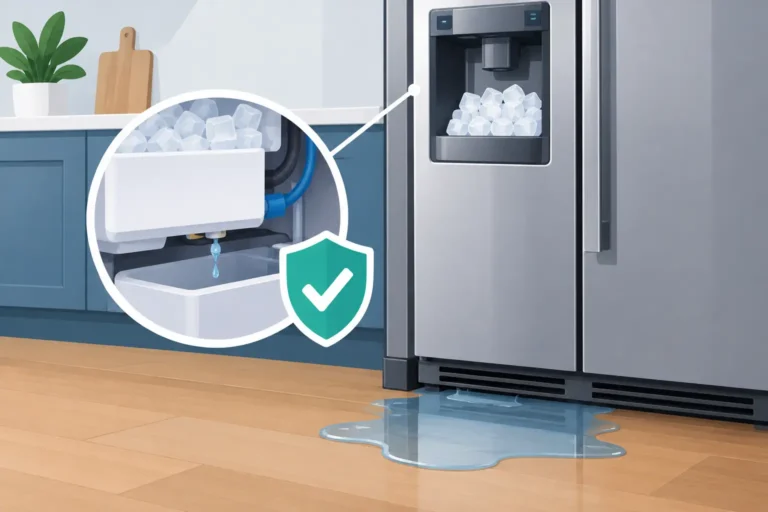
A puddle under the refrigerator can turn from an annoyance into damaged flooring, warped cabinets, or a downstairs ceiling stain faster than most people expect. The good news is that you can often stop ice maker leaks long enough to protect your home and preserve your food. The key is knowing when a simple adjustment is safe and when the refrigerator needs a trained diagnosis.
Start by moving towels around the base of the refrigerator and keeping children and pets away from the wet area. If water is near an outlet, power cord, or extension cord, do not reach through the water. Turn off the refrigerator’s water supply at the shutoff valve, usually located behind the refrigerator, under the sink, or in a nearby cabinet. Then identify whether the water is actually coming from the ice maker, the water dispenser, or another refrigerator component.
First Steps to Stop Ice Maker Leaks Safely
Once the water is off, empty the ice bin and look inside the freezer. Fresh drips, oversized ice cubes, a sheet of ice beneath the bin, or water running down the freezer wall can all point to an ice maker problem. Wipe the area dry before checking again. This makes it easier to see where new water first appears.
Pull the refrigerator forward carefully, preferably with a second person helping. Check the floor and the back panel for moisture. A leak at the rear often comes from the water supply connection or plastic water line. Water that begins inside the freezer is more likely tied to the ice maker fill tube, ice mold, or freezer temperature.
Do not keep turning the water on and off repeatedly while the refrigerator is plugged in and the floor is wet. One controlled check after drying the area is usually enough to narrow down the source. If the leak is active, leave the supply off until repairs are made. You can still use the refrigerator section for a limited time if it is holding a safe temperature, but avoid opening the doors unnecessarily.
Common Reasons an Ice Maker Starts Leaking
An ice maker does not usually leak without a reason. Water may be entering the ice mold at the wrong time, in the wrong amount, or from the wrong place. These are the issues our technicians see most often.
A loose or cracked water line
The small line supplying water to the refrigerator can loosen at its connection, develop a crack, or get pinched when the unit is pushed back against the wall. Even a slow drip can travel along the line and collect under the refrigerator, making the source hard to spot.
Look for wet fittings, mineral buildup, or a visibly damaged line. If a connection is clearly loose and accessible, a gentle hand-tightening may help temporarily. Do not overtighten plastic fittings. They can crack, creating a larger leak than the one you started with. A brittle or damaged line should be replaced rather than taped.
A frozen or misaligned fill tube
The fill tube directs water from the refrigerator into the ice maker mold. If it freezes shut, water may back up and spill. If it slips out of position, water can miss the mold completely and run into the freezer.
A little frost around the tube may be visible, but do not use a knife, screwdriver, or sharp object to chip ice away. It is easy to puncture a hidden component or damage the freezer liner. A hair dryer is also risky around plastic parts and electrical wiring. This is a good point to call for service, especially if the tube keeps freezing after it has thawed.
Too much water entering the ice maker
If cubes are unusually large, connected together, hollow, or spilling over the mold, the water inlet valve may not be closing correctly. This valve opens briefly to fill the tray, then shuts off. When it sticks or fails, water continues entering and can overflow into the freezer.
This problem is not a good DIY repair for most homeowners. The valve, wiring, and water connections are located behind or below the refrigerator, and the underlying issue may be electrical, mechanical, or related to water pressure. Turning off the water supply prevents more damage, but the failed part still needs attention.
The refrigerator is not level
A refrigerator that leans too far forward can affect how water flows through the ice maker and how the doors seal. Most units should sit level from side to side and tilt slightly toward the back so the doors close on their own. If the refrigerator was recently moved, installed, or loaded with heavy items in the doors, check whether it rocks or appears uneven.
Adjusting the front leveling feet can help, but only if the water line has enough slack and the unit can be moved safely. Leveling will not repair a leaking valve or broken ice maker, yet it can prevent an otherwise healthy system from behaving poorly.
A clogged defrost drain that looks like an ice maker leak
Not every freezer puddle comes from the ice maker. Refrigerators periodically defrost, and the melted water is meant to travel through a drain to a pan beneath the unit. If that drain clogs, water can freeze on the freezer floor and later spill out onto the kitchen floor.
This can be confusing because the ice maker may be nearby and the leak seems to happen around the same time as ice production. A thick sheet of ice under freezer drawers or water appearing after a defrost cycle points more strongly to a drain issue. The repair approach is different, so an accurate diagnosis can save time and unnecessary parts costs.
When You Can Use the Ice Maker Again
Do not restart the ice maker simply because the visible puddle is gone. A leak can pause when the tray has finished filling, then return during the next ice-making cycle. After a minor line adjustment or leveling correction, place dry paper towels under and behind the refrigerator, restore the water supply, and watch for several hours.
Check the freezer after the ice maker cycles. If water drips from the fill area, ice forms in places it should not, or the towels become wet, turn the water back off. Also pay attention to water dispenser performance. Weak flow, sputtering, or unusual noises can provide useful clues about a restricted line or failing valve.
If you are leaving town, have a rental property sitting vacant, or manage multiple units, it is wiser to leave the ice maker water supply off until the repair is complete. An unattended slow leak can cause far more expense than the original refrigerator repair.
When to Call for Refrigerator Repair
Call for professional service when the water line is cracked, the fill tube is frozen repeatedly, the ice maker overfills, or water continues appearing after you have shut off and checked the supply. You should also schedule help if the refrigerator is not cooling properly, the freezer has heavy frost, or you see electrical damage or corrosion near the rear of the unit.
For landlords and property managers, quick action matters for more than avoiding a maintenance call. Refrigerator leaks can damage cabinetry, flooring, neighboring units, and tenant confidence. Document the affected area, shut off the water, and arrange service before allowing the appliance back into regular use.
A technician can check the water inlet valve, pressure, fill tube, ice maker assembly, drain system, door seals, and refrigerator level as one system. That matters because replacing the ice maker alone will not solve a leak caused by a bad valve or blocked drain. At Don’s Appliances, we explain what failed, what it takes to correct it, and whether repair remains the sensible choice for your refrigerator.
Protect the floor first, keep the water supply off until you know the source, and do not let a small puddle become a kitchen renovation. A prompt, accurate repair can get the ice flowing again without adding more disruption to your home or property.