
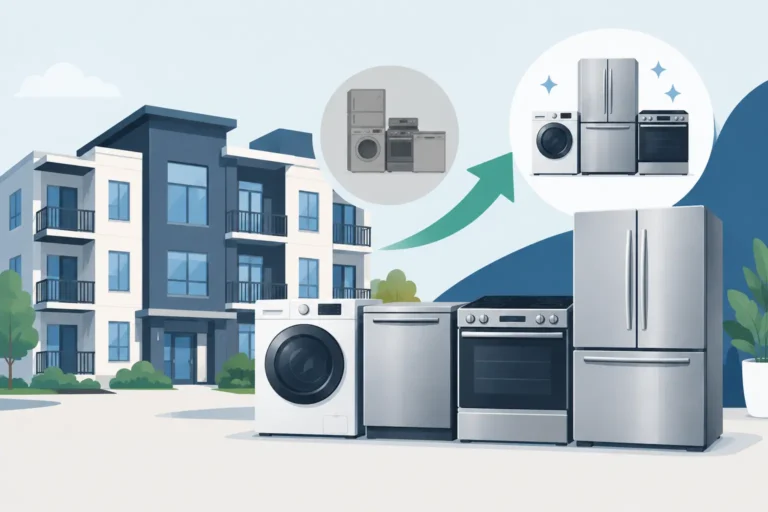
A failed refrigerator can spoil a tenant’s groceries overnight. A broken washer can turn a routine maintenance request into a lease-renewal problem. For owners and managers, a multifamily appliance upgrade guide is not just about choosing newer machines. It is about protecting occupancy, controlling operating costs, and making sure each unit is ready when residents need it.
The best upgrade plan is rarely “replace everything at once.” It starts with the appliances creating the most disruption, then builds a repeatable standard that makes future repairs, turns, and replacements easier to manage.
Start With the Problems Costing You the Most
Before shopping for appliances, look at your service history. Which models generate the most calls? Which failures lead to water damage, missed move-in dates, food loss, or unhappy tenants? A lower-priced appliance is not a bargain if it repeatedly needs parts, causes leaks, or leaves a unit without laundry for days.
Track the age, brand, model number, repair history, and condition of appliances in every unit. This does not need to be complicated. A simple property spreadsheet can show patterns quickly. You may find that one building has aging refrigerators nearing the end of their useful life, while another has washers that are still worth repairing.
Pay close attention to repeat repairs. If the same appliance has needed several service calls in a short period, has an expensive sealed-system issue, or is causing collateral damage, replacement may be the more practical choice. On the other hand, a dependable appliance with a straightforward part failure may have years of useful service left.
That repair-versus-replacement decision depends on age, condition, part availability, repair cost, and tenant impact. A qualified technician can help you avoid replacing an appliance that has a reasonable repair ahead of it, while also helping you avoid sinking money into one that is likely to fail again soon.
Build a Standard for Each Unit Type
For most multifamily properties, standardizing appliances is one of the biggest long-term cost savers. When every unit has a different refrigerator, range, dishwasher, washer, or dryer, each repair requires more research, different parts, and more time coordinating replacements.
Choose a small number of approved models or model families for similar units. The goal is not to make every apartment identical at any cost. It is to reduce unnecessary variation where it makes sense. A one-bedroom unit may need a different refrigerator size than a three-bedroom home, but both can still follow a consistent brand, finish, and service approach.
Your standards should account for the realities of each property:
- Available cabinet and doorway dimensions
- Electrical voltage and outlet type
- Gas versus electric connections
- Water supply, drain, and venting requirements
- Tenant usage patterns and household size
- Local replacement-part availability
Measurements matter more than many owners expect. A new refrigerator can look like it will fit on paper but still fail to clear a hallway turn, cabinet opening, or low overhead cabinet. For laundry, confirm stackable dimensions, dryer vent routing, drain capacity, and whether electrical service can support the new equipment. Planning these details before delivery prevents expensive installation-day surprises.
Prioritize Reliability Over Extra Features
Features can help attract renters, especially in competitive markets, but more features also mean more components that can fail. The right choice depends on the property and resident expectations.
For standard rental units, dependable mid-range appliances often make the most financial sense. Look for easy-to-clean surfaces, simple controls, readily available parts, and proven performance. A basic top-freezer refrigerator, a conventional range, or a durable laundry pair can be easier to maintain than a highly specialized model with electronic features tenants may not use.
For higher-end units, upgraded finishes and features may support rent positioning. Even then, choose features with a clear benefit. A dishwasher with useful wash cycles and a quiet operation may add value. A complicated control panel with rarely used options may add repair exposure without improving the resident experience.
Energy and water efficiency deserve attention, particularly across a larger portfolio. Efficient appliances can lower utility costs, but the savings should be weighed against the purchase price, expected life span, and maintenance needs. This is especially important when the owner pays utilities or when shared laundry equipment runs frequently.
Plan Upgrades Around Turns and Risk
Vacant-unit turns are usually the least disruptive time to replace appliances. You have room to inspect connections, clean behind equipment, address flooring or cabinetry damage, and complete installation without coordinating access around a tenant’s schedule.
Still, waiting only for turnovers can leave you reacting to emergencies. Create a replacement schedule based on appliance age and condition. For example, if several refrigerators are approaching the same age, budget to replace the weakest units first rather than waiting for multiple failures during a busy season.
Certain appliances deserve faster attention because their failure can create larger problems. Refrigerators can lead to food loss and urgent tenant calls. Dishwashers and washing machines can leak and damage floors, cabinets, or units below. Wall heaters affect comfort and safety during colder weather. In these cases, a proactive inspection can be far less costly than an after-hours emergency.
For occupied units, communicate clearly and give realistic appointment windows. Residents are more cooperative when they understand why the work is needed and how long it will take. Respectful scheduling also helps protect your reputation with tenants, especially when a replacement requires moving furniture, disconnecting a water line, or temporarily shutting off power.
Do Not Treat Installation as an Afterthought
A new appliance is only as dependable as its installation. Improper leveling can cause a washer to shake, walk, or wear out early. A loose water connection can create a leak. Incorrect dryer venting can reduce performance and create a safety concern. Gas appliances require particular care to ensure connections are correct and operating safely.
Installation is also the right time to inspect the surrounding area. Check shutoff valves, supply hoses, outlets, vents, drain lines, flooring, and wall clearances. Replacing an old washer without addressing brittle hoses or a weak drain setup can leave the property exposed to the same water-damage risk.
Keep records of installation dates, serial numbers, warranties, and any parts used. When a tenant reports a problem months later, good records make it easier to determine whether the issue may be covered, whether a model has a recurring concern, and what service history the appliance already has.
Make Laundry Equipment a Separate Strategy
Laundry equipment has a different impact on multifamily operations. In-unit washers and dryers affect tenant convenience and water exposure. Shared or coin-operated machines affect resident satisfaction, property revenue, and daily traffic in common areas.
For shared laundry rooms, prioritize durable commercial-grade equipment when usage is heavy. Residential machines may cost less up front, but frequent cycles can wear them out quickly. Consider how easy it is to access machines for service, whether residents can understand the controls, and how long a unit being down will affect the building.
For coin-operated equipment, downtime is more than an inconvenience. It can mean lost revenue and residents taking their business elsewhere. Regular maintenance, prompt diagnostics, and keeping an eye on recurring error codes can help prevent a small issue from turning into an extended outage.
Work With a Service Partner Before an Emergency
A strong appliance plan includes a dependable repair and installation resource before the next urgent call comes in. The right service partner should explain what failed in plain language, provide clear pricing, and give practical advice instead of pushing replacement every time.
For property managers in Long Beach, Murrieta, Menifee, and Temecula, Don’s Appliances can help evaluate failing units, complete professional installations, and support major household appliances as well as coin-operated laundry equipment. Having one responsive local team familiar with your properties can make turnovers and urgent tenant calls easier to manage.
Put the Budget on a Rolling Schedule
Instead of treating appliances as unpredictable expenses, set aside a rolling annual budget for repairs and replacements. Divide the property into groups by building, unit type, or appliance category. Replace the highest-risk items first, then revisit the plan every quarter as repair history changes.
Keep a little room in the budget for the unexpected. Even a well-planned property will occasionally have a compressor fail, a dishwasher leak, or a dryer stop heating at the worst possible time. The goal is not to eliminate every surprise. It is to make sure a surprise does not derail the rest of your maintenance plan.
A thoughtful upgrade program gives tenants more reliable homes and gives owners fewer rushed decisions. Start with one property, one appliance category, or one upcoming turnover, then build consistency from there. The next service call may still come at an inconvenient time, but you will have a clearer path forward when it does.