
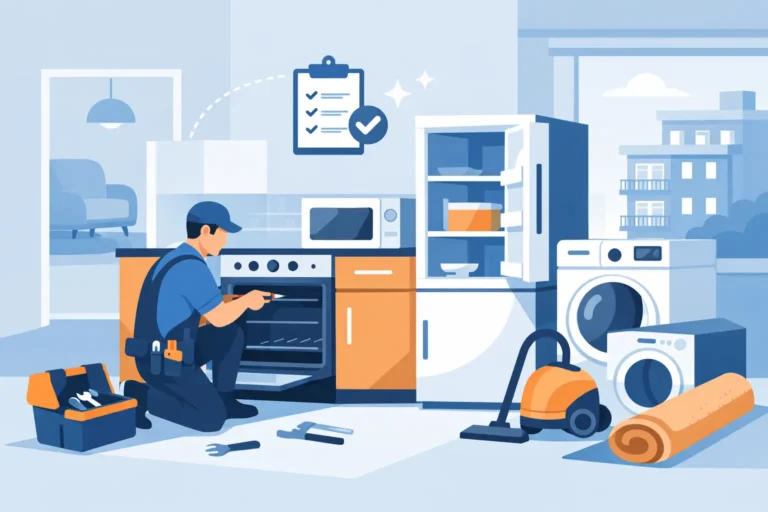
A refrigerator that will not cool, a dryer that leaves clothes damp, or a range with a burner that will not heat can turn a routine move-out into a costly delay. Apartment turnover appliance repair gives landlords and property managers a practical way to catch these problems before a new resident receives the keys. The goal is not to repair every old appliance at any cost. It is to make smart, timely decisions that protect your rental income, your property, and your tenant experience.
For busy owners and managers, appliances are easy to overlook until they become the reason a unit cannot be listed or a move-in has to be rescheduled. A focused inspection between tenants helps prevent that scramble.
Why appliance problems slow down a turnover
An empty apartment can make an appliance issue seem minor. There is no tenant calling about warm food or a growing laundry pile, after all. But a nonworking appliance can hold up cleaning, maintenance, final inspections, photography, and leasing. If the appliance is included in the rental agreement, the unit may not be ready to deliver as promised.
Some problems also get worse while a property sits vacant. A slow dishwasher leak can damage flooring or cabinets. A refrigerator with a failing seal may run constantly and waste energy. A dryer vent restriction can create a safety concern, even when the dryer itself appears to work.
Fast attention during turnover is usually less expensive than an emergency visit after move-in. It also gives you time to order a part, compare repair and replacement costs, or schedule installation without putting a resident in the middle of the decision.
A practical apartment turnover appliance repair checklist
A full appliance inspection does not need to become a complicated process. It should be consistent. Test the appliances included with the unit while utilities are active and before the final cleaning and walk-through are complete.
Start with the refrigerator
Check that the refrigerator and freezer are cooling, interior lights work, shelves and drawers are secure, and door gaskets create a proper seal. Look underneath and behind the unit for water, dust buildup, or damaged water lines. If there is an ice maker or dispenser, test it as well.
A refrigerator that is running but not maintaining temperature needs prompt attention. Waiting to see whether it improves can cost valuable turnover days and may lead to a compressor or defrost issue becoming harder to diagnose.
Test the range, oven, and venting
Turn on each surface burner or heating element. Confirm that gas burners ignite reliably and that electric elements heat evenly. Run the oven long enough to verify it reaches temperature and check the control panel, door latch, and interior light.
A range can look clean and still have an issue that affects tenant safety or daily use. Delayed ignition, a gas odor, sparking that continues after ignition, or an oven that will not heat should be handled by a qualified appliance professional. Do not ask cleaners or maintenance staff to work around those symptoms.
Run the dishwasher through a cycle
The dishwasher should fill, spray, drain, and latch correctly. Check around the door, beneath the unit, and under the sink for moisture. A standing pool of water after the cycle may point to a drainage problem, while poor cleaning can come from a clogged spray arm, failed component, or water-temperature issue.
Dishwasher leaks are especially worth catching during turnover because the damage may be hidden until a new resident starts using the appliance every day.
Give the washer and dryer more than a quick look
For in-unit laundry, run a short washer cycle and look for leaks, excessive vibration, unusual noises, and drainage issues. Test the dryer for tumbling and heat. If clothes stay damp after a normal cycle, the cause could be a heating failure, airflow restriction, or vent problem.
In shared laundry rooms and laundromats, downtime has a direct impact on residents and revenue. Coin-operated equipment should be checked for payment function, cycle completion, water flow, drainage, heat, and doors that lock or latch correctly. A machine that works intermittently is still a problem waiting to happen.
Know when repair makes financial sense
Repair-versus-replacement decisions depend on more than the appliance’s age. A newer machine with a failed pump, heating element, door seal, or control component is often a good repair candidate. A well-maintained appliance may have years of useful service left after the right repair.
Replacement becomes more reasonable when an appliance has repeated failures, serious rust or structural damage, a major sealed-system issue, unavailable parts, or repair costs that approach the price of a dependable replacement. Energy use matters too, particularly for older refrigerators or frequently used laundry equipment.
The most useful recommendation is an honest one. A technician should explain what failed, what the repair involves, what it is likely to cost, and whether the appliance is likely to remain dependable afterward. That clarity helps property managers make decisions they can stand behind with owners and tenants.
Build appliance service into your turnover schedule
The best time to schedule appliance service is early in the turnover, not after every other task is complete. If a resident provides notice, plan the inspection shortly after move-out. That leaves room for diagnosis, parts ordering, repair, reinspection, and cleaning before the next lease begins.
For properties with multiple units, keep a simple record of each appliance’s make, model, approximate age, past repairs, and recurring symptoms. This does not need to be complicated software. Even a well-maintained property file helps identify when a particular model is becoming a repeat expense.
It also helps to separate cosmetic concerns from operational concerns. A scratched refrigerator handle may not delay move-in, while a refrigerator that cannot hold temperature absolutely can. Prioritizing the issues that affect habitability, safety, and tenant routines keeps the turnover moving in the right order.
Avoid the false savings of a rushed fix
It is tempting to choose the quickest possible patch when a unit is sitting vacant. Sometimes a small, appropriate repair is exactly what is needed. Other times, a rushed fix creates a second service call just after the tenant moves in, which costs more and damages confidence.
Watch for repeat complaints such as a washer that occasionally will not drain, a dishwasher that leaks only during certain cycles, or an oven that takes too long to preheat. Those are not always simple wear-and-tear issues. A proper diagnosis can prevent the same appliance from becoming a turnover problem again next month.
Professional service also protects your staff and property. Major appliances combine electricity, water, gas, heat, and moving parts. Improvised repairs can create hazards or cause collateral damage that far exceeds the cost of a service visit.
Choose a repair partner who understands rental timelines
Property managers need more than a technician who can replace a part. They need clear communication, dependable scheduling, and practical recommendations that account for vacancy costs. A repair partner should explain the issue in plain language, provide honest pricing, and respect the condition and access requirements of the property.
Don’s Appliances has served Southern California homes and income-producing properties since 1983, with repair support for kitchen appliances, in-unit laundry, wall heaters, and commercial coin-operated equipment. Friendly technicians who respect your property and schedule can make a difficult turnover task feel manageable, especially when the next move-in date is close.
A one-year warranty and satisfaction-backed service also provide useful peace of mind. When a repaired appliance is going back into a rental unit, you want confidence that the work was done carefully and that you have support if a covered issue returns.
A clean, working apartment tells a new resident that the property has been cared for before they unpack their first box. Scheduling appliance inspection and repair early gives you more choices, fewer surprises, and a better chance to hand over the keys on time.
