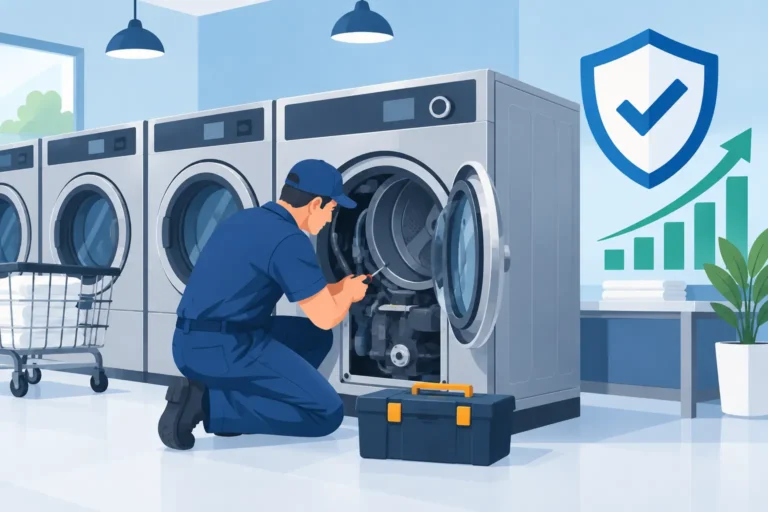
A broken dryer is more than an inconvenience when customers are waiting with wet clothes. This laundromat repair example shows how a methodical service call can turn a frustrating equipment failure into a controlled repair decision, protecting both daily revenue and customer trust.
Consider a busy self-service laundry with a bank of commercial dryers. One dryer has stopped heating, but its drum still turns. The owner first assumes the machine needs a major replacement. After all, customers have already placed several out-of-order signs near other machines, and taking another dryer out of service can quickly create long waits and lost business.
The better first step is a proper diagnosis. A dryer that tumbles without heat can have several possible causes, from a failed igniter or heating element to a tripped safety switch, a gas-supply problem, poor airflow, or a damaged control component. Replacing parts based on a guess may cost more, take longer, and still leave the underlying issue unresolved.
Laundromat Repair Example: A Dryer That Runs Cold
In this representative scenario, the technician begins by speaking with the owner. When did the issue begin? Does the dryer run its full cycle? Is it completely cold, or does it heat briefly and then shut off? Have customers mentioned long drying times on nearby machines?
Those details matter. They help separate a single-machine failure from a larger ventilation or utility issue affecting the laundry room.
The technician then checks the basics safely and systematically: power supply, controls, door switch operation, lint accumulation, exhaust airflow, and the heating system appropriate to that dryer model. For a gas dryer, that includes checking the ignition sequence and confirming that the machine is receiving gas. For an electric dryer, it includes verifying the correct electrical supply and inspecting heating components.
In this case, the drum motor and controls are operating normally, but the burner does not stay lit. The inspection finds restricted exhaust airflow caused by lint buildup farther along the vent path. The dryer’s safety system is shutting off heat to prevent overheating.
That is good news and bad news. The repair may be less expensive than replacing the entire dryer, but simply resetting a safety device without correcting the airflow problem would invite another shutdown. It could also create a fire risk.
The Repair Decision
The immediate repair includes clearing the blockage, addressing any affected safety component, and testing the dryer through a complete heating cycle. The technician also checks that air is leaving the building properly rather than backing up into the machine.
Before putting the dryer back into service, the owner receives a clear explanation of what failed, why it failed, and what the repair will cost. That conversation is just as valuable as the repair itself. A laundromat owner needs to know whether the machine is reliable enough to keep earning or whether repeated breakdowns are signaling that replacement should be planned.
If the dryer is otherwise in good condition and the repair cost is reasonable compared with replacement, repairing it is often the practical choice. If it has a history of heating failures, damaged bearings, worn seals, and frequent service calls, continued repairs can become more expensive than installing a newer unit. There is no one answer for every machine. The age, condition, parts availability, and amount of downtime all matter.
Why Fast Diagnosis Matters to a Laundromat
Every out-of-order sign affects more than the machine behind it. When available dryers become scarce, customers may leave before finishing their laundry or decide to use another location next time. Attendants and staff spend more time answering questions, managing complaints, and moving customers between machines.
For an owner, the cost includes lost vend revenue, but it may also include reputation. A customer who finds a clean, working laundry room is likely to return. A customer who repeatedly encounters equipment that will not wash, dry, or accept payment may not.
The same concern applies to laundry rooms in apartment communities, hotels, and other commercial properties. A washer leak or failed dryer can lead to resident complaints, water damage concerns, and added pressure on maintenance teams. Prompt repair helps protect the property and keeps tenants from losing access to an essential amenity.
What the Example Reveals About Preventive Service
The failed dryer in this example did not necessarily fail without warning. Longer dry times, unusually hot machine surfaces, a burning-lint smell, repeated heat shutoffs, and excess lint around equipment can all point to an airflow concern. Ignoring those signs may turn a manageable cleaning and repair into a larger service interruption.
A sensible maintenance plan focuses on the equipment that causes the biggest disruption when it fails. Commercial washers and dryers work hard, often for long hours, so routine attention to lint systems, hoses, belts, door latches, drain performance, coin or payment systems, and unusual operating noises can help catch smaller problems early.
Owners should also keep a simple record of service calls for each machine. A pattern is easier to see when repairs, downtime, and parts costs are documented. If Dryer 12 has required three calls in six months while the rest of the bank runs reliably, that machine deserves a closer repair-versus-replacement conversation.
When to Call for Commercial Laundry Repair
A laundromat should schedule service when a machine will not start, will not heat, leaks, makes grinding or banging sounds, fails to drain, damages clothing, or repeatedly displays an error. It is also wise to call when dryers are taking much longer than usual. Slow drying is not only frustrating for customers. It can signal restricted ventilation or a heating problem that should not be ignored.
Do not ask staff or customers to bypass door switches, safety controls, or electrical protections to get a machine running. Commercial laundry equipment combines high heat, electricity, moving parts, water, and, in some locations, gas. A temporary workaround can create a much bigger problem.
A qualified technician can determine whether the issue is isolated to one unit, connected to the building’s exhaust or utility supply, or part of a wider maintenance concern. That helps owners make a decision based on facts instead of frustration.
For laundromat operators and property managers in Long Beach, Murrieta, Menifee, and Temecula, Don’s Appliances provides commercial laundry equipment repair with clear, honest pricing and practical guidance. The goal is not to sell a replacement before it is needed. It is to get the right answer, restore service safely, and help protect the income your equipment produces.
When a machine goes down, a quick call and a careful diagnosis can keep one out-of-order sign from becoming a row of disappointed customers.
