
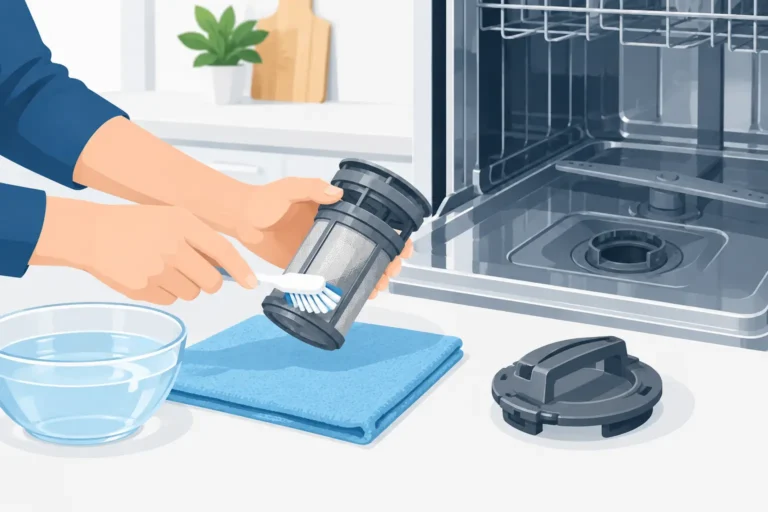
A dishwasher that suddenly smells sour, leaves grit on glasses, or has water sitting in the bottom is often asking for one simple bit of attention. Learning how to clean dishwasher filter can restore better wash results and help prevent a small drainage issue from becoming a kitchen disruption.
The filter catches food particles before they reach the dishwasher pump and drain system. It is doing exactly what it is supposed to do, but when it becomes packed with residue, water cannot circulate or drain as freely. The good news is that most homeowners can clean it in a few minutes with common household supplies.
What a Dishwasher Filter Does
Most modern dishwashers have a filter assembly at the bottom of the tub, beneath the lower spray arm. Depending on the model, it may include a round cylindrical filter, a flat screen, or both. The assembly catches food debris, labels, broken toothpicks, and other small items that should not travel into the drain pump.
Older dishwashers may have a self-cleaning filter or food grinder instead. Those models do not always have a removable filter, so do not force any part loose. If you are unsure what type you have, check the owner’s manual or look for a twist-lock filter at the bottom of the dishwasher.
A clean filter supports proper water flow. It can also reduce odors and stop bits of old food from finding their way back onto plates and cups. It will not fix every cleaning or drainage problem, but it is the right first step because it is simple, safe, and costs nothing.
How to Clean Dishwasher Filter Step by Step
Start with the dishwasher empty and turned off. You do not need to disconnect power for basic filter cleaning, but avoid running a cycle while the filter is out. Pull out the lower rack so you have a clear view of the bottom of the tub.
Most removable filters unlock with a quarter-turn or counterclockwise twist. Lift the cylindrical portion out gently, then remove the flat mesh screen beneath it if your dishwasher has one. Take a moment to notice how the pieces fit together. A photo with your phone can make reassembly easier, especially if the assembly has more than one part.
Carry the filter to the sink and rinse it under warm running water. Use a soft dish brush, old toothbrush, or non-abrasive sponge to loosen food residue from the mesh and plastic frame. A little regular dish soap is usually enough for greasy buildup.
If the filter has a stubborn film, soak it in warm, soapy water for 10 to 15 minutes and try again. Keep your tools gentle. Steel wool, abrasive scouring pads, and sharp objects can tear a fine mesh screen or damage plastic parts. Do not use bleach unless your appliance manufacturer specifically permits it.
While the filter is out, use a damp cloth or paper towel to wipe the filter well, which is the recessed area where the assembly sits. Look for small pieces of glass, bones, twist ties, or labels. Remove only debris you can clearly see and reach safely. Be careful around the pump area, since hidden broken glass can cause a cut.
Once the filter is clean, place the flat screen back first, if applicable, and return the cylindrical filter to its original position. Turn it until it locks securely. A filter that is not seated correctly can allow debris into the pump or interfere with the lower spray arm.
Replace the lower rack and run a normal cycle. If you want to freshen the tub after cleaning a particularly dirty filter, run an empty hot cycle with a dishwasher cleaner made for your appliance. Follow the cleaner instructions rather than adding random mixtures to the machine.
A Quick Check Before You Run the Next Load
Spin the lower spray arm by hand if your model allows it. It should move freely and should not strike the filter assembly. Also check that nothing is blocking the dispenser door. These small checks help you catch an installation issue before the next load comes out poorly washed.
How Often Should You Clean It?
For most households, cleaning the dishwasher filter once a month is a sensible routine. A home that runs the dishwasher daily, skips pre-rinsing often, or has hard water may need attention every two to three weeks. A lightly used dishwasher may only need it every two or three months.
Instead of relying only on a calendar, pay attention to what the dishwasher is telling you. Clean the filter sooner if you notice a musty odor, food particles on dishes, a cloudy film that keeps returning, slower drainage, or water collecting beneath the filter area. These signs do not automatically mean a repair is needed, but they are worth addressing promptly.
Scraping plates into the trash before loading helps the filter do its job without turning the dishwasher into a disposal. There is no need to hand-wash dishes before loading them. In fact, many modern detergents work best when there is some food soil for them to act on. The practical middle ground is simple: scrape away solids, then let the dishwasher handle the washing.
When Filter Cleaning Is Not Enough
A dirty filter is common, but it is not the answer to every dishwasher problem. If water remains in the bottom after you have cleaned and properly reinstalled the filter, the issue could involve a clogged drain hose, blocked air gap, drain pump problem, or a plumbing backup. If the dishwasher hums but will not drain, stop the cycle and avoid repeatedly restarting it. That can put extra strain on the pump.
Poor cleaning can also come from clogged spray-arm holes, a failing circulation pump, low water temperature, a detergent issue, or hard-water mineral buildup. White residue, for example, is not always food debris. In Southern California, hard water can leave mineral spots even when the filter is perfectly clean.
Call for service if you see leaking water, smell electrical burning, hear grinding that continues after the filter is cleaned, or find broken filter components. Also get professional help if the filter will not lock into place or if you discover debris deep in the pump area. Trying to pry apart components that were not designed for homeowner removal can turn a manageable repair into a larger one.
For rental properties, a dishwasher that will not drain deserves prompt attention. Standing water can create odors, frustrate tenants, and potentially lead to a leak if the appliance is used again. Property managers are often best served by documenting the symptoms, checking the filter, and arranging diagnosis if the problem continues.
A Few Habits That Keep the Filter Cleaner
The easiest maintenance plan is the one your household will actually follow. Scrape dishes, check the filter monthly, and run the hot water at the kitchen sink for a few seconds before starting a cycle. That last step can help the dishwasher begin with hot water instead of a pipe full of cooled water.
Use the correct amount of detergent for your water conditions and dishwasher type. More detergent is not always better. Too much can leave a film, while too little may leave grease behind. If your dishwasher has a rinse-aid dispenser, keeping it filled can improve drying and reduce spotting, particularly in hard-water areas.
A clean dishwasher filter is one of those small home-care tasks that can make a noticeable difference in daily life. If cleaning it does not restore normal drainage or clean dishes, Don’s Appliances can help identify the real cause with clear, practical guidance so you can get your kitchen routine back on track.
