
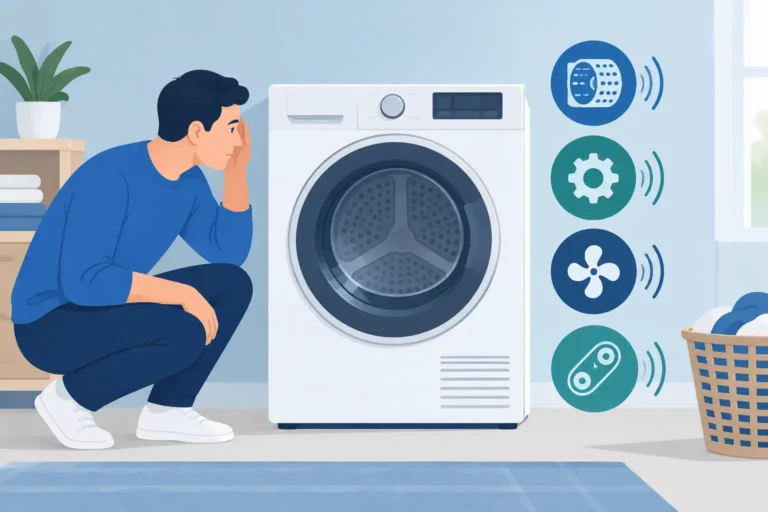
A dryer that suddenly squeals across the laundry room or thumps through every rotation can make a normal load feel urgent. Dryer noise diagnosis starts with listening to when the sound occurs, how it changes as the drum turns, and whether the dryer is still heating and tumbling normally. Those details can help separate a loose item in the drum from a worn part that needs prompt attention.
The good news is that many dryer noises begin as repairable problems. The less-good news is that continuing to run a dryer with a loud scrape, bang, or grinding sound can turn a manageable repair into damage to the drum, motor, or surrounding parts. If the sound is severe, new, or paired with a burning smell, stop the cycle and arrange for service before starting another load.
When a Dryer Noise Needs Immediate Attention
Not every sound is an emergency. A zipper tapping the drum or a sneaker bumping around is annoying, but it is usually solved by stopping the dryer and checking the load. A harsh metal-on-metal scrape, repeated grinding, or a loud banging that continues with an empty drum deserves more caution.
Turn the dryer off right away if you notice smoke, a burning rubber or electrical smell, sparks, excessive vibration, or a drum that is difficult to turn. Unplug an electric dryer before inspecting anything accessible. For a gas dryer, do not attempt internal repairs or disconnect gas connections yourself. A trained technician can diagnose the appliance safely and check the components that are not visible from the front of the machine.
A dryer that is noisy and also taking much longer to dry should not be ignored. Restricted airflow can cause overheating, while a failing drum support part can make the machine work harder than it should. Both problems can interrupt laundry day and, in a rental or laundry business, quickly become a tenant or customer issue.
Dryer Noise Diagnosis: What Each Sound Can Mean
The timing and character of a noise offer useful clues, but they do not confirm the failed part by themselves. Dryer designs vary by brand and model, so a professional diagnosis is the best way to avoid replacing the wrong component.
Squealing or high-pitched chirping
A sharp squeal that starts when the drum begins turning often points to friction in a moving support component. Worn drum rollers, a strained idler pulley, or a deteriorating belt can all create this type of sound. The noise may come and go at first, especially when the dryer is carrying a heavier load.
Do not assume a squeak will stay minor. A pulley or roller that is beginning to bind can eventually damage the belt or prevent the drum from turning. If the dryer squeals on most cycles, schedule a repair before it stops in the middle of a load.
Rhythmic thumping or bumping
A thump that repeats once per drum rotation can be caused by an item in the dryer, such as shoes, a belt buckle, or clothing with heavy hardware. Stop the cycle, remove the load, and run the dryer briefly while empty. If the sound disappears, the appliance may be fine.
If the thump remains with an empty drum, the cause may be a worn drum roller, a flat spot on a roller, or a damaged drum support component. An uneven or overloaded load can also make a dryer vibrate, but persistent thumping is worth having checked. Over time, the repeated impact can put added stress on the cabinet and drum.
Scraping, grinding, or metal-on-metal sounds
Scraping is one of the noises that calls for a quick response. It can occur when the drum is rubbing against a support surface, a foreign object has slipped between the drum and the cabinet, or a roller has worn down enough to affect how the drum sits.
A coin, screw, bra wire, or small piece of hardware can make a surprisingly loud scrape. Even so, do not reach into gaps around the drum or disassemble panels to retrieve an object. The item may be accessible only after the dryer is safely opened, and forcing it can damage the drum seal or create a sharp-edge hazard.
Rattling or buzzing
A light rattle may be as simple as buttons, loose change, or zippers striking the drum. Empty pockets and close zippers before drying to protect clothing and reduce unnecessary noise. If the rattle happens only during certain parts of the cycle, it may also be related to vibration from an unbalanced dryer.
A rattle that continues when the dryer is empty can point to a loose cabinet panel, blower wheel issue, or loose internal hardware. Buzzing is different. A dryer that hums or buzzes but does not turn may have a motor, start, belt, or drum-related problem. Stop trying to restart it repeatedly, since repeated attempts can place more strain on the motor.
Loud vibration or walking across the floor
A dryer should not move across the laundry room. First, make sure all four leveling feet are firmly on the floor and that the machine is not sitting unevenly. A heavily unbalanced load, especially one large item such as a comforter, can make a dryer shake more than usual.
If the dryer remains noisy and unstable with a normal load, internal drum supports or suspension-related parts may be worn. Vibration can also loosen vent connections and cause wear where it is not immediately visible. This is especially important in apartments, condominiums, and rental homes where the sound can disturb nearby residents.
Safe Checks You Can Make Before Calling
A few simple checks can give you clearer information for your service appointment without putting you at risk. Remove the laundry and look inside the drum for loose objects. Check that the lint screen is clean, and make sure the dryer is level and not pressed tightly against a wall.
Pay attention to whether the noise happens immediately, only after the dryer warms up, or only with a full load. Also notice whether the drum turns, whether the dryer heats, and whether clothes are taking longer than normal to dry. These observations help a technician narrow the cause faster.
Avoid opening the dryer cabinet, bypassing door switches, or spraying lubricants into the machine. Household lubricants can attract lint, damage certain components, and create a fire concern in a high-heat appliance. A dryer contains electrical connections, moving parts, and, for gas models, fuel connections that should be handled with the proper tools and training.
Why Professional Diagnosis Can Save Money
Dryers often make similar sounds for different reasons. A squeal could be a belt, a pulley, or a roller. A thump could come from the load, a roller, or the drum itself. Replacing one part based on a guess may not solve the problem and can add unnecessary cost.
A thorough service visit should include checking the drum supports, belt path, pulleys, blower area, motor operation, cabinet stability, and airflow concerns related to the noise. The technician should explain what failed, what repair is recommended, and whether the condition is likely to affect other parts. Clear answers matter, particularly when you are deciding whether repair makes sense for an older machine.
The repair-versus-replacement decision depends on the dryer’s age, overall condition, repair cost, and how well it has been performing outside of the noise. A dryer with a single worn support part may be a practical repair. A unit with major motor trouble, repeated heating failures, and multiple worn components may deserve a more careful cost comparison. Honest guidance should account for your budget and the inconvenience of being without a working dryer.
Keep Rental and Commercial Laundry Moving
For landlords, property managers, and laundromat operators, a noisy dryer is more than an inconvenience. It can lead to tenant complaints, out-of-service machines, missed laundry revenue, and larger repairs if the equipment continues operating under strain. A quick response protects both the appliance and the people relying on it.
Document which machine is making the sound, when it occurs, and whether it is still drying properly. If possible, keep the unit out of service when it is grinding, scraping, or smelling hot. This gives the repair technician a better starting point and helps prevent a small mechanical issue from becoming downtime for multiple residents or customers.
For homeowners and property professionals in Murrieta, Long Beach, Menifee, and Temecula, Don’s Appliances can provide straightforward dryer diagnostics, clear repair explanations, and respectful service focused on getting laundry back on track. A new noise is your dryer’s way of asking for attention – responding early is usually easier on your schedule, your home, and your budget.
