
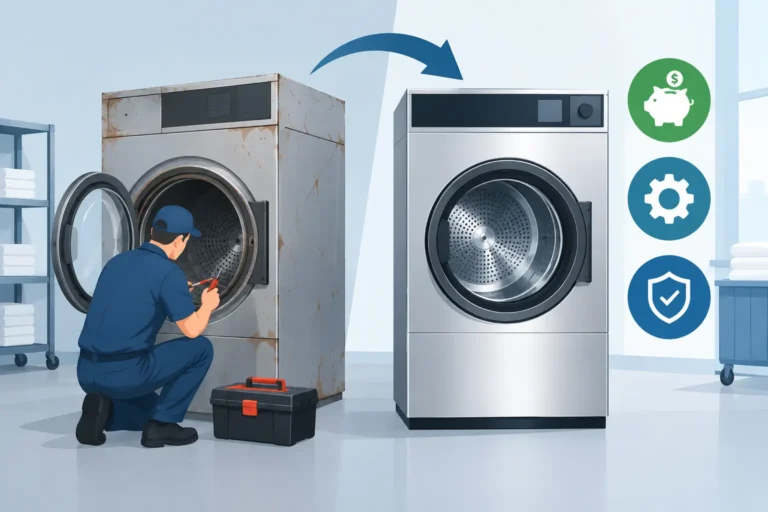
A dryer that runs but leaves loads damp can quietly drain a laundry operation. Tenants start calling, customers wait for open machines, staff spend extra time reloading loads, and utility costs climb. Commercial dryer restoration is the practical process of diagnosing what has failed, repairing the equipment safely, and bringing dependable drying performance back before a small issue becomes a larger interruption.
For laundromat owners, apartment communities, hotels, and other income-producing properties, the goal is not simply to make a dryer turn on. It is to restore safe, efficient operation with a clear understanding of the repair cost, the condition of the machine, and how long that repair is likely to serve the business.
What Commercial Dryer Restoration Really Means
Commercial dryer restoration can range from a targeted repair to a more involved renewal of worn components. A technician begins by checking the symptoms, verifying airflow and heat performance, and identifying the actual source of the failure. That matters because a dryer that will not dry may have a heating problem, but it may also have restricted venting, a failing blower, worn drum support parts, or a control issue.
Depending on the dryer and its condition, restoration may involve replacing failed heating components, igniters, thermostats, belts, rollers, bearings, switches, motors, or control parts. It can also include correcting airflow problems that make a working dryer overheat or take too long to finish a load. The right scope depends on the age of the equipment, the availability of parts, and the overall condition of the cabinet, drum, and major systems.
Restoration is not always the same as a complete rebuild. If one dryer has a clear, isolated failure and has otherwise been dependable, a straightforward repair is often the sensible choice. If several major components are worn and the machine has a long history of outages, a replacement conversation may be more honest and more cost-effective.
Signs Your Commercial Dryer Needs Attention
A dryer rarely fails without giving some warning. Addressing those warnings early can help avoid a shutdown during a busy laundry day or a string of tenant complaints at a rental property.
Watch for these common signs:
- Loads need two or three cycles to dry, even when they are not overloaded.
- The drum turns but there is no heat, or the dryer heats intermittently.
- The machine makes thumping, scraping, squealing, or rumbling noises while running.
- The dryer shuts off early, trips a breaker, produces a burning smell, or feels unusually hot around the cabinet.
- Customers or residents report wrinkled, damp, or excessively hot laundry.
Some of these symptoms point to mechanical wear, while others can signal an airflow or electrical concern. A burning smell, repeated breaker trips, or signs of overheating should not be treated as an inconvenience. Stop using the dryer and arrange for a professional inspection. Continuing to run a compromised commercial dryer can damage additional parts and create a serious safety risk.
Why Slow Drying Is Not Always a Heating Failure
When a load stays wet, many people assume the heating element or gas ignition system has failed. Sometimes that is exactly the problem. But restricted exhaust is one of the most common causes of poor drying performance, and it can put extra strain on otherwise healthy equipment.
Commercial dryers move a high volume of hot, moist air. If lint has accumulated in the vent path, the transition duct is crushed, or the exterior termination is blocked, that moisture has nowhere to go. The dryer may run hotter, take longer, cycle off on a safety limit, or eventually damage heat-related components.
This is why proper diagnostics matter. Replacing a heat component without checking airflow can create a costly repeat problem. A thorough service visit should look at the machine’s performance and the conditions around it, including the exhaust path that supports safe operation.
Repair or Replace? Make the Decision With Numbers
The repair-versus-replacement decision should be based on more than the age of the dryer. A commercial machine that is several years old may still be a good repair candidate if it has been maintained, parts are available, and the current failure is limited. On the other hand, newer equipment can become expensive to keep if it has repeated control problems or major damage.
Start with the immediate repair estimate, but also consider how the dryer has performed over the last year. Has it needed repeated service calls? Is it losing revenue or creating regular tenant complaints? Are parts becoming difficult to source? Is the dryer using noticeably more energy or taking too long per load?
For a laundromat, downtime has a direct dollar value. One out-of-service machine can push customers to another location, especially during evenings and weekends. For property managers, the cost may show up differently: maintenance calls, frustrated residents, delayed turnovers, and staff time spent managing a problem that should have been addressed quickly.
A good technician should explain the likely repair, the condition of related components, and whether the money being spent is likely to buy meaningful additional service life. That clear guidance is more useful than pressure to replace equipment before it is necessary.
The Value of Timely Commercial Dryer Restoration
Waiting until a dryer stops completely can turn a manageable repair into a more expensive one. Worn drum rollers can damage other support components. A slipping belt can leave a machine unusable at the wrong time. Poor ventilation can overwork heating parts and create repeat failures.
Timely restoration also protects the customer experience. In a shared laundry room, residents expect machines that work when they need them. In a coin-operated location, customers notice long dry times immediately. Fast attention to performance issues helps protect the reputation of the property or business, not just the machine itself.
There is a balance, though. Preventive service should be purposeful, not an excuse to replace every older part. The best approach is to inspect equipment that is showing symptoms, address verified problems, and make a plan for machines that are nearing the end of their useful life.
What to Expect From a Professional Service Visit
A productive commercial dryer service call begins with the operating complaint. Whether the dryer will not heat, will not start, makes noise, or takes too long to dry, those details help focus the diagnostic process. It also helps to share when the problem started, whether it affects one machine or several, and whether there have been recent electrical, gas, or venting changes.
The technician should test the dryer rather than guess at the repair. That includes checking basic operation, heat production, drum movement, safety devices, electrical connections or gas ignition components as appropriate, and visible signs of wear. If a repair is recommended, the explanation should be plain: what failed, why it matters, what the repair involves, and what the expected cost will be.
For property managers and commercial operators, scheduling matters too. A responsive local service company can help prioritize equipment that is affecting residents or revenue while keeping communication clear for owners, maintenance teams, and onsite staff. Don’s Appliances brings that practical, family-run approach to commercial laundry equipment service, with honest recommendations and a one-year warranty on completed repairs.
Simple Habits That Help Dryers Last Longer
Commercial dryers work hard, but a few consistent practices can reduce avoidable wear. Staff should clean lint filters between loads, avoid packing drums beyond their capacity, and report unusual noises or slow drying as soon as they appear. The exhaust system should also receive regular attention, especially in high-volume settings where lint accumulation can happen quickly.
Keep the area around the dryers clear so technicians and staff can safely access the equipment. If multiple machines begin drying slowly at the same time, treat it as a possible shared ventilation concern rather than assuming every dryer needs a separate heating repair.
Most importantly, do not ignore the first sign of declining performance. A commercial dryer is part of the daily routine for residents, customers, and employees. Getting a clear diagnosis early can keep laundry moving, control repair costs, and give you the confidence to decide whether restoration or replacement is the better next step.
