
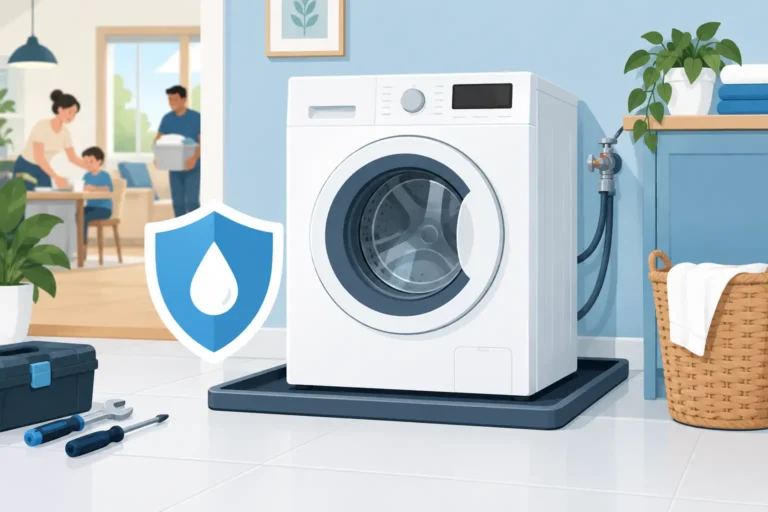
A washer leak rarely starts as a dramatic flood. More often, it begins with a damp spot behind the machine, a musty smell in the laundry room, or a little water appearing after a heavy load. The best washer leak prevention is a combination of good installation, a few regular checks, and quick action when something does not look right. Those small habits can protect flooring, cabinets, nearby walls, and the routine your household depends on.
Start With the Connections Behind the Washer
The water supply hoses are one of the first places to look. Pull the washer forward carefully enough to see where the hot and cold hoses connect to the wall valves and the back of the machine. Look for drips, rust at the fittings, bulges, cracking, kinks, or moisture on the floor.
Rubber hoses can work well, but they should not be treated as permanent parts. They can weaken from age, pressure changes, heat, and Southern California’s hard-water conditions. Many homeowners choose braided stainless-steel supply hoses because they offer added protection against bursting. That said, braided hoses still need inspection. The outer braid can make it harder to see deterioration underneath, so replace hoses according to the manufacturer’s guidance or sooner if they show wear.
Make sure the connections are snug, but do not force them. Overtightening can damage threads, seals, or the hose fitting itself. If a connection keeps dripping after a careful adjustment, the washer may need a new washer gasket, hose, valve, or professional diagnosis.
If you will be away from home for several days, shutting off the washer’s hot and cold water valves is a simple extra precaution. This is especially useful for second homes, vacant rental units, and properties where a small unnoticed leak could sit for days.
Keep the Washer Level and Stable
A washer that shakes hard during the spin cycle is more than an annoyance. Repeated vibration can loosen hose connections, strain internal parts, move the drain hose, and eventually create a water problem. If the machine walks across the floor or bangs against the wall, it needs attention.
Start by checking the load. Large items such as comforters, bath mats, and a single heavy towel can become unevenly distributed. Pause the cycle, rearrange the load, and restart it. If the washer still rocks when empty or with a normal load, its leveling feet may need adjustment.
A properly installed washer should sit firmly on all four feet without rocking. The floor beneath it also matters. A soft, sloped, or water-damaged floor can make balancing difficult and may worsen over time. For upstairs laundry rooms or washers installed over finished living areas, a stable installation is particularly worthwhile because a leak can damage more than one room.
Watch the Drain Hose and Standpipe
Water that appears during draining is often blamed on the washer, but the drain setup may be the real issue. The drain hose should be securely positioned in the standpipe without being sealed airtight. It needs enough room for the washer to drain properly and for the plumbing system to breathe.
A hose pushed too far down can siphon water back out of the machine or interfere with drainage. A hose that is too loose can jump free when the pump sends water out quickly. Secure it according to the washer installation instructions, and inspect it occasionally for cracks or damage where it bends.
If water backs up from the standpipe, the household drain may be partially clogged. This usually shows up when the washer drains, often with gurgling sounds or water rising from the pipe. Do not keep running loads and hoping the problem clears. Repeated overflows can soak drywall and flooring before anyone notices the full extent of the damage.
Use the Right Amount of Detergent
Too much detergent can create more suds than the washer can handle. The extra foam may push water out through the dispenser, door area, or venting points, especially in high-efficiency machines. It can also leave residue that affects performance over time.
Use detergent labeled for your washer type, and measure it rather than pouring by habit. High-efficiency washers need far less soap than older top-load models. If you have soft water, small loads, or lightly soiled clothing, you may need even less than the detergent bottle suggests.
Fabric softener and detergent dispensers deserve occasional cleaning, too. A clogged dispenser can send water in an unexpected direction or leave buildup that makes future leaks harder to spot. Warm water and a soft cloth are usually enough for routine cleaning, provided your owner’s manual does not give different instructions.
Check Seals, Doors, and Dispensers
Front-load washers depend on a flexible rubber door gasket to keep water inside. Check this seal every few weeks for tears, loose areas, trapped objects, or buildup. Coins, hairpins, small socks, and pet hair can get caught around the gasket and prevent the door from sealing fully.
Wipe the gasket dry after laundry day, particularly in the folds. Leaving the door slightly open between loads helps the interior dry out and reduces odors and mildew. Do not pull or scrub aggressively on the gasket, since damage to the rubber can create a leak path.
Top-load washers can also leak from around the lid area, dispenser, tub ring, or internal hoses. If water is appearing at the front of a top-load machine, take note of when it happens. A leak during filling, washing, spinning, or draining gives a technician useful clues and can help narrow down the cause faster.
Add Layers of Protection Where They Make Sense
The best washer leak prevention setup depends on where the appliance sits and what is below it. A washer pan with a drain can provide valuable protection, especially in an upstairs closet, condominium, or laundry room next to finished spaces. A pan is not a substitute for repairing a leak, but it can help contain small failures long enough to prevent major damage.
Water leak sensors are another useful option. These small devices sit on the floor near the washer and alert you when they detect moisture. Some smart systems can also shut off water automatically. They are particularly helpful for landlords, property managers, and homeowners who travel often, but they still need fresh batteries, reliable connectivity, and correct placement to do their job.
For a high-risk location, an automatic shutoff valve may be worth considering. It can stop water flow when a sensor detects a leak or when a system detects abnormal water use. The trade-off is cost and installation complexity, so it is most practical when the potential damage from an overflow would be significant.
Know When a Small Leak Needs Service
Do not ignore recurring moisture, even if the washer still finishes its cycle. A small leak can come from a worn pump, damaged tub seal, loose internal hose, failing inlet valve, cracked dispenser housing, or drain problem. These are not always visible from the outside, and continued use can turn a manageable repair into damage to the appliance and the room around it.
If you see active water on the floor, stop the cycle if it is safe to do so. Turn off the washer’s water supply valves and avoid touching standing water if it is near an electrical outlet or cord. Mop up what you can, take a photo of where the water appeared, and arrange for service before using the machine again.
For rental homes and shared laundry areas, fast reporting matters. Tenants should report damp flooring, vibration, drain backups, or unusual sounds right away. Property managers can reduce repeat issues by scheduling periodic hose and drain inspections, especially between tenants or before a high-use season.
At Don’s Appliances, friendly technicians can identify whether the problem is a washer component, an installation concern, or a plumbing-related issue that needs a different solution. Clear explanations and repair-versus-replacement guidance help you make a cost-conscious decision without guessing.
A few minutes spent checking hoses, balancing the machine, and watching for early warning signs can spare you the stress of a soaked laundry room. When water shows up where it should not, treat it as a reason to pause, protect your home, and get the cause addressed before the next load.
