
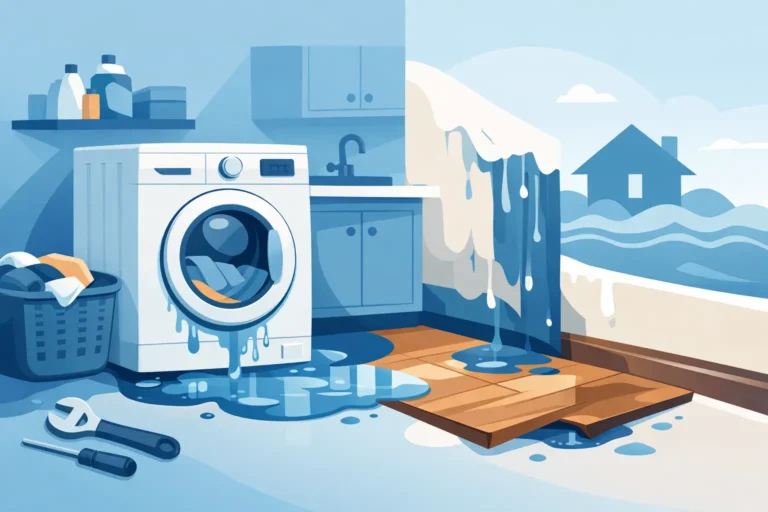
A washer can turn one ordinary load of laundry into a wet-floor emergency fast. Water may creep out from under the machine, run down a supply hose, or appear only during the drain cycle. Prompt washer leak repair matters because the visible puddle is often only part of the problem. Water can damage flooring, baseboards, nearby cabinets, and the ceiling below a second-floor laundry area.
Before moving the washer or starting another cycle, stop the water and take a close look at when and where the leak appears. That information helps narrow down the cause, protects your home, and gives a repair technician a much clearer starting point.
What to Do When Your Washer Starts Leaking
If water is actively flowing, turn off the washer and unplug it if you can safely reach the plug without standing in water. Close the hot and cold water shutoff valves behind the machine. If the leak happens while the washer is draining, pause or cancel the cycle if possible, then use towels to contain the water.
Do not keep testing the washer with full loads. A small drip may look manageable, but repeated cycles can turn it into a larger leak. Take a few photos of the puddle, hoses, and any water marks. Then note whether the leak occurred while the tub was filling, agitating, draining, or spinning. Those details can point to different parts of the machine.
If water reached an outlet, power cord, or electrical connection, leave the appliance unplugged and avoid touching the area until it is dry and safe. For upstairs laundry rooms or substantial flooding, act quickly to protect the space below and consider professional water-damage help as well.
Find the Leak Source Before Scheduling Washer Leak Repair
Water does not always emerge from the same place as the actual failure. A loose connection at the back can run down the cabinet and make it look as if the washer is leaking underneath. In other cases, an internal hose or tub seal only leaks after the machine begins moving water.
Leaks from the Back of the Washer
The water supply hoses are one of the first places to inspect. Check the hot and cold hose connections at both the wall and washer for drips, corrosion, cracked rubber, or a loose fitting. A connection may need careful tightening, but overtightening can damage threads or a washer inside the fitting.
Bulging, brittle, or heavily worn hoses should be replaced rather than patched. This is especially true if the hoses are older, bent sharply behind the appliance, or showing rust at the connectors. The drain hose also deserves attention. It can leak from a split, slip out of the standpipe, or allow water to back up if it is pushed too far down the pipe or sealed too tightly.
Leaks During the Fill Cycle
A washer that leaks as soon as water begins entering may have a problem with the inlet hoses, inlet valve, detergent dispenser, or fill system. On some front-load models, excess suds can force water out through the dispenser area. Using too much detergent or using a regular detergent in a high-efficiency washer can create enough foam to cause a messy overflow.
A damaged inlet valve can also leak inside the cabinet. Because this part is connected to pressurized water, it is not a good candidate for a guess-and-check repair. A technician can confirm whether the valve, internal tubing, or dispenser assembly is responsible before recommending replacement parts.
Leaks from the Front Door or Lid Area
For front-load washers, inspect the rubber door gasket for tears, trapped clothing, pet hair, coins, or residue that prevents a proper seal. Clean the gasket gently with a soft cloth and check the area around the glass door. A small object caught in the seal can cause a leak that appears only when the drum is full.
Top-load washers can leak around the lid area if the tub is overloaded or laundry shifts heavily to one side. Water may splash over the tub rim during agitation or spin. That does not always mean a mechanical part has failed, but it does mean the machine needs to be loaded more carefully. If the washer leaks with normal-sized, balanced loads, the tub, suspension, or internal components may need diagnosis.
Water Under the Washer
A puddle under the machine often points to a drain pump, internal hose, tub seal, or damaged outer tub. Drain-pump leaks commonly show up when the washer empties. You may hear the pump running and see water collect near the front or underneath the cabinet.
A worn tub seal can be more involved. It may leak around the center of the tub and can be accompanied by unusual bearing noise during spin. Depending on the washer’s age, condition, and part availability, this is one of the repairs where an honest repair-versus-replacement conversation is useful. Replacing a simple pump is very different from rebuilding a washer with extensive tub or bearing damage.
Common Causes That Are Easy to Miss
Not every wet laundry floor means the washer itself is at fault. A clogged or slow household drain can cause water to back up from the standpipe when the washer pumps out. If the drain hose is secure but water rises from the pipe in the wall, the plumbing drain may be the issue.
An uneven washer can contribute to splashing, vibration, and hoses rubbing against the wall or cabinet. Check that all four feet are firmly on the floor and that the appliance does not rock. Leveling may help, but do not mistake it for a cure when there is an active internal leak.
Also look for laundry products stored above or beside the washer. A tipped detergent bottle, a leaking bleach container, or water from a utility sink can create a misleading puddle. Finding the true source first prevents spending money on the wrong repair.
Which Washer Leaks Can You Handle Yourself?
Homeowners can often manage simple cleanup, remove a visible obstruction from a door gasket, straighten a kinked drain hose, or tighten an accessible hose connection carefully. Replacing clearly worn external supply hoses can also be reasonable if you are comfortable shutting off the water and making secure connections.
Internal repairs are another matter. Removing panels can expose sharp edges, electrical components, and hoses that are difficult to reinstall correctly. Front-load washers, stacked units, and machines installed in tight closets can be particularly challenging to access. A leak may also be a symptom of another issue, such as a failing pump, worn bearing, or damaged dispenser system.
Calling for service makes sense when the leak returns after basic checks, comes from underneath the washer, involves an internal part, or has already caused damage. It is also the safer choice if you smell burning, hear grinding, notice the washer will not drain, or see water near electrical connections.
A Practical Repair-or-Replace Decision
A washer leak does not automatically mean you need a new appliance. Many leaks come from serviceable parts such as hoses, clamps, pumps, valves, or door gaskets. The best decision depends on the machine’s age, overall condition, the cost of the repair, and whether other problems are appearing at the same time.
If a newer washer has been reliable and needs a single repair, fixing it is often the sensible, budget-conscious choice. If an older unit needs a major tub repair while also making loud spin noises or leaving clothes wet, replacement may offer better value. The right answer is not the same for every household.
For landlords and property managers, speed matters just as much as repair cost. A leaking washer can disrupt a tenant’s routine, damage a unit, and create avoidable liability. Commercial and coin-operated laundry equipment need the same quick attention, since downtime can affect customer satisfaction and daily revenue.
What a Professional Washer Leak Repair Visit Should Include
A proper service call should go beyond wiping up the water and replacing the first part that looks suspicious. The technician should identify the leak source, inspect related hoses and connections, check the washer through the relevant part of its cycle, and explain the recommended repair in plain language.
At Don’s Appliances, that approach means clear, honest pricing and practical guidance before work begins. Friendly technicians should respect your home, protect your schedule, and help you understand whether repair is a worthwhile investment. A one-year warranty on covered work also provides reassurance after the machine is back in service.
Prevent the Next Laundry Room Leak
A little routine attention can reduce the chance of another surprise puddle. Check supply hoses and connections a few times a year, especially after moving the washer. Avoid packing the drum beyond the manufacturer’s capacity, use the correct amount and type of detergent, and clean the door gasket and dispenser regularly.
Give the washer enough space behind it so hoses are not crushed when the machine vibrates. If you leave home for an extended trip, consider turning off the washer’s water supply valves. It is a small habit that can prevent a pressurized hose failure while no one is there to see it.
Your washer should make laundry easier, not leave you watching the floor for water. When a leak is more than a loose hose or too much detergent, getting the cause diagnosed early can protect your home, your routine, and your budget.
