
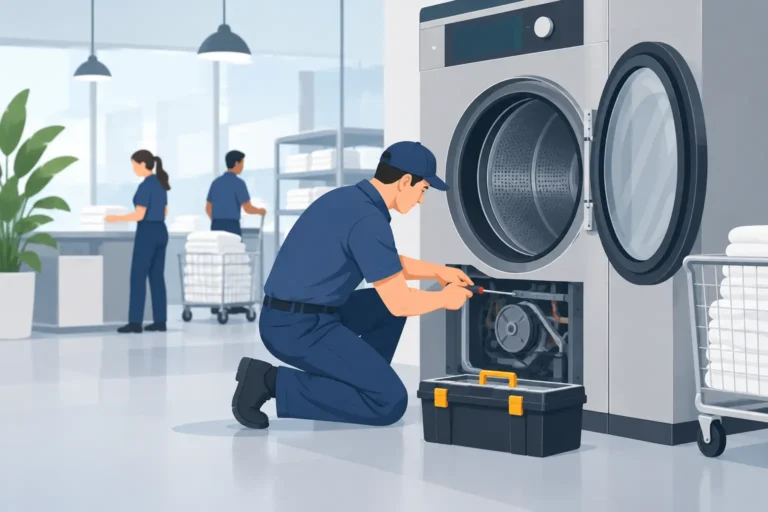
A commercial dryer that stops heating can turn a normal workday into a pile of wet laundry, frustrated tenants, and lost income. This commercial dryer maintenance guide focuses on the practical checks that help laundromat owners, property managers, and business operators avoid preventable interruptions without asking staff to become appliance technicians.
Commercial dryers work harder than household machines. Multiple loads a day create more lint, more heat, and more wear on moving parts. A simple maintenance routine protects drying performance, helps control utility costs, and gives you a better chance of catching a small issue before it takes a machine out of service.
Why Commercial Dryer Maintenance Pays Off
Dryers rarely fail at a convenient time. For a laundry room in an apartment community, one out-of-order unit can mean complaints that spread quickly. For a laundromat or hospitality business, a slow or non-heating dryer can directly affect revenue and customer trust.
Maintenance also matters for safety. Lint is highly flammable, and it does not stay neatly contained in the lint screen. It can build up in the vent path, blower housing, and surrounding areas over time. Good cleaning habits do not replace professional inspection, but they reduce the conditions that can lead to overheating and restricted airflow.
There is a cost trade-off to consider. Taking a machine briefly offline for cleaning or service can feel inconvenient during a busy period. Waiting until airflow is restricted, clothes take twice as long to dry, or the dryer shuts down completely is usually more disruptive and more expensive.
Daily and Weekly Checks for Commercial Dryers
The best routine is one your team can actually follow. Assign the work to a specific person or shift, and keep a simple log near the laundry area. That record can help a technician understand whether a problem is sudden or has been developing over time.
Clean the lint screen after every load
Empty the lint screen completely after each cycle, not just when it looks full. A partially blocked screen reduces airflow, makes the dryer run hotter, and extends drying times. If the screen has a film from dryer sheets or fabric-softener residue, wash it with warm water and mild dish soap, then let it dry fully before reinstalling it.
Never operate a commercial dryer without its lint screen in place. Lint can move deeper into the machine, where it is harder to remove and can interfere with internal components.
Watch for changes in drying time
Staff members often notice the first warning sign before an owner does: loads are coming out damp after a normal cycle. Do not assume users are overloading the machine. Longer drying times can point to a blocked vent, weak heat, a worn belt, a failing blower, or a control issue.
Ask staff to note which dryer is affected, whether the drum turns, whether it gets warm, and whether the issue happens with every load. Those details make diagnosis faster and help avoid unnecessary guesswork.
Keep the area around each dryer clear
Do not store boxes, cleaning supplies, carts, or bags against the dryer or behind it. Commercial equipment needs breathing room for air circulation and safe access. Clutter also makes it easier to miss a loose vent connection, a damaged gas line, or lint collecting on the floor.
At the end of each week, vacuum loose lint from around and beneath the machines. This is especially worthwhile in shared laundry rooms, where lint can travel farther than most people expect.
Monthly Maintenance That Prevents Slowdowns
Monthly checks are a good time to look beyond the lint screen. If your operation has several dryers, inspect one machine at a time so there is no confusion about which unit was checked or returned to service.
First, examine the dryer door and latch. A door that does not close securely may stop the machine from starting or interrupt a cycle. Check the gasket for tears, heavy buildup, or items caught around the opening. Wipe the surfaces clean so the door can seal properly.
Next, look at the exhaust vent connection behind the dryer. It should be secure, free of crushing, and routed without sharp bends whenever possible. A crushed or sagging duct restricts airflow. If you see disconnected venting, damaged material, or visible lint buildup near the connection, schedule service rather than pushing the machine through another busy week.
For coin-operated equipment, test payment and cycle-start functions while the laundry room is not crowded. A dryer that heats and tumbles perfectly still creates a problem if customers cannot start it or the timer behaves unpredictably. Prompt attention protects revenue and prevents customers from assuming the whole laundry room is unreliable.
Signs Your Dryer Needs Professional Service
Some maintenance tasks are appropriate for on-site staff. Electrical, gas, heating, motor, and internal airflow repairs should be handled by a qualified appliance technician. Commercial dryers combine high heat, moving parts, and, in many cases, gas connections. Trying to solve an internal problem without the right training can create a larger repair or a safety concern.
Call for service when you notice persistent warning signs such as:
- Clothes take more than one normal cycle to dry.
- The dryer tumbles but produces little or no heat.
- The machine stops mid-cycle, trips a breaker, or shows repeated error codes.
- You smell burning, gas, melting plastic, or unusually strong lint odor.
- The drum squeals, thumps, scrapes, or struggles to turn.
- The outside exhaust airflow feels weak while the dryer is running.
A gas smell requires immediate action. Stop using the dryer, avoid switches or open flames near the area, and follow your property’s gas-safety procedure. Do not restart the machine to see whether the smell goes away.
A Commercial Dryer Maintenance Guide for Property Managers
Property managers face a slightly different challenge from laundromat operators. The goal is not only to keep equipment running, but also to protect tenant satisfaction and avoid repeated service calls. A dryer that appears to work but leaves tenants with damp clothes can quickly become a recurring complaint.
Set clear expectations for residents or laundry-room users. Post a simple reminder to clean the lint screen, avoid overloading, and report unusual noises or poor drying results right away. Small issues reported early are easier to address than damage that has continued through dozens of cycles.
It also helps to track each machine by location or unit number. When a tenant says “the dryer by the window is broken,” your maintenance record should quickly identify its model, past repairs, and known concerns. This makes repair-versus-replacement decisions more practical, especially when managing older machines across multiple properties.
Replacement may make more sense when a dryer has repeated major failures, parts are hard to source, or energy use and downtime are climbing. On the other hand, a single worn belt, heating component, or airflow issue does not automatically mean the machine is finished. An honest diagnostic should explain the repair needed, the likely cost, and what to expect from the appliance afterward.
Build a Service Schedule Around Your Actual Usage
There is no single maintenance calendar that fits every commercial laundry setup. A lightly used apartment laundry room may need a different schedule than a busy laundromat running from morning through evening. The more loads you process, the more frequently lint control, vent inspection, and professional service should be scheduled.
Start with daily lint-screen cleaning, weekly cleanup around the equipment, and monthly visual checks. Then arrange periodic professional maintenance based on usage, machine age, and any history of airflow or heating problems. Keep service records, because patterns matter. If the same dryer repeatedly overheats, runs long, or needs the same repair, the underlying cause may be outside the part that was replaced.
For commercial laundry equipment in Murrieta, Temecula, Menifee, or Long Beach, Don’s Appliances can help diagnose dryer problems clearly and recommend a practical next step. Keeping one dependable dryer in service is helpful. Keeping the whole laundry operation predictable is what protects your customers, tenants, and schedule.
