
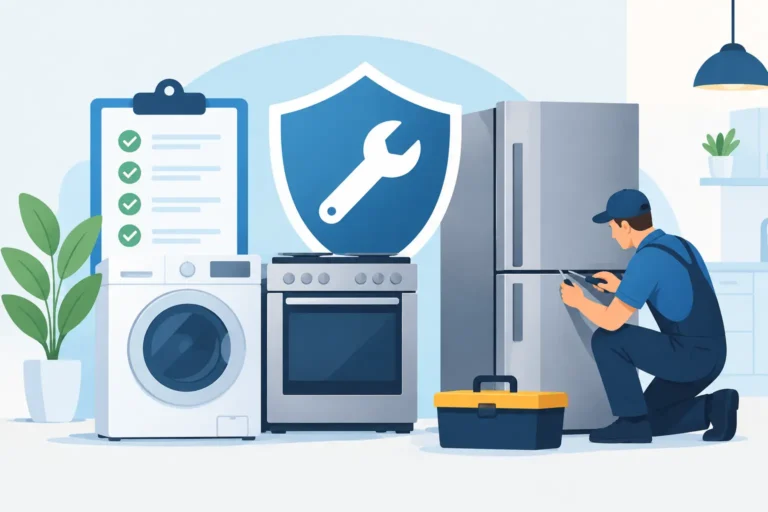
A refrigerator that stops cooling again a week after service can turn a normal day into spoiled groceries, missed work, and a lot of frustration. That is where an appliance repair warranty matters. A good warranty gives you a clear path back to the repair company if the same covered issue returns, instead of leaving you to wonder whether you will have to pay for the job twice.
For homeowners, renters, landlords, and laundry operators, the value is not just financial. It is knowing that the company standing in your kitchen, laundry room, or vacant rental unit stands behind its work. Still, warranties are not all written the same way. Knowing what yours covers helps prevent surprises and makes it easier to get help quickly when you need it.
What an Appliance Repair Warranty Usually Covers
A repair warranty generally covers the specific repair completed during your service visit. If a technician replaces a failed part, corrects a wiring issue, repairs a leak, or addresses another diagnosed problem, the warranty should explain how long that repair is protected and what happens if the same issue comes back.
Most repair warranties address two parts of the job: the replacement part and the labor used to install or repair it. These are related, but they are not always covered for the same amount of time. A manufacturer may provide its own limited warranty on a replacement part, while the repair company provides a separate warranty on the labor and workmanship.
At Don’s Appliances, a one-year warranty and a 100% customer-satisfaction commitment are meant to give customers practical reassurance after a repair. If there is a concern related to the work performed, it should be brought to the company’s attention promptly so the issue can be reviewed and handled fairly.
The key phrase is “related to the work performed.” A warranty is not a blanket promise that every future appliance problem will be free. Appliances have several systems working together. A refrigerator can have a repaired ice maker today and develop a separate compressor or defrost problem months later. A washer may receive a new drain pump, then later need a lid switch or inlet valve. Those are different repairs, even if they happen on the same machine.
What Is Usually Not Included
Clear exclusions are not a bad sign. They help set honest expectations before a technician begins work. An appliance repair warranty typically does not cover a new, unrelated failure, accidental damage, misuse, pest damage, power surges, plumbing problems outside the appliance, or issues caused by improper installation from another party.
Normal wear can also matter. If an older dryer receives a repair for a heating problem but the drum rollers fail later, the original repair may still be perfectly sound. The machine simply has another worn component. This is one reason a trustworthy technician should explain the overall condition of an appliance, not just replace the first failed part and leave you guessing about what may be next.
For landlords and property managers, damage caused by a tenant or conditions inside a unit may fall outside warranty coverage. The same can apply to commercial or coin-operated laundry equipment that experiences unusually heavy use. Ask about the terms upfront, especially if the appliance serves multiple residents, customers, or employees.
Why Written Warranty Terms Matter
A verbal promise is comforting, but written terms are easier to understand and use. Before approving a repair, ask how long the warranty lasts, whether it covers parts and labor, and what steps to take if the problem returns. You do not need technical knowledge to ask these questions. A reliable company should answer them in plain language.
It also helps to keep your invoice. The invoice should identify the appliance, the work completed, and any parts installed. If you call later, those details allow the office and technician to see what was done and determine whether your current issue appears connected to the original repair.
A good repair company will not hide behind confusing fine print. Just as important, a good customer understands that a warranty is intended to correct covered workmanship or part concerns, not to turn an aging appliance into a brand-new one. Both sides benefit when the expectations are clear.
How to Use Your Appliance Repair Warranty
If the appliance begins showing the same symptoms after a repair, do not keep restarting it, forcing doors shut, or repeatedly running cycles to see if it fixes itself. That can make diagnosis harder and, in some cases, cause additional damage. Turn the appliance off if there is a burning smell, smoke, sparking, a major water leak, or another safety concern.
Then contact the repair company as soon as practical. Have your service invoice available and describe what you are seeing. Useful details include whether the refrigerator is warm but the lights work, whether the washer stops at the same point in every cycle, or whether the oven displays an error code. A short video can sometimes help document an intermittent issue, but only if doing so is safe.
When a technician returns, the goal is to determine whether the issue is connected to the previous repair. If it is, the warranty process should be straightforward. If it is not, the technician should explain the new diagnosis and provide clear pricing before additional work begins.
A Warranty Is Also a Sign of Accountability
Not every repair is the right financial choice. On a newer, well-maintained appliance, a quality repair backed by a solid warranty can be far more sensible than replacement. You avoid the cost of a new unit, delivery delays, installation changes, and the hassle of disposing of the old appliance.
On the other hand, an older appliance with repeated failures may be nearing the point where replacement makes more sense. A warranty does not change that reality, but it does protect you from paying again if the repair itself does not hold up. The best technicians will give you honest repair-versus-replacement guidance based on the appliance’s age, condition, repair history, and the cost of the needed work.
That honesty is especially valuable when a broken appliance affects a rental unit or a business. A landlord may need to restore a refrigerator quickly to protect tenant satisfaction. A laundromat owner may need a coin-operated washer working again to prevent lost revenue. In those cases, the right decision is not always the cheapest immediate fix. It is the option that best protects the property, schedule, and long-term budget.
Questions Worth Asking Before You Approve Service
Before work begins, make sure you understand the answer to a few practical questions. How long is the warranty? Does it cover both parts and labor? Is the warranty limited to the specific repair? What should you do if the same problem returns? And are there conditions, such as water damage or power issues, that could affect coverage?
You can also ask whether the technician sees other worn components that may need attention soon. That does not mean you should approve every recommended repair. It means you can make an informed decision instead of being surprised later. Clear, honest pricing and a straightforward explanation are part of good service.
Choose Repair Support You Can Count On
A warranty is most useful when it comes from a local repair company that answers the phone, keeps records, and treats a return visit as a responsibility rather than an inconvenience. Friendly technicians who respect your home and schedule make the process easier, but accountability after the repair is what builds real trust.
Whether you are dealing with a warm refrigerator in Murrieta, laundry piling up in Long Beach, or an appliance problem at a rental property, ask about warranty coverage before the work starts. Then keep your service paperwork and call promptly if the same covered problem returns. A dependable repair should restore more than an appliance – it should help restore your routine and your peace of mind.
