
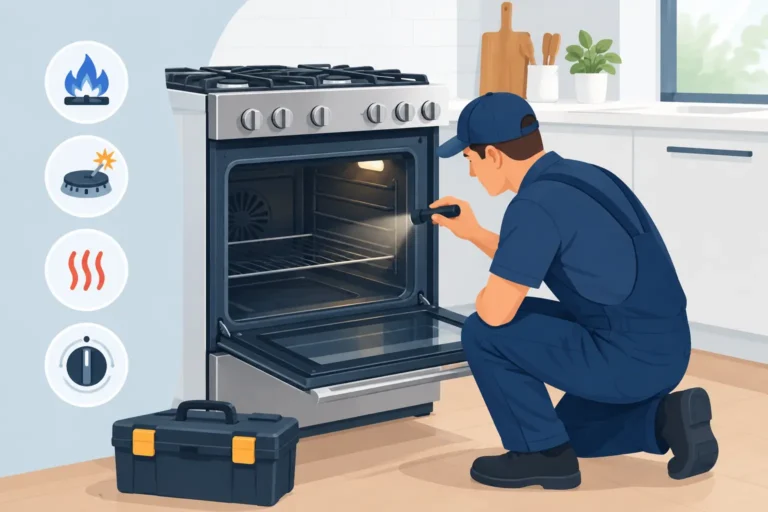
A gas oven that will not heat can turn a normal dinner plan into takeout, wasted groceries, and a frustrating evening. Gas oven repair is not just about getting heat back – it is about making sure your appliance operates safely, cooks evenly, and does not create a risk inside your home.
Some oven problems have a simple explanation, such as a tripped breaker or a clock that is set incorrectly. Others involve ignition parts, gas flow, wiring, or controls that need professional testing. Knowing the difference can help you protect your household, avoid unnecessary replacement costs, and get back to cooking with confidence.
Common Signs You Need Gas Oven Repair
The clearest sign is an oven that will not heat at all. You may hear clicking, see the igniter glow, or smell gas briefly, but the burner never lights. In many modern gas ovens, a weak igniter is often the cause. It may glow without becoming hot enough to open the gas valve and ignite the burner.
Uneven cooking is another common concern. If cookies brown heavily on one side, casseroles take far longer than expected, or a recipe comes out undercooked in the center, the oven may not be reaching or holding the temperature shown on the display. A failing temperature sensor, control issue, damaged door gasket, or burner problem can all contribute.
Pay attention if the oven flame looks unusual. A healthy gas flame is generally blue and steady. Yellow or orange flames, delayed ignition, popping noises, or flames that seem too large can point to combustion or burner issues. Those symptoms deserve prompt service rather than trial-and-error adjustments.
Other reasons to schedule service include a gas odor that continues after ignition, an oven door that will not close securely, a display that is blank or showing an error code, and an oven that keeps shutting off mid-cycle. For landlords and property managers, these issues can quickly become a tenant-satisfaction problem, especially when the appliance is the only working cooking option in a rental unit.
What to Do When You Smell Gas
A brief gas smell when a burner is first lighting can happen, but a strong or persistent odor is different. Do not try to locate a leak with a flame, and do not keep attempting to light the oven.
If you smell gas, turn the appliance off if you can do so safely. Avoid operating light switches, using electrical appliances nearby, or creating a spark. Leave the area and contact your gas utility or emergency services if the smell is strong, you hear hissing, or anyone feels dizzy or unwell. Once the immediate safety concern has been addressed, a qualified appliance technician can evaluate the oven itself.
This is one repair category where waiting to see whether the problem goes away is rarely a good plan. Your family’s safety comes first.
Why an Oven May Not Heat Properly
Gas ovens rely on several parts working together. The igniter starts the heating process, the gas valve supplies fuel, the burner distributes the flame, and the sensor and electronic controls manage temperature. A failure in any one of these components can make the oven unreliable.
A weak bake igniter is especially common in ovens that take a long time to preheat or only heat intermittently. The igniter can wear down gradually, so the change may be easy to miss at first. You may find yourself adding 10 or 15 minutes to every recipe before the oven finally stops heating altogether.
Temperature problems can be more complicated. An oven that runs 50 degrees too hot may be dealing with a faulty sensor, a calibration issue, or a control board problem. The right repair depends on the model and the results of testing. Replacing parts without diagnosis can waste money and still leave you with the same cooking issue.
Sometimes the cause is more basic. A loose oven door seal lets heat escape, which can extend cook times and make the kitchen uncomfortably warm. Food or grease around the burner can also affect ignition and flame quality. Cleaning visible spills from a cool appliance is reasonable, but disassembling gas components or attempting to alter gas connections is not a homeowner repair.
A Note About Oven Thermometers
An inexpensive oven thermometer can help confirm that cooking temperatures seem off, but it does not always tell the full story. Oven temperatures naturally cycle above and below the setting as the appliance maintains heat. Test over a complete preheat and cooking cycle rather than relying on one quick reading.
If the temperature is consistently far off, call for service. A technician can test the sensor, burner operation, and controls to determine whether calibration is appropriate or a part has failed.
Safe Checks You Can Make Before Scheduling Service
There are a few safe, practical checks that may save time during your appointment. Confirm that the oven is receiving power, since electronic igniters and controls need electricity even though the appliance uses gas. Check the circuit breaker if the display is dead, and make sure a nearby outlet has not been switched off.
Make sure the oven is not in a timed bake, delay start, Sabbath, or child-lock setting that affects normal operation. Your owner’s manual can explain those settings for your model. If the oven has a clock display, verify that it is set correctly after a power outage.
Look through the oven window or open the door briefly after starting a bake cycle to see whether the igniter is glowing. Do not touch it. Make a note of what happens: whether it clicks, glows, lights late, lights briefly and goes out, or never begins heating. Those details help make the diagnostic visit more efficient.
Do not use the oven if you smell ongoing gas, see damaged wiring, notice scorch marks, or suspect a gas leak. Also, never use an oven to heat your home. It is not designed for that purpose and can create serious safety hazards.
Repair or Replace: What Makes Financial Sense?
A broken oven does not automatically mean you need a new range. Many issues, including igniters, sensors, door hinges, gaskets, and some control-related problems, can be repaired at a cost that makes sense compared with replacement. This is particularly true when the rest of the appliance is clean, dependable, and a good fit for your kitchen.
Replacement may be worth considering when the oven has repeated major failures, parts are unavailable, repair costs are high relative to a comparable new unit, or the appliance has broader condition problems such as heavy rust, damaged insulation, or failing burners and controls. Age matters, but condition and repair history matter more.
For a rental property, the decision may also depend on downtime. A repair that restores safe operation quickly can be the better choice when tenants need a working kitchen. On the other hand, recurring service calls can become more expensive than a planned replacement. Clear diagnostics and honest pricing make that decision easier.
What a Professional Gas Oven Repair Visit Should Include
A quality service visit begins with listening. The technician should ask what the oven is doing, when the problem started, and whether there have been error codes, gas odors, power outages, or recent changes in performance.
From there, the oven should be tested carefully rather than guessed at. That may include checking ignition, burner operation, temperature response, electrical connections, safety components, and the condition of the door and seals. Once the cause is identified, you should receive a plain-language explanation of the repair options, expected costs, and whether repair is practical for the appliance.
At Don’s Appliances, our friendly technicians respect your home and schedule while providing clear, honest pricing. We have served Southern California households and property owners since 1983, with a one-year warranty and a commitment to helping customers make cost-conscious choices.
Help Your Oven Last Longer After Repair
Routine care will not prevent every failure, but it can reduce avoidable problems. Wipe up spills after the oven cools, especially sugary or greasy spills that can bake onto components. Avoid slamming the door, and do not line the oven bottom or racks with foil unless the manufacturer specifically allows it. Foil can interfere with airflow and, in some models, damage surfaces or sensors.
If cooking results begin changing, do not wait until a holiday meal or a tenant move-in date to address it. An oven that takes longer to preheat or bakes unevenly is often giving you an early warning. Scheduling service before a complete failure gives you more control over timing and helps keep everyday routines moving.
