
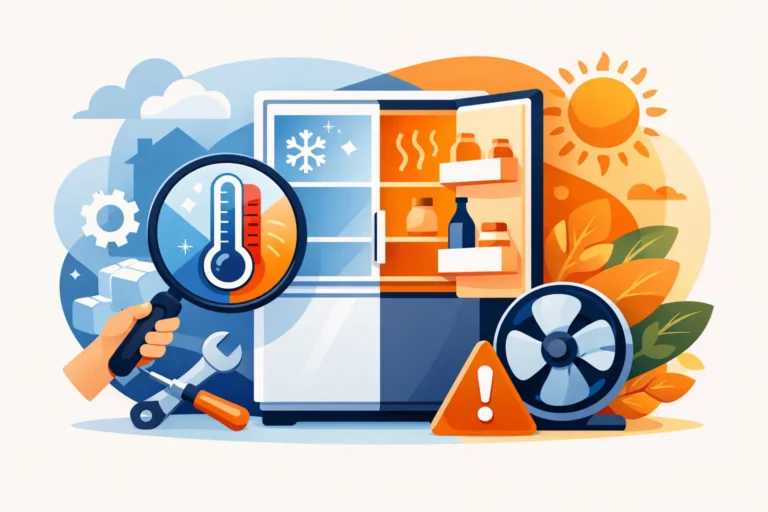
A refrigerator that feels warm inside can turn a normal grocery run into a stressful race against the clock. If you are wondering why refrigerator is warm, start by protecting your food, then look for a few simple clues. Some causes are easy to correct at home. Others need a trained technician before a small cooling problem becomes a failed refrigerator and a kitchen full of spoiled groceries.
Protect Your Food Before Troubleshooting
Your refrigerator should generally hold food at or below 40°F. If milk, leftovers, meat, or other refrigerated items have been sitting warm for several hours, use caution. When in doubt, throw out perishable food that has been above a safe temperature too long. Food poisoning is not worth trying to save a few groceries.
Keep the refrigerator and freezer doors closed as much as possible while you investigate. Each time a door opens, more warm kitchen air enters the compartment and makes the unit work harder. If the refrigerator is clearly not cooling and you have a cooler with ice, move the most perishable items first. Frozen food that still has ice crystals may be safe to refreeze, but food that is fully thawed and warm should be handled carefully.
A warm refrigerator does not always mean the entire appliance has failed. The freezer may still be cold, one section may be warmer than the other, or the problem may come and go. Those details help narrow down the cause.
Why Is Your Refrigerator Warm? Common Causes
The temperature setting was changed
It sounds simple, but temperature controls can get bumped while loading groceries, cleaning shelves, or reaching for a container. Check that the refrigerator setting has not been moved to a warmer position or turned off. If your model has a digital display, make sure it is set near 37°F for the refrigerator and around 0°F for the freezer.
After correcting a setting, give the appliance time. A refrigerator may need several hours to stabilize, especially after the doors have been open frequently or the unit has been packed with room-temperature groceries.
Airflow is blocked inside the refrigerator
Cold air has to move freely from the freezer area or cooling vents into the refrigerator compartment. Large containers, overfilled shelves, and food pushed against interior vents can stop that circulation. The result can be a freezer that seems normal while the fresh-food section becomes warm.
Look for vents along the back wall, ceiling, or sides of the refrigerator. Rearrange food so air can circulate around them. Avoid tightly packing every shelf. A full refrigerator can hold its temperature well, but an overstuffed one can block the airflow it needs to cool evenly.
Dirty condenser coils are making the unit work too hard
Condenser coils release the heat pulled from inside your refrigerator. Depending on the model, they may be behind the appliance or underneath it. Over time, dust, pet hair, and kitchen debris can cover the coils and reduce their ability to release heat.
If the exterior sides of the refrigerator feel hotter than usual, dirty coils may be part of the problem. Unplug the unit before cleaning. Use a coil brush or vacuum carefully, and leave enough space around the appliance for ventilation. In homes with pets, this basic maintenance is especially worthwhile.
The door is not sealing properly
A worn, torn, or dirty door gasket lets cool air leak out and warm air leak in. The refrigerator then runs longer, temperatures rise, and moisture or condensation may appear around the door or inside the compartment.
Inspect the rubber seal around the door for cracks, gaps, or food residue. Wipe it clean with mild soap and water, then test whether the door closes firmly. If a sheet of paper slides out easily when the door is shut on it, the gasket may not be sealing well. A damaged gasket often needs replacement, but a door that is misaligned or overloaded can also cause sealing trouble.
Frost is blocking the evaporator area
If the freezer has heavy frost buildup, the refrigerator may have a defrost-system issue. Frost can cover the evaporator coils and prevent air from moving through the appliance. You may notice weak airflow from vents, a freezer wall covered in ice, or a refrigerator section that is warm even though the freezer is still somewhat cold.
Turning the refrigerator off to fully defrost it may temporarily restore cooling, but that does not always fix the underlying reason the frost developed. A failed defrost heater, sensor, timer, or control can cause the ice to return. This is a common situation where a proper diagnosis can prevent repeat problems and wasted food.
A fan, compressor, or control component has failed
Refrigerators rely on fans and electrical components to move heat and cold air where they belong. A failed evaporator fan can leave the freezer cold while the refrigerator warms up. A condenser fan problem can cause the compressor area to overheat. Issues with the compressor, start relay, thermostat, or electronic control board can stop cooling altogether.
These repairs are not good candidates for guesswork. Replacing parts without confirming the cause can cost more than a service call and still leave you with a warm refrigerator. A technician can check temperatures, airflow, electrical components, and the sealed cooling system to identify what is actually wrong.
Safe Checks You Can Make at Home
Before scheduling service, check whether the refrigerator has power and whether the interior light turns on. Listen for signs of operation, such as a gentle fan sound or compressor hum. Silence does not always mean failure because refrigerators cycle on and off, but a repeated clicking sound, loud buzzing, or a hot burning smell should be taken seriously.
Make sure the appliance is not pressed tightly against the wall and that its vents are clear. Check for blocked interior vents, a door left slightly open, and obvious frost. If the refrigerator was recently moved, installed, or unplugged, it may need time to settle and cool after being restarted.
Do not chip ice with a knife, pry at refrigerator parts, or repeatedly unplug and restart the unit. That can damage plastic liners, puncture cooling components, or make diagnosis more difficult. If you see water near electrical connections or notice a burning odor, unplug the refrigerator if it is safe to do so and arrange professional service.
When to Call for Refrigerator Repair
Call for help when the refrigerator stays warm after you have checked the settings, airflow, door seal, and condenser area. Service is also the smart move when there is heavy frost, water leaking onto the floor, unusual noise, a freezer that works but a refrigerator section that does not, or food temperatures that keep rising.
For landlords and property managers, a warm refrigerator can quickly become a tenant-satisfaction issue and a potential food-loss claim. Prompt diagnosis helps get the appliance back in service without automatically replacing it. The right choice depends on the refrigerator’s age, condition, repair needed, and the cost of a comparable replacement.
Don’s Appliances provides clear, honest refrigerator repair guidance for homes and properties in Long Beach, Murrieta, Menifee, Temecula, and nearby communities. A friendly technician can explain the problem in plain language, discuss repair-versus-replacement options, and help you make a cost-conscious decision.
A refrigerator rarely chooses a convenient time to stop cooling. Keep the doors closed, protect the food you can, and get a qualified diagnosis before a warm compartment turns into a larger and more expensive disruption.
