
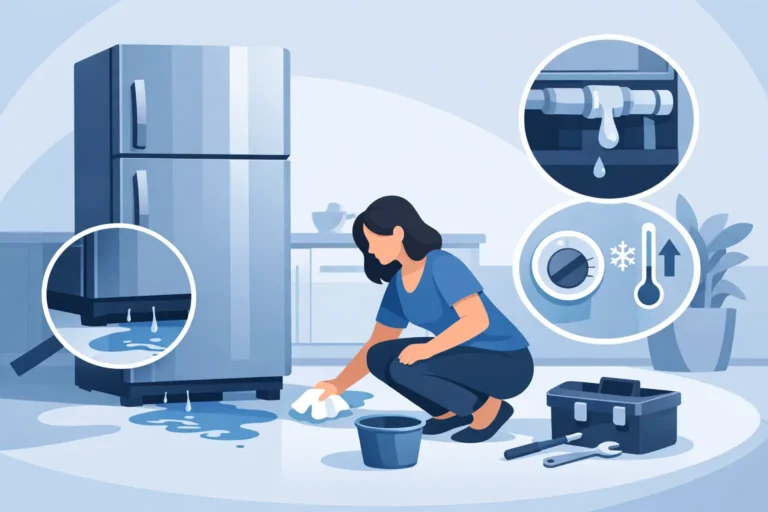
A puddle under the refrigerator can turn a normal morning into a stressful cleanup fast. The most common refrigerator leak causes are often manageable, but the water can also signal a cooling, drainage, or water-line problem that needs attention before it damages flooring, cabinets, or the food you rely on.
Start by protecting the area. Move rugs, towels, and anything stored near the refrigerator, then dry up standing water. If water is close to an electrical outlet or appears to be coming from behind the unit, avoid reaching into the back of the refrigerator. Shut off the water supply if your refrigerator has an ice maker or dispenser, and schedule a professional diagnosis if the source is not obvious.
First, Find Out Where the Water Is Coming From
The location of the water provides a useful clue. Water inside the fresh-food compartment usually points to a blocked defrost drain or an issue with food placement and airflow. Water beneath the front of the refrigerator may be condensation, a full drip pan, or a clogged drain. A wet floor near the back of a refrigerator with an ice maker is more likely connected to the water supply line or its fittings.
Do not assume every puddle comes from the refrigerator itself. A leaking sink line, dishwasher connection, or nearby plumbing issue can travel beneath cabinets and appear next to the appliance. Dry the area completely, place a few paper towels around the refrigerator, and check again after several hours. This can help narrow down where the leak begins.
Common Refrigerator Leak Causes
A clogged defrost drain
Many refrigerators automatically defrost frost buildup. The melted water is meant to flow through a small drain opening and tube into a pan underneath the appliance, where it evaporates. When food debris, ice, or buildup blocks that path, water backs up and can spill into the refrigerator or onto the floor.
You may notice ice or water collecting beneath the crisper drawers, moisture at the bottom of the freezer, or a recurring puddle at the front of the unit. A clogged drain can sometimes be cleared, but forcing tools into the drain or using excessive heat can damage parts. If the drain freezes repeatedly, there may be another issue affecting the defrost system.
A leaking water supply line
Refrigerators with an ice maker or door dispenser use a water line behind the appliance. Over time, the tubing can crack, become pinched when the refrigerator is pushed back, or loosen at a connection. This type of leak may be slow enough to go unnoticed until flooring begins to swell or mildew develops behind the unit.
Carefully pull the refrigerator forward only if it is safe to do so and you have help. Check for obvious moisture around the water line connection, but do not overtighten fittings. Plastic tubing and connectors can become brittle with age. Turning off the refrigerator water supply is the safest temporary step until the source is repaired.
A damaged or overflowing drain pan
The drain pan sits beneath the refrigerator and catches defrost water. In normal operation, the heat from the compressor helps the water evaporate. A cracked, misaligned, or unusually full pan can allow water to reach the floor.
Some pans are not designed for easy removal, so trying to pull one out can create more trouble. A pan that is simply damp may be normal. A pan filled with standing water, however, may point to a defrost, drainage, or airflow issue that is preventing proper evaporation.
Condensation from a door that is not sealing
If warm, humid kitchen air gets into the refrigerator, it creates excess condensation. A worn, dirty, torn, or misaligned door gasket can let that happen. The refrigerator may also run longer than usual as it works to maintain temperature, raising energy use while moisture builds inside.
Check the gasket for crumbs, sticky residue, or visible gaps. Clean it gently with mild soap and water, then dry it fully. Also make sure food containers are not preventing the door from closing. If the gasket is cracked or the door sits unevenly, replacement or adjustment may be needed.
A refrigerator that is not level
A refrigerator needs a slight backward tilt so the doors close properly and defrost water moves where it should. If the unit leans too far forward or side to side, doors may not seal well and water may not drain correctly.
This is especially common after a new floor installation, a move, or an appliance that has been pulled out for cleaning. Leveling can be a straightforward adjustment, but large refrigerators are heavy. Avoid placing shims or household objects under the appliance unless you are confident they are stable and appropriate for the job.
Too much frost or a defrost system problem
Heavy frost in the freezer can block drainage channels and eventually melt into places where it does not belong. A failing defrost heater, sensor, timer, or control can contribute to this problem. You may see a sheet of ice at the freezer bottom, inconsistent temperatures, or food softening and refreezing.
Unplugging the refrigerator for a full manual defrost may temporarily clear the ice, but it does not always solve the part failure that caused it. If the leak returns after a short time, a technician should check the defrost components rather than repeatedly thawing the appliance.
An ice maker issue
A leaking ice maker can be caused by a cracked fill tube, a faulty inlet valve, a loose connection, or an ice maker that overfills. Water may freeze in unexpected places, drip into the freezer, or run down to the kitchen floor after the door is opened.
Turn off the ice maker and water supply if you suspect this is the source. This helps prevent ongoing water damage while preserving the refrigerator’s basic cooling function. If the refrigerator is not cooling properly as well as leaking, move perishable food to another cold location and request service promptly.
What You Can Safely Do Before Scheduling Repair
A little cleanup and observation can make a repair visit more efficient. Dry the floor and the inside bottom of the refrigerator, remove any food blocking air vents, and check that the doors close without resistance. If there is a water dispenser or ice maker, shut off the water supply when the leak appears to be behind or beneath the refrigerator.
Avoid removing rear panels, cutting water lines, or attempting electrical repairs. Refrigerators combine water, electricity, moving fans, and sealed cooling components. What starts as a simple leak can become a larger problem if a fitting, wire, or panel is damaged during a do-it-yourself repair.
It also helps to take a photo of the puddle, frost buildup, or visible dripping before drying everything. Note whether the refrigerator is still cooling normally, whether the ice maker is operating, and when the leak occurs. Those details give a technician a faster starting point.
When a Refrigerator Leak Needs Professional Help
Call for service when water keeps returning, the refrigerator is warm, frost is building heavily, or you can see water coming from a line or fitting. Prompt help is also wise when water has reached wood flooring, baseboards, cabinets, or a lower-level ceiling. The cost of addressing the appliance early is often much lower than repairing water damage later.
For landlords and property managers, a refrigerator leak deserves quick attention even if the unit still cools. Water can affect neighboring units, create tenant frustration, and leave a vacant property with hidden moisture damage. A clear diagnosis also helps determine whether repair makes financial sense or whether replacement is the better long-term choice.
At Don’s Appliances, friendly technicians explain what they find in practical terms and provide clear, honest pricing before work moves forward. Whether the issue is a blocked drain, failing ice maker connection, or a more involved defrost problem, the goal is to protect your home, schedule, and budget.
A refrigerator should keep food cold, not leave you wondering where the next puddle will appear. Dry the area, shut off the water when needed, and arrange a repair before a small leak has time to become a damaged floor or a spoiled grocery bill.
