
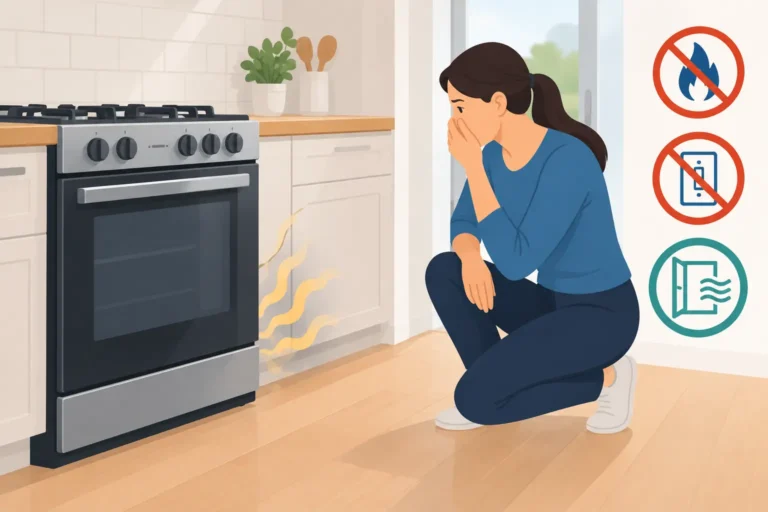
A gas smell in the kitchen is not a problem to wait out. Can ovens leak gas? Yes. While modern gas ovens have several safety features, gas can escape when a component fails, a connection is damaged, or the burner does not ignite correctly. Knowing what to do in those first few minutes can protect your home, family, tenants, and property.
If you smell a strong gas odor, hear a hissing sound, or feel dizzy or nauseated, leave the building immediately. Do not light a match, use a lighter, turn switches on or off, unplug appliances, or use a phone inside the home. Once you are safely outside and away from the building, call 911 or your gas utility’s emergency number. Do not go back inside until emergency personnel say it is safe.
Can ovens leak gas even when they are off?
Yes. A gas oven can leak while it is running, while it is trying to light, or even when the controls appear to be off. The oven itself may not be the only source, either. The flexible gas connector, shutoff valve, regulator, or pipe connection behind the range can also develop a leak.
Natural gas is odorless by itself, but utility companies add a sulfur-like odor so people can detect it. Many homeowners describe it as smelling like rotten eggs. Propane has a similar added odor. Treat that smell seriously, especially if it is noticeable away from the oven or stays in the room after the appliance has been turned off.
A brief, faint gas smell for a second or two as a burner lights can happen with some gas ranges. It should disappear as soon as the flame is established. A smell that lingers, gets stronger, returns after cooking, or appears when the appliance is not in use is not normal.
Common reasons a gas oven may leak
The cause is not always visible from the outside. Gas appliances use valves, burners, ignition parts, fittings, and safety controls that must all work together correctly. A problem in one area can create an odor or release unburned gas.
A burner or oven igniter is not lighting properly
A surface burner that clicks repeatedly without lighting, or an oven that takes too long to heat, may be releasing gas before ignition occurs. Grease, food debris, moisture, or a worn ignition component can interfere with the spark or flame.
With an oven, a weak glow-bar igniter is a common concern. It may glow but fail to draw enough power to open the gas safety valve promptly. That can leave the oven unable to light correctly and may allow gas to build up before ignition. Do not keep trying to restart an oven that fails to ignite.
A control valve is worn or damaged
The valves behind your oven knobs regulate gas flow. Over time, internal parts can wear out, particularly on older ranges that get heavy daily use. A faulty valve may not close fully when you turn the control off, allowing a small amount of gas to escape.
This is not a repair to handle with household tools. Gas valves need proper diagnosis and the correct replacement part for the appliance model.
Loose or aging gas connections
Your range connects to the home’s gas supply through a shutoff valve and approved connector. A connection can be damaged during a move, an installation, flooring work, or a previous repair. Corrosion and normal aging may also affect fittings over time.
If the gas smell seems strongest behind or beside the oven, do not pull the appliance away from the wall to investigate. Moving the range could worsen a damaged connection. Leave the area and call for professional help.
Burner ports are clogged or the flame looks wrong
A healthy gas flame is usually steady and mostly blue. Yellow or orange flames, uneven flames, delayed ignition, or flames that lift away from the burner can signal a burner issue or an air-to-gas mixture problem. These symptoms do not automatically mean there is a gas leak, but they do mean the appliance should be inspected.
Food spills and grease can block burner ports. Basic surface cleaning may help in some cases, but avoid pushing sharp objects into ports or taking apart gas components if you are unsure. A small cleaning mistake can turn into an ignition or gas-flow issue.
What to do if you suspect your oven is leaking gas
Your next step depends on the severity of the situation. When the odor is strong, persistent, or accompanied by a hissing sound, treat it as an emergency. Get everyone out, including pets, and call emergency services or the gas utility from outside.
For a faint odor that happens only when the oven tries and fails to ignite, turn the oven control off if you can do so without approaching a strong odor. Open doors and windows only if they are easy to reach on your way out. Then arrange for a qualified appliance technician to inspect the oven before using it again.
Do not test for a suspected gas leak with a flame. Do not assume that an open window makes it safe to keep cooking. And do not rely on the smell disappearing as proof that the problem is gone. Gas odors can come and go depending on airflow, while the underlying problem remains.
When should you call an appliance repair technician?
Call for service when the odor is mild but recurring, the oven will not ignite, burners ignite late, flames look abnormal, or you smell gas after the appliance has been shut off. A trained technician can check the ignition system, burner operation, safety valve, control valves, and accessible appliance connections to identify the real issue.
If the gas utility shuts off service because of a suspected leak, follow its instructions first. The utility may require a repair and safety check before gas service can be restored. In some cases, the issue may be with household piping rather than the oven, and a licensed gas plumber may be needed.
For rental homes and managed properties, a suspected gas leak deserves prompt action. Waiting for a convenient maintenance window can put tenants at risk and turn a manageable repair into a bigger disruption. Document the concern, keep residents away from the appliance, and arrange the appropriate emergency response or repair as quickly as possible.
Can an old gas oven be safely repaired?
Often, yes. A failed igniter, worn burner, damaged valve, or bad connector can frequently be repaired without replacing the whole range. The practical choice depends on the oven’s age, overall condition, part availability, and the cost of repair compared with replacement.
An older oven that has otherwise been dependable may be worth repairing. But if it has repeated ignition failures, heavily corroded parts, unavailable components, or multiple costly problems at once, replacement may be the safer long-term choice. A good technician should explain both options clearly, not pressure you into a decision.
Gas appliances deserve respect, but you do not have to face a suspected problem alone. If your oven smells like gas, stop using it and choose the safest next step based on the severity of the odor. For non-emergency oven concerns in Murrieta, Menifee, Temecula, Long Beach, and nearby communities, Don’s Appliances can provide straightforward diagnostics and clear, honest guidance on getting your kitchen safely back to normal.
