
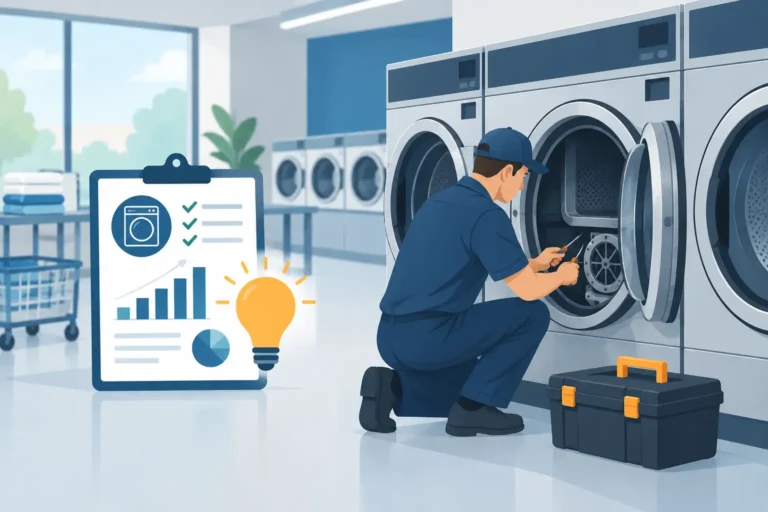
A dryer that stops heating at a laundromat is not just one machine out of order. It is a line of customers waiting with wet clothes, a growing risk of lost sales, and a daily routine that suddenly feels unreliable. This laundromat dryer downtime case study uses a representative service scenario to show how a fast, careful diagnosis can protect revenue without rushing into an unnecessary equipment replacement.
For laundromat owners, apartment laundry room operators, and property managers, the lesson is simple: the first repair decision affects much more than the current service call. It affects customer trust, utility costs, staff time, and whether a small failure turns into a larger shutdown.
The Call: A Dryer Bank Starts Falling Behind
The operator noticed the problem during a busy afternoon. One stacked commercial dryer was tumbling normally, but customers reported that loads were still damp after a full cycle. Within a few hours, the dryer was effectively unavailable. Customers shifted to the remaining machines, which extended wait times and put extra strain on equipment that was already working hard.
The initial temptation was to label the dryer as “not heating” and order a replacement heating part immediately. That approach can sometimes work, but it also creates risk. A dryer can lose heat because of an airflow restriction, a failed thermostat or thermal safety device, an ignition problem, a damaged connection, or an issue with the power supply. Replacing one part without identifying the cause may bring the same problem back days later.
In a commercial laundry setting, guesswork is expensive. The goal is not simply to make the drum warm again. The goal is to restore safe, consistent drying performance and reduce the chance of another interruption during the next rush.
What the Diagnosis Found
The service approach started with the basics: confirm the customer’s report, check the machine’s operation, and inspect the dryer’s airflow path. The drum turned, but heating performance was inconsistent. The dryer was also taking too long to move moisture out of loads.
That last detail mattered. Dryers need both heat and airflow. If hot air cannot move properly through the drum and exhaust system, clothes take longer to dry, components run hotter than they should, and protective safety devices may shut the heat down. A dryer may appear to have a heating failure when restricted ventilation is the underlying problem.
In this representative case, the inspection pointed to two related concerns: a worn heating-control component and restricted exhaust airflow. The component needed replacement, but replacing it alone would not address the conditions that likely contributed to the failure. The operator received a clear explanation of both findings, along with the difference between the immediate repair and the airflow work needed to help prevent repeat downtime.
That kind of explanation is especially valuable for owners managing several machines. They need to know what failed, why it may have failed, what must be repaired now, and what can be planned for the near future. Clear, honest pricing and practical options make that decision easier.
The Repair Decision: Fix the Cause, Not Just the Symptom
The repair plan focused on bringing the dryer back online safely while addressing the condition that was slowing performance. The failed control component was replaced, electrical connections were checked, and the dryer was tested through a complete heating cycle. The exhaust path was also addressed so the machine could move hot, moist air as designed.
The trade-off was straightforward. A minimal repair may cost less at the moment, but it can leave the operation vulnerable if airflow remains restricted. A more complete repair requires a little more attention upfront, yet it may help avoid another emergency call, extended dry times, and customer complaints.
Not every dryer problem requires a broad repair. If a machine is otherwise in good condition and the fault is isolated, a focused repair is often the most cost-conscious choice. On the other hand, if a dryer has repeated heating failures, extensive wear, or parts that are difficult to source, replacement can be the better long-term decision. The right answer depends on the machine’s age, repair history, overall condition, and the cost of keeping it out of service.
Results That Matter to a Laundry Operation
Once the dryer was repaired and airflow was restored, the machine returned to normal service. More importantly, the operator had a clearer picture of what had caused the interruption and what to watch for across the rest of the dryer bank.
The most meaningful result was not simply that one dryer heated again. It was that the operator avoided letting a manageable problem spread into a larger operational issue. During busy periods, every unavailable dryer forces more use onto the remaining units. That can create longer customer waits, reduce turnover, and accelerate wear on the equipment still running.
For a landlord or property manager, the same issue can look different but carry similar consequences. A shared laundry room with a nonworking dryer creates tenant frustration quickly. Residents may need to make extra trips, pay for additional cycles, or take laundry elsewhere. Prompt repair helps protect the property experience as well as the equipment.
Laundromat Dryer Downtime Case Study: The Bigger Lesson
The central lesson from this laundromat dryer downtime case study is that drying complaints should be treated as performance problems, not just part failures. When a commercial dryer begins taking too long, producing inconsistent heat, or shutting down during cycles, the cause may involve several connected factors.
Operators can often spot trouble early by paying attention to changes in normal use. A machine that once dried a standard load in one cycle but now needs two is sending a signal. So is a dryer that feels unusually hot around the exterior, has a burning odor, trips safety controls, or receives repeated complaints from customers.
Waiting until a machine stops completely is understandable, especially when an operation is busy and budgets are tight. But early service is usually easier to schedule and may prevent a small repair from becoming a larger disruption. It can also help identify ventilation concerns before they affect multiple dryers.
Practical Steps to Reduce Future Downtime
No laundromat can eliminate every equipment failure. Commercial dryers work hard, often for long hours, and parts eventually wear out. Still, a few consistent habits can reduce avoidable interruptions.
Keep lint collection areas cleaned on schedule and make sure staff know when an unusual buildup needs attention. Watch drying times across machines instead of relying only on customer complaints. If one dryer begins lagging behind the others, schedule a check before it becomes unusable.
It also helps to keep a basic equipment record. Note the date of each repair, the symptoms reported, parts replaced, and any airflow or electrical concerns found during service. Over time, that record makes repair-versus-replacement decisions more practical. It may reveal that one unit has an isolated issue while another is becoming a frequent source of lost time and money.
Finally, choose service that starts with diagnosis rather than assumptions. A technician should explain the problem in plain language, outline the available repair path, and let you know when a larger investment may or may not make sense. That is how commercial laundry equipment gets back to work with fewer surprises.
For laundromat operators and property managers in Long Beach, Murrieta, Menifee, and Temecula, Don’s Appliances provides responsive commercial laundry repair backed by decades of hands-on experience. When a dryer is down, a clear answer and a practical repair plan can help keep customers moving and your operation on track.
