
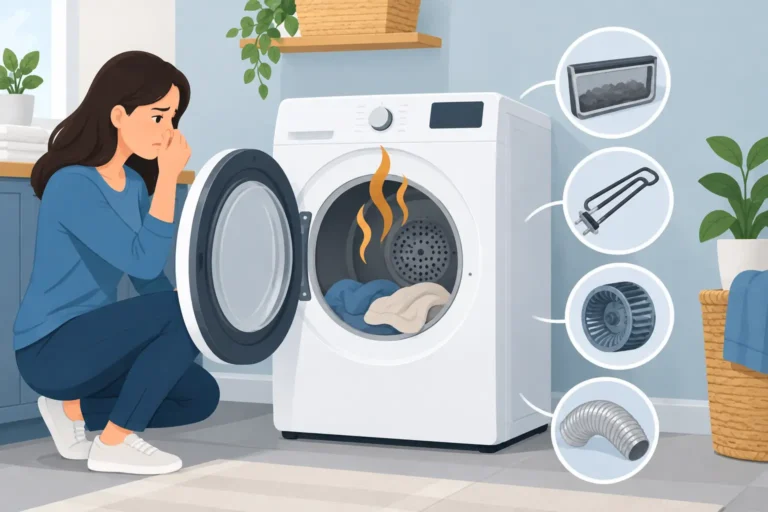
A burning smell from the dryer can turn an ordinary laundry day into a real safety concern. If you are asking, “what causes dryer burning smells,” the short answer is that heat is building where it should not – often around lint, restricted airflow, an electrical part, or a worn mechanical component. The right response depends on the smell, how strong it is, and whether the dryer is also overheating, making noise, or failing to dry clothes.
If the odor is strong, smoky, electrical, or continues after you stop the machine, turn the dryer off, unplug it if you can safely reach the plug, and avoid running another load. A dryer that smells hot or burnt is not a problem to ignore until laundry slows down.
What causes dryer burning smells most often?
The most common cause is lint. Lint is highly flammable, and it does not stay only in the screen that you clean between loads. It can collect behind the lint filter, inside the blower area, in the vent hose, and in the exterior vent line. When hot air cannot move freely out of the dryer, the appliance runs hotter and the lint around it can begin to smell scorched.
This is especially common when clothes are taking two or three cycles to dry, the top of the dryer feels unusually hot, or the laundry room seems humid during a cycle. A clean lint screen is essential, but it does not prove the full vent path is clear. Dryer sheets can also leave an invisible film on the screen that restricts airflow even when the screen looks clean.
A clogged vent is more than an inconvenience. It forces the heating system and motor to work harder, raises energy use, and can shorten the life of the dryer. For homeowners, it can mean a growing fire risk. For landlords and laundromat operators, it can also mean downtime, frustrated tenants or customers, and repeated equipment wear that could have been prevented.
Lint caught near the heating element
On many electric dryers, lint can reach the heating element housing or collect near internal air passages. The element gets hot during normal operation, but lint touching or sitting too close to that area may create a sharp burning odor. Gas dryers have a burner assembly rather than an electric heating element, but they can develop similar issues when lint blocks airflow or accumulates in unsafe places.
This is not a repair to guess at from the outside. Internal dryer access involves electrical connections, sharp cabinet edges, and components that may remain hot after use. A technician can inspect the source of the buildup and make sure the dryer is heating and venting correctly after service.
A blocked, crushed, or disconnected vent hose
The flexible duct behind the dryer is often the weak point. It can be crushed when the dryer is pushed too close to the wall, sag enough to trap lint, or come loose from the wall connection. Plastic or foil-style ducts may also deteriorate over time. A proper metal vent connection helps air move safely and stands up better to heat.
The exterior vent cap deserves attention too. Lint can collect at the opening, and birds or pests occasionally build nests in the vent line. If the flap outside does not open while the dryer runs, air may not be escaping as it should. Do not reach deep into the vent with tools if you cannot see what you are doing. A damaged duct or packed lint blockage can make the situation worse.
Other dryer burning smell causes that need repair
Not every burning odor is lint. A dryer has electrical parts, moving parts, and heat controls that can all fail in different ways. The smell itself provides a useful clue, although it is not a reliable diagnosis on its own.
A smell like burning rubber may point to a slipping or worn dryer belt. The belt turns the drum, and when it becomes damaged, misaligned, or worn, friction can create a rubbery odor. You may also hear squealing, thumping, scraping, or a repeated chirp while the drum turns. Continuing to use the dryer can cause the belt to break and may put extra strain on other components.
A hot plastic odor may come from a failing motor, blower wheel, wiring insulation, control board, or another electrical connection. Electrical burning smells are often sharper and more chemical-like than the smell of scorched lint. If you notice this odor, see sparks, hear buzzing, or find that the breaker trips, stop using the dryer immediately. Do not reset the breaker and continue testing the appliance. That can turn a small electrical failure into a larger repair or a safety hazard.
A worn drum roller, idler pulley, or motor bearing can also create friction and excess heat. These issues usually arrive with noise before they produce a burning smell. A dryer that suddenly becomes loud, struggles to start, or leaves a dark mark on clothing needs professional attention before a part fails completely.
When a burning smell can be normal
There is one important exception: a brand-new dryer may give off a mild odor during its first few uses. Manufacturing oils, coatings, or dust can heat up and burn off as the appliance settles in. This smell should be light, temporary, and should fade after a few cycles.
It should never be accompanied by smoke, a melting-plastic smell, unusual heat, tripped breakers, or poor drying performance. If the odor remains after several loads or gets stronger, treat it as a problem rather than a normal break-in period. The same rule applies after a dryer has been stored for a long time. Dust may create a brief odor, but persistent burning is not expected.
What to do when your dryer smells like it is burning
Start with safety. Stop the cycle and let the dryer cool. If there is visible smoke, flames, or an active fire, leave the area and call emergency services. Do not open panels or try to put out an appliance fire yourself if smoke is building.
Once the dryer is cool and there is no immediate danger, remove and clean the lint screen. Wash it with warm water and a little dish soap if it feels coated, then let it dry completely before reinstalling it. Check the area around and behind the dryer for loose lint, clothing, paper, or stored items. Laundry products, boxes, and other household items should never be kept against a dryer because they limit airflow and add fuel if overheating occurs.
Then consider the warning signs. If the odor disappears after lint-screen cleaning and the dryer returns to normal drying times, the issue may have been minor surface buildup. If the smell returns, clothes still take too long to dry, or the dryer is hot enough to make you uncomfortable, the vent system and appliance should be inspected. A dryer is designed to get warm, but it should not smell burned or make the laundry room feel excessively hot.
Avoid running repeated “test loads” to see whether the smell goes away. That is a tempting shortcut when clothes are piling up, but it can expose the dryer to more heat and friction. It is better to pause, dry essential items another way if possible, and arrange service.
How to help prevent dryer odor and overheating
Regular habits make a meaningful difference. Clean the lint screen before every load, and make sure clothes are not packed so tightly that air cannot circulate. Periodically vacuum visible lint from around the dryer and check that the machine has enough room behind it for the vent connection to stay straight and secure.
The complete dryer vent system should also be cleaned on a schedule that fits how heavily the appliance is used. A busy family may need more frequent attention than a one-person household. Shared laundry rooms, rental properties, and coin-operated machines often need a more structured maintenance plan because many loads pass through the equipment each week.
Pay attention to changes instead of waiting for a complete breakdown. Longer dry times, a hot dryer cabinet, humidity in the laundry area, new noises, and recurring odor are all early warnings. Addressing them early is usually easier on your budget than replacing a damaged motor, heating component, or dryer altogether.
For homeowners and property managers in Long Beach, Murrieta, Menifee, and Temecula, a qualified appliance technician can determine whether the issue is a vent restriction, a worn part, or an electrical fault. Don’s Appliances provides clear repair explanations so you can make a practical decision based on the condition of your machine, not pressure to replace it.
A dryer should make laundry easier, not leave you wondering whether it is safe to run. When the smell is burnt, unusual, or repeated, trust that warning sign and have the cause checked before the next load becomes a bigger problem.
