
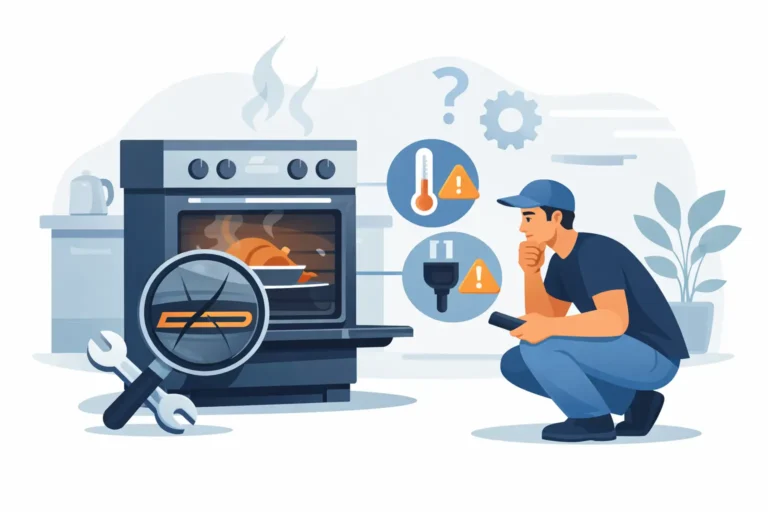
A dinner that will not bake, cookies that burn on one side, or an oven that will not turn on can disrupt more than one meal. Knowing how to diagnose oven issues starts with noticing what the appliance is doing – and what it is not doing – before assuming the whole oven needs to be replaced. A few safe checks can help you describe the problem clearly, avoid unnecessary expense, and know when it is time to schedule a repair.
Start With Safety and the Simple Checks
Before checking anything inside the oven, make sure the appliance is safe to approach. If you smell gas, hear hissing near a gas range, see sparks, or notice smoke that does not quickly clear after a spill, stop using the oven. Turn off the gas supply only if you can do so safely, leave the area if the gas odor is strong, and contact the gas utility or emergency services as appropriate. Do not test switches, light matches, or try to relight the appliance.
For an electric oven, a burning electrical smell, a tripped breaker that will not stay on, visible damaged wiring, or repeated sparking also calls for professional attention. Unplug a portable range if it is safe to do so, but do not pull a built-in wall oven out of its cabinet or remove panels yourself.
If there is no immediate safety concern, begin with the basics. Check that the oven clock is set and that a delayed-start, Sabbath, or control-lock feature has not been activated. Confirm the door is fully closed, especially on models that will not start certain cooking cycles with the door ajar. Then check the home electrical panel. A partially tripped double-pole breaker can leave an electric oven with enough power for lights or the display but not enough power for heating.
How to Diagnose Oven Issues by the Symptom
The most useful diagnosis is not a technical guess. It is a clear description of the symptom, when it happens, and whether the problem affects bake, broil, convection, or every function. That information helps a technician narrow down the cause faster.
The oven will not heat at all
If an electric oven turns on but stays cold, look at the heating elements during a short bake or broil test. A bake element may glow red beneath the oven floor, while a broil element glows at the top. Not every element is visible on every model, so do not remove panels to inspect one. A visibly blistered, cracked, or broken element is a strong sign that repair is needed.
When neither bake nor broil heats, the issue could be a failed control, temperature sensor, power supply problem, wiring fault, or a thermal safety component. On a gas oven, failure to heat can involve the igniter, gas valve, burner assembly, or control system. A weak gas igniter may glow but still fail to open the gas valve reliably, which is why seeing a glow does not necessarily mean the part is working correctly.
The oven heats, but takes far too long
An oven that eventually reaches temperature may have a weak heating element, a failing igniter, a temperature sensor problem, or a door that is allowing heat to escape. First, inspect the door gasket for obvious tears, flattened spots, or sections pulling away from the frame. A damaged gasket can waste energy and create uneven results, although it is not the cause of every slow-heating complaint.
Avoid relying on the oven display alone. If you have an oven thermometer, place it in the center of the middle rack and let the oven preheat fully. Compare the actual reading with the set temperature after it has had time to cycle. Small swings are normal because ovens heat above and below the target temperature to maintain an average. A consistent difference of 25 to 50 degrees, or a temperature that never settles, deserves service.
Food cooks unevenly or burns on one side
Uneven cooking is often the first sign homeowners notice. Rotate pans halfway through baking only if the recipe allows it, then pay attention to whether the same side always browns faster. Also make sure racks are level and positioned correctly. Dark pans, crowded racks, and pans placed too close to an element can all affect results.
If the pattern continues with different cookware and recipes, the oven may not be distributing heat properly. A convection fan that does not run, a weak bake element, a damaged door seal, or an inaccurate sensor can all contribute. For rental properties, this is worth addressing before a tenant turns to countertop appliances or reports repeated cooking problems. Early repair can be far less disruptive than waiting for a complete failure.
The oven is too hot or cannot hold temperature
Food that suddenly overcooks, a display that says preheat is complete too soon, or an oven that keeps climbing in temperature should not be ignored. The control board, sensor, or relay may be sending incorrect signals. Turn the oven off if it appears to be overheating. If it continues heating after being turned off, shut off power at the breaker or the gas supply if safe, and request service promptly.
Do not try to solve chronic overheating by constantly lowering the set temperature. That workaround can make cooking unpredictable while allowing the underlying problem to worsen.
The oven door will not close, unlock, or stay shut
A door that will not close tightly may have worn hinges, a bent latch, loose screws, or debris around the frame. Let the oven cool completely, then gently check for baked-on buildup along the door edge and gasket. Never force the door. Forcing a hinge or latch can turn a manageable repair into a damaged door or broken glass.
After a self-clean cycle, some ovens may remain locked until the appliance cools or the control completes its cycle. If the door stays locked long after the oven is cold, or an error code appears, turn off the appliance and arrange for diagnosis. Self-cleaning cycles create extreme heat and can expose problems in older components, so it is wise to use them carefully and only according to the manufacturer instructions.
The display, buttons, or clock are acting strangely
A blank display may be as simple as a tripped breaker, but flickering displays, unresponsive buttons, random beeping, or error codes can point to a control-panel or electronic-control issue. Write down the exact error code and note whether it appears during preheat, cooking, cleaning, or after a power outage. Do not repeatedly reset the breaker in hopes that the problem disappears. One reset after checking for a power interruption is reasonable; repeated trips signal a problem that needs attention.
What to Record Before Scheduling Oven Repair
A good service visit begins before the technician arrives. Write down the oven brand and model number, usually found around the door frame, storage drawer area, or side trim. Note whether it is gas or electric and whether the issue affects bake, broil, convection, or the range top as well.
It also helps to record what happens step by step. For example: “The display says 350 degrees, but the oven takes 45 minutes to preheat and the bottom of food remains pale.” This is more useful than simply saying the oven is broken. Include any error code, unusual sound, gas odor, breaker issue, or recent power outage. Clear details support a more efficient diagnosis and a clearer repair estimate.
When a Repair Makes More Sense Than Replacement
Age matters, but it is not the only factor. A well-built oven with one failed igniter, element, sensor, hinge, or control component can often be worth repairing. Replacement may make more sense when the appliance has repeated major failures, parts are no longer available, or the repair cost approaches the value of a comparable replacement.
Built-in wall ovens bring another consideration: replacement can require cabinet changes, electrical updates, and installation work beyond the price of the new appliance. For landlords and property managers, repairing a dependable existing unit may also reduce vacancy-related disruption and keep a unit functional sooner. The right choice depends on the specific failure, the appliance condition, and your budget – not a one-size-fits-all rule.
For homeowners, renters, and property managers in Long Beach, Murrieta, Menifee, and Temecula, Don’s Appliances can help turn a vague oven problem into a clear repair decision. A friendly technician can explain what failed, what the repair involves, and whether the investment makes sense before work moves forward. Your oven does not have to be perfect to be worth saving, but it should be safe, dependable, and ready when your household needs it.
