
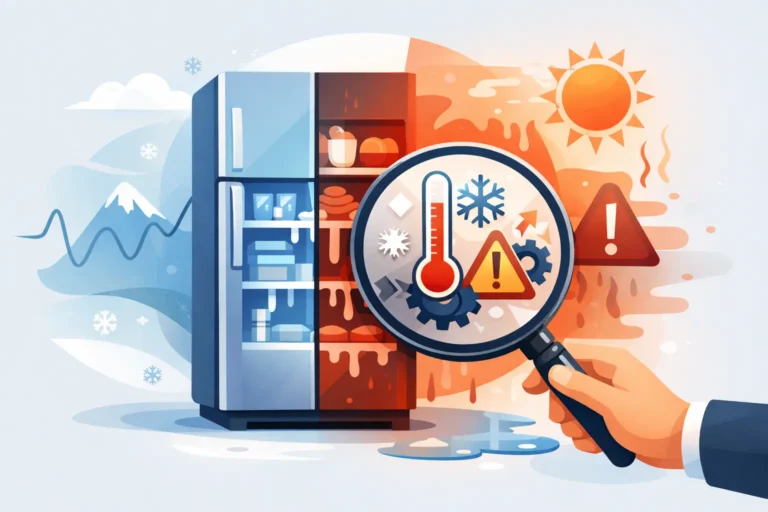
A refrigerator that is running but not keeping food cold creates a problem fast. Milk, leftovers, medication, and frozen groceries may all be at risk. Proper refrigerator cooling failure analysis starts by separating a simple airflow or settings issue from a mechanical failure that needs professional repair.
The good news is that a warm refrigerator does not automatically mean it is time to replace it. Many cooling problems can be repaired when the cause is found early. The key is to protect your food, avoid unsafe do-it-yourself work, and get a clear explanation of what failed and what the repair makes sense to cost.
Start With Food Safety, Not the Appliance
If the refrigerator compartment feels warm, move perishable food to a cooler with ice or to another working refrigerator as soon as possible. Foods such as meat, dairy, eggs, cooked leftovers, and cut produce should not sit above 40 degrees Fahrenheit for extended periods. Do not rely on a cold-looking carton or a refrigerator light as proof that the appliance is holding a safe temperature.
Check the freezer, too. A refrigerator can have different temperatures in each compartment. For example, the freezer may stay cold while the fresh-food section warms up, or both sections may lose cooling at once. That distinction gives a technician useful clues about the likely source of the problem.
Before unplugging the unit, listen for normal operating sounds. Is the interior fan running? Does the compressor at the back or bottom make a low hum? Is there clicking every few minutes? Those observations can help, but do not remove electrical panels or handle wiring. Refrigerators contain electrical components, sharp metal edges, and sealed refrigeration parts that require the right tools and training.
Refrigerator Cooling Failure Analysis: Common Causes
A refrigerator cools by moving heat out of the cabinet through a connected system of fans, coils, controls, and a compressor. When one part stops doing its job, the symptoms can look similar from the kitchen. That is why replacing a part based on a guess often wastes money.
Dirty condenser coils or restricted airflow
The condenser coils release heat from the refrigerator. Depending on the model, they may be behind the unit or underneath it. Dust, pet hair, and debris can trap heat around the coils and make the refrigerator work harder than it should.
Homeowners can safely vacuum loose dust from accessible coil areas after unplugging the appliance, following the manufacturer’s instructions. Also check that boxes, walls, or stored items are not blocking ventilation around the refrigerator. In a busy rental unit or commercial break room, this simple issue is easy to overlook.
Dirty coils are not the answer to every cooling complaint. If the appliance has been cleaned and still runs warm, there may be a fan, defrost, control, or sealed-system issue behind the problem.
Incorrect temperature settings or a damaged door seal
A bumped control setting can cause a refrigerator to run warmer than expected, especially in homes with children or shared kitchens. Set the fresh-food section near 37 degrees Fahrenheit and the freezer near 0 degrees Fahrenheit, then allow adequate time for temperatures to stabilize.
Door gaskets deserve a close look as well. A torn, hardened, or dirty seal lets warm room air into the cabinet. You may notice condensation, frost buildup, a door that does not close firmly, or a compressor that seems to run constantly. Wipe the gasket clean and make sure food containers are not preventing the door from closing. If the seal is damaged or the door is misaligned, repair may be needed.
Blocked vents and poor air circulation
Cold air must travel through vents between the freezer and refrigerator compartments. Packing food tightly against those vents can limit circulation and leave one area warmer than the other. Ice buildup can also block the passages.
Try rearranging food to leave open space around interior vents. Do not chip ice with a knife or sharp tool. It is easy to puncture an interior liner or damage components behind it, turning a manageable repair into a larger one.
Evaporator fan or condenser fan failure
Fans are essential to cooling. The evaporator fan circulates cold air through the cabinet, while the condenser fan helps move heat away from the condenser area on many models. A failed fan may cause uneven temperatures, unusual rattling or squealing, excessive heat near the bottom of the refrigerator, or a freezer that is cold while the refrigerator section is warm.
A technician can test whether the fan motor is receiving power and determine whether the issue is the motor, a wire connection, a control board, or an obstruction. That testing matters because the same symptom can have several causes.
Defrost system trouble
Most modern refrigerators periodically defrost frost from the evaporator coils. When the defrost heater, sensor, timer, or control fails, ice can build up over the coils. Air can no longer pass through properly, and the refrigerator gradually loses cooling.
A common pattern is a freezer that begins to frost over, followed by a warm refrigerator compartment. Temporarily thawing the appliance may restore cooling for a short time, but it does not fix the failed defrost component. A proper repair identifies why the ice returned in the first place.
Compressor, start device, or sealed-system problems
The compressor is the heart of the cooling system. If it is not starting correctly, you may hear repeated clicking, humming, or short cycling. A faulty start relay or overload protector may be repairable without replacing the compressor.
More serious concerns include a weak compressor, a refrigerant leak, or a restriction in the sealed system. These problems require specialized diagnosis. The refrigerator may run almost constantly but never reach safe temperatures, or one section of the evaporator may frost while the rest remains warm. Repair value depends on the appliance’s age, brand, condition, and the exact failure.
What You Can Check Before Scheduling Service
A few careful checks can save time and help describe the issue accurately. Confirm that the refrigerator has power, the temperature controls have not been changed, and the doors close completely. Check for blocked vents, heavy frost, dirty accessible coils, and unusual sounds.
Also note when the problem began and whether it followed a power outage, moving the refrigerator, loading it heavily, or an unusually hot day. Southern California garages and kitchens can become hot enough to expose ventilation or compressor problems, particularly when a refrigerator is installed too close to a wall.
Avoid repeatedly unplugging and restarting the unit, turning controls to their coldest setting, or using a hair dryer near plastic liners and electrical parts. Those steps can cause further damage without identifying the real issue.
How a Professional Diagnosis Protects Your Budget
A reliable cooling diagnosis is more than checking whether the refrigerator feels cold. A technician should inspect airflow, fans, frost patterns, door seals, condenser condition, electrical controls, and compressor operation. When needed, they can take electrical readings and test components rather than replacing parts by trial and error.
The best repair decision depends on more than the age of the refrigerator. A relatively older unit with a failed fan motor or door gasket may be worth repairing. A newer premium refrigerator with a control or defrost issue often is as well. On the other hand, a major sealed-system repair on a lower-value appliance may make replacement the more practical choice.
Ask for a plain-language explanation of the failure, the expected repair, and whether the repair is likely to restore dependable cooling. Clear, honest pricing helps you decide without pressure. For landlords and property managers, a documented diagnosis also helps prioritize repairs, communicate with tenants, and reduce the chance of repeat service calls.
When to Call for Refrigerator Repair
Schedule service promptly if food is warming, the freezer is thawing, the refrigerator runs continuously, frost keeps returning, or you hear repeated clicking and the appliance will not cool. A water leak near the refrigerator, burning smell, or tripped breaker deserves immediate attention. If you smell something burning, unplug the unit if it is safe to do so and avoid using it until it has been inspected.
For households in Long Beach, Murrieta, Menifee, and Temecula, Don’s Appliances can provide the straightforward, hands-on evaluation that a cooling failure needs. Friendly technicians respect your home and schedule while helping you weigh repair against replacement based on the appliance in front of you.
A refrigerator should quietly support daily life, not force a last-minute scramble to save groceries. Acting early, keeping food safe, and getting the real cause diagnosed gives you the best chance of restoring dependable cooling without spending more than necessary.
