
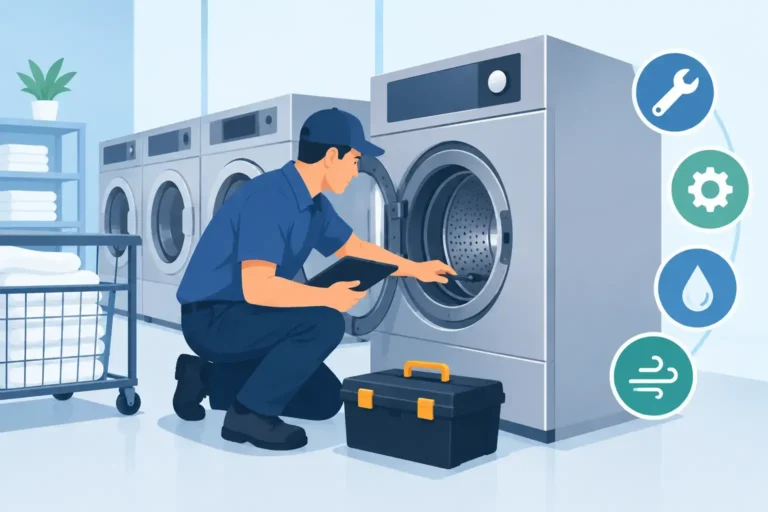
A washer that will not spin or a dryer that leaves every load damp can bring a laundry room to a standstill fast. For laundromat owners, landlords, and property managers, the best commercial laundry troubleshooting tips start with protecting people, preventing further damage, and identifying whether the issue is a simple operating problem or a repair that needs prompt attention. Every out-of-service machine can mean lost income, unhappy tenants, and a growing pile of laundry.
Start With a Safe, Simple Check
Before opening panels or moving equipment, disconnect power to the affected machine when it is safe to do so. If there is a burning smell, smoke, sparking, standing water near electrical connections, or a gas odor around a gas dryer, stop using the equipment immediately. Keep customers or tenants away from the machine and arrange professional service.
For problems without an obvious safety concern, begin with the basics. Confirm the machine has power, that the breaker has not tripped, and that any emergency stop switch is in the correct position. Commercial laundry equipment gets bumped, overloaded, and used continuously, so a loose plug, tripped breaker, or partially closed water valve is more common than many operators expect.
Write down the model number, the error code if one appears, and exactly what happened during the cycle. Details such as fills but does not agitate, stops with three minutes remaining, or makes a grinding sound while spinning help a technician narrow down the cause quickly. They also help you see whether several machines are experiencing the same issue, which may point to a utility, drain, or ventilation problem instead of a single failed appliance.
Commercial Washer Troubleshooting Tips
When the Washer Will Not Start
First, make sure the door or lid closes firmly. Most commercial washers will not run until the door-lock system confirms that it is secure. Check for clothing caught in the seal, a damaged latch, or a door that has been slammed out of alignment. Do not force the door closed or bypass a safety lock. Those safeguards are there to prevent injury and water damage.
If the machine accepts payment but will not begin, note whether the display changes, the door locks, or water enters the tub. A payment-system issue, control problem, door-lock failure, or power interruption can look similar from the outside. Resetting the breaker once may be reasonable, but repeated tripping is a warning sign. Continuing to reset it can turn a manageable repair into electrical damage.
When the Washer Will Not Fill, Drain, or Spin
A washer that will not fill may have closed supply valves, kinked hoses, clogged inlet screens, or a failed fill component. Check that both hot and cold water valves are open and that hoses are not crushed behind the unit. If water is available at nearby fixtures but not entering the washer, it is time for a closer diagnosis.
Poor draining is often tied to a clogged drain path, a blocked pump filter where applicable, or a worn drain pump. Stop the machine if water is backing up onto the floor. Do not keep starting cycles in hopes that the problem clears itself. Overflow can damage flooring, walls, nearby equipment, and lower-level spaces.
When a washer will not spin, look at the load before assuming the motor has failed. Heavy items bunched on one side can leave the drum badly unbalanced. Redistribute the load and try again if the machine allows it. If it still will not spin, makes loud banging or grinding sounds, or shakes excessively with a balanced load, take it out of service. Possible causes range from worn suspension parts to drive, bearing, or motor issues.
Dryer Problems That Need Fast Attention
A dryer that runs but does not heat is frustrating. A dryer that overheats is a fire concern. Start by checking the lint screen and the exterior vent outlet. Lint should be removed after every load, and airflow at the outside termination should feel strong while the dryer operates.
Weak airflow, unusually long drying times, a hot laundry room, or a burning-lint smell can all point to a restricted vent. Do not assume the dryer itself is the only problem. Shared ductwork, crushed vent sections, bird nests, and lint buildup farther down the run can restrict airflow. Running the dryer longer only raises energy costs and puts extra strain on heating components.
For gas dryers, verify that the gas supply valve is open only if there is no gas odor. If you smell gas, do not operate switches, use flames, or attempt repairs. Leave the area and follow your property’s emergency procedure. A qualified technician should inspect the dryer before it goes back into service.
Squealing, thumping, or scraping noises may come from worn rollers, belts, glides, or objects caught in the drum area. A small noise can become a major breakdown when a high-use dryer is left running day after day. Removing the machine from service early can protect the drum and motor from additional damage.
Best Commercial Laundry Troubleshooting Tips for Coin-Operated Equipment
Coin-operated and card-operated machines add another layer to the diagnosis: the equipment may be mechanically sound but unable to collect payment or start a cycle. Check the display for error messages, confirm that the machine has power, and see whether the issue affects one unit or every machine in the room.
If coins are being rejected, inspect the coin slot for visible debris or a jammed coin. Avoid poking deep into the mechanism with tools, which can damage the acceptor or create a security concern. If the machine takes payment but does not start, record the amount collected and the machine number so you can address customer refunds accurately.
When multiple machines stop accepting payment or show similar display issues, the cause may involve a shared power source, network connection, payment system, or electrical circuit. This is where a quick call for service is usually more cost-effective than treating each machine as a separate failure. Downtime across a full laundry room can affect revenue and tenant confidence far more than a single repair visit.
Watch for Leaks Before They Become Property Damage
Commercial laundry leaks are not always dramatic. A slow drip behind a washer, damp baseboard, rusty hose connection, or recurring puddle can signal a hose, valve, pump, door seal, or drain issue. Inspect behind machines regularly, especially in properties where equipment is installed in upper-floor laundry rooms.
If water is actively leaking, turn off the water supply to that machine if you can safely reach the valves. Then stop the cycle, disconnect power if water is near electrical areas, and clean up standing water. Photographing the leak source and any affected area can be useful for maintenance records and property management documentation.
Do not ignore a washer door that requires repeated pushing to stop leaking. Door seals and latches wear over time, and forcing the door can cause more damage. A timely repair is usually less disruptive than waiting for a leak to affect drywall, flooring, or an occupied unit below.
Know When to Call a Commercial Laundry Technician
Some checks are appropriate for an owner or on-site maintenance team. Internal electrical work, gas connections, drive systems, control boards, and major water leaks are not good do-it-yourself projects. The right choice depends on the machine’s age, repair history, parts availability, and the cost of downtime.
Call for professional service when a breaker repeatedly trips, an error code returns after a basic reset, the machine leaks, the drum will not turn, or the equipment makes grinding, burning, or loud banging sounds. The same applies when a dryer has heating or venting concerns. Taking one machine out of service is inconvenient. A preventable fire risk, flood, or damaged electrical system is much more expensive.
At Don’s Appliances, the goal is not to push a replacement when a practical repair makes sense. A clear diagnosis lets you weigh the repair cost against expected remaining life, usage demands, and the needs of your tenants or customers. For aging equipment with repeated failures, replacement may be the more dependable long-term decision. For a well-maintained machine with one failed component, repair can often restore reliable service without a major capital expense.
Keep a Simple Maintenance Routine
The most useful troubleshooting tool is a maintenance log. Record machine numbers, service dates, recurring error codes, lint-cleaning schedules, leaks, and customer complaints. Patterns are easier to spot when they are written down, especially across a multi-unit property or busy laundry room.
Train staff or property personnel to report unusual noises, wet floors, extended drying times, and payment issues right away. Clean lint screens daily, inspect hoses and visible connections regularly, and keep enough clearance around equipment for airflow and safe access. These small habits do not eliminate every breakdown, but they reduce surprises and give you a better chance to fix a problem before laundry service, rental operations, or customer trust takes a hit.
A commercial laundry room works best when small warning signs get attention early. A quick, honest diagnosis can keep one troubled machine from disrupting the entire operation.