
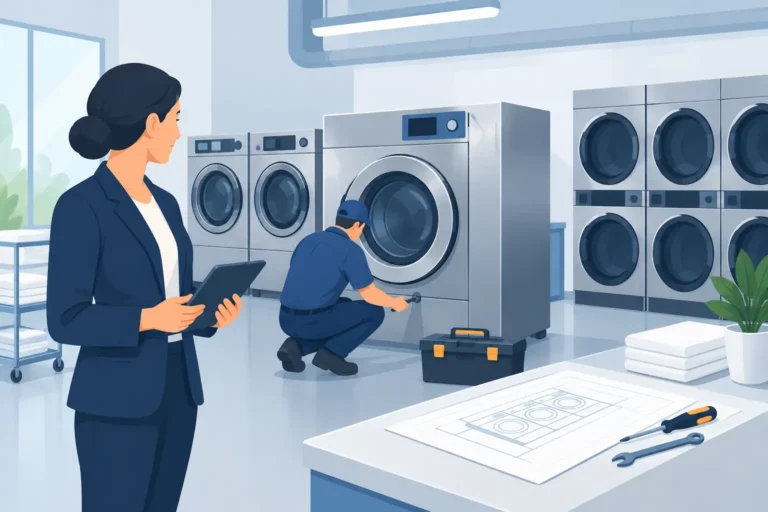
A commercial washer sitting in place is not the same thing as a laundry room ready to earn its keep. One missed drain requirement, undersized gas line, or loose connection can mean flooded floors, unhappy tenants, lost laundry revenue, and a costly return visit. This commercial laundry installation guide helps property owners, managers, and laundromat operators plan the job before equipment arrives.
Commercial laundry equipment works harder than a typical household machine. It needs the right space, utility capacity, ventilation, drainage, and testing to operate safely through repeated daily cycles. Getting those details right protects the equipment, the building, and the people who rely on the laundry room.
Start With the Laundry Room, Not the Machines
It is tempting to choose washers and dryers first, then try to fit them into the available room. A better approach is to measure the room, map the utility connections, and confirm the building can support the equipment you want to install.
Measure the doorways, hallways, turns, and stair access leading to the laundry area. Commercial units are heavy and bulky. A machine that fits neatly on paper may not make it through a narrow utility-room door. Also leave working clearance around each unit for loading, service access, and airflow. Packing machines too tightly may save a few inches, but it makes routine maintenance harder and can create heat and ventilation problems.
Think about how people will use the space. In a multifamily property, residents need room to open doors, move baskets, and wait safely without blocking an exit. In a laundromat, traffic flow matters even more. Equipment layout should make it easy for customers to move from washers to dryers without crowding the room.
Floor condition deserves the same attention. The surface must be level enough for machines to operate without excessive vibration. It should also be durable and prepared for occasional water exposure. If the floor has cracks, poor drainage, or signs of previous leaks, address those issues before setting new equipment in place.
Confirm Water, Drain, Gas, and Electrical Capacity
The most expensive installation surprises usually involve utilities. Before purchasing equipment, compare the manufacturer requirements with what the building actually has. Model numbers matter because a larger-capacity machine may need substantially different connections than the unit it replaces.
Water supply and pressure
Commercial washers require reliable hot and cold water supply. Old valves, corroded lines, or weak pressure can limit wash performance and extend cycle times. Confirm that shutoff valves are accessible and functioning, not buried behind machines where nobody can reach them during a leak.
Water temperature matters, too. If the property uses a central water heater, make sure it can recover fast enough for the expected laundry volume. A laundry room may appear fine during a light weekday afternoon but struggle when several tenants run hot cycles at the same time.
Drainage that can keep up
A washer drains a large amount of water quickly. The drain line must be sized and configured to handle that discharge without backing up. A slow drain can cause overflow, odors, and repeated service calls that look like washer failures but are really plumbing problems.
Never assume an existing drain is adequate just because an older machine was connected there. Newer commercial equipment, especially higher-capacity models, may move water differently. A qualified installer should inspect the drain connection, standpipe arrangement, and floor drainage before the installation is finalized.
Gas and dryer ventilation
Gas dryers need correctly sized gas supply lines, approved shutoff valves, and careful leak testing. This is not an area for shortcuts. Improper gas connections create a serious safety risk and can leave equipment operating poorly or not at all.
Dryer venting is equally critical. Exhaust ducts should be routed as directly as practical, with the correct materials and as few restrictions as possible. Long runs, crushed ducting, excessive bends, and lint buildup make dryers run hotter and longer. That wastes energy, increases wear, and raises fire risk.
Electric dryers avoid a gas connection, but they still require proper electrical capacity and ventilation. The right choice depends on the building, local utility costs, available infrastructure, and expected volume. Gas may offer lower operating costs in one property, while electric may be the practical choice where gas service is unavailable or upgrading it would be too costly.
Electrical service
Commercial washers, dryers, payment systems, and lighting all place demands on the electrical panel. Verify voltage, amperage, dedicated circuits, grounding, and disconnect requirements before delivery day. Do not rely on extension cords or improvised outlet arrangements to make a commercial machine work.
If coin-operated or card-operated equipment is planned, account for the power and communications needs of the payment system as well. It is far easier to plan for those connections during installation than to reopen walls later.
Permits, Codes, and the Value of Doing It Right
Commercial laundry rooms often require permits or inspections for plumbing, gas, electrical work, ventilation, or structural changes. Requirements vary by city, building type, and scope of work. A like-for-like replacement may be simpler than converting an unused room into a new laundry area, but both deserve a code review.
Permits can feel like a delay when machines are needed quickly. In practice, they help prevent expensive corrections later. They also create a record that can matter for insurance, property sales, tenant complaints, and future repairs.
For landlords and property managers, proper installation protects more than the equipment budget. A leak that damages neighboring units, a dryer vent issue that becomes a safety concern, or an unapproved alteration can quickly become a major property-management problem. Clear planning and professional work are usually less expensive than emergency repairs.
Plan Delivery and Installation Day
The best installation days are quiet because the preparation happened earlier. Confirm delivery access, reserve parking if needed, protect nearby floors and walls, and make sure the room is clear before technicians arrive. If an old machine is being removed, decide in advance who is responsible for disposal.
Have the equipment specifications available, including utility requirements and installation instructions. The team should inspect the units for shipping damage before connections are completed. Once the machines are positioned, they need to be leveled and secured as required. An unlevel washer can walk, vibrate, loosen hoses, and create noise complaints in apartment buildings.
After connections are made, do not treat the job as finished when the machines power on. Each unit should run through a test cycle. Check for water leaks at hoses and valves, watch the drain during discharge, confirm the dryer heats and exhausts properly, and listen for unusual vibration or noise.
For coin-operated equipment, test the payment process and confirm that the cycle starts, completes, and releases the door or lid correctly. A laundry room can look finished while still failing the first customer who tries to use it.
Build Maintenance Into the Installation Plan
Commercial equipment lasts longer when the room is designed for service. Keep shutoff valves, cleanouts, electrical panels, and dryer access points reachable. Label circuits and water valves so a manager or maintenance employee can respond quickly if there is a leak or malfunction.
Create a simple operating routine from the beginning. Staff or property managers should know who cleans lint filters, how often exhaust systems are inspected, where to report leaks, and when a machine needs professional attention. Ignoring small warning signs such as longer dry times, a sour drain smell, shaking washers, or repeated payment errors often leads to a larger interruption later.
It also helps to keep a record of model numbers, serial numbers, installation dates, repairs, and warranty information. That record speeds up service calls and gives owners a clearer picture of whether repair or replacement makes financial sense as equipment ages.
When Professional Installation Is the Practical Choice
Some owners can handle basic preparation, such as clearing the room and confirming dimensions. But commercial gas, electrical, plumbing, drainage, and ventilation work should be handled by qualified professionals. The savings from a rushed installation disappear quickly when a machine leaks, trips breakers, overheats, or sits out of service.
For commercial properties in Long Beach, Murrieta, Menifee, and Temecula, Don’s Appliances can help keep laundry equipment installed correctly and supported when problems interrupt operations. Clear, honest guidance matters when each day of downtime affects tenants, customers, or revenue.
A well-installed laundry room should feel uneventful after opening day. Machines run properly, dryers finish on time, water stays where it belongs, and users can get back to their routine. That kind of reliability starts with careful planning before the first load goes in.
