
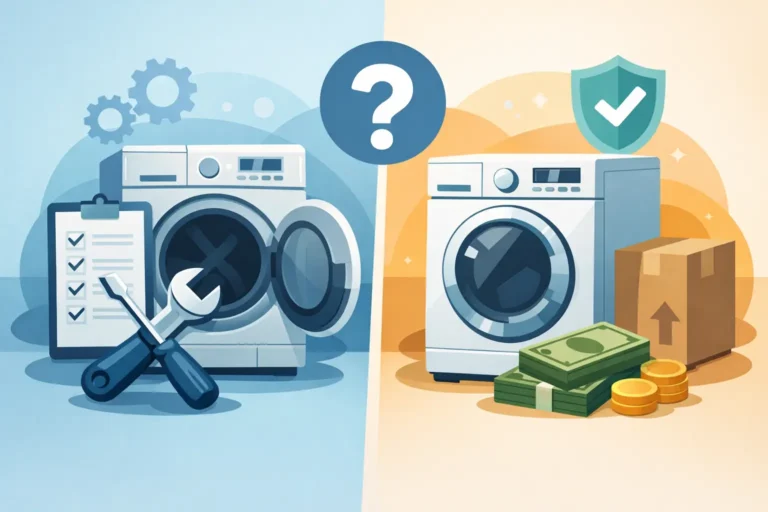
Laundry has a way of piling up at the worst possible time. When the search for “repair or replace dryer” starts, you are usually dealing with damp work clothes, towels spread around the house, or a rental unit that needs attention now. The right answer depends on more than whether the dryer turns on. Its age, the type of problem, the likely repair cost, and any safety concerns all deserve a close look.
A professional diagnosis can keep you from replacing a dryer that needs one practical repair. It can also prevent you from putting money into an appliance that is nearing the end of its useful life. The goal is not to sell you the most expensive option. It is to get your laundry routine back on track with a decision that makes sense for your home, budget, or property.
Repair or Replace Dryer: Start With Safety
Some dryer problems should not wait for another load. If you smell burning, see smoke, notice sparks, or find the exterior of the dryer unusually hot, stop using it and unplug it if you can do so safely. A dryer that trips breakers repeatedly or has a crushed, clogged, or disconnected vent also needs prompt attention.
Lint buildup is a common concern because it restricts airflow, makes drying take longer, and can create a fire risk. Cleaning the lint screen after every load helps, but the screen is only one part of the ventilation path. The ductwork and outside vent must also move air properly.
Safety issues do not automatically mean replacement is necessary. In many cases, a damaged heating component, faulty wiring connection, failed thermostat, or venting problem can be repaired. What matters is identifying the cause instead of repeatedly resetting a breaker or running load after load in a dryer that is overheating.
Consider the Dryer’s Age and Expected Life
Most dryers can provide dependable service for roughly 10 to 13 years, although the actual lifespan varies by brand, maintenance, frequency of use, and installation conditions. A lightly used dryer in a small household may last longer than one handling daily loads for a busy family or rental property.
Age alone should not decide the issue. A six-year-old dryer with a worn belt or failed door switch is often a strong repair candidate. Those are common service items, and a properly completed repair may provide years of additional use.
The conversation changes when an older dryer has major failures, recurring breakdowns, or multiple worn components. If the drum support, motor, control board, and heating system all show signs of trouble, repair costs can add up quickly. Replacing an aging appliance may offer better value and fewer interruptions, especially when parts are difficult to obtain.
A technician can help put the dryer’s age in context. A well-built premium model may be worth repairing at an age when a basic model with repeated issues may not be. That is why clear diagnostics matter more than a one-size-fits-all rule.
Compare the Repair Cost With Replacement Value
A useful guideline is to compare the estimated repair with the cost of a comparable new dryer. When a repair is modest and the appliance is otherwise in good condition, repairing is often the cost-conscious choice. When the repair approaches a substantial share of replacement cost, particularly on an older machine, replacement deserves serious consideration.
There are other costs to consider besides the price on the estimate. A new dryer may require delivery, installation, electrical or gas connection work, and removal of the old unit. If your laundry room has a tight fit, stacked configuration, pedestal, or unusual venting setup, choosing a replacement takes a little more planning.
On the other hand, a repaired dryer does not always mean a temporary fix. Replacing a failed thermal fuse, roller, belt, igniter, or sensor can restore normal performance without the expense and disruption of shopping for a new appliance. Honest repair-versus-replacement guidance should explain the repair, its expected benefit, and any concerns that could affect future reliability.
Problems That Are Often Worth Repairing
Many dryer failures come down to individual components that wear out over time. A dryer that tumbles but does not heat may have a problem with a heating element, thermostat, igniter, gas valve coils, or airflow. A dryer that squeals or thumps may need rollers, a belt, or an idler pulley. A machine that will not start can have an issue with the door switch, start switch, power supply, or control.
These symptoms can sound alarming, but they do not automatically signal the end of the appliance. A correct diagnosis is especially valuable because several different problems can produce the same symptom. For example, clothes that stay damp may point to a heating failure, but they can also result from a blocked vent or an overloaded dryer.
Repair is often the practical route when the cabinet and drum are in good shape, the appliance has been reliable until now, replacement parts are available, and the estimate is reasonable. It also reduces the inconvenience of comparing models, waiting for delivery, and adjusting to a new machine.
When Replacing a Dryer Makes More Sense
Replacement may be the better choice when an older dryer needs an expensive motor, a hard-to-source control board, or several repairs at once. It can also make sense when you have already paid for repeated service calls and the appliance continues to fail in different ways.
Poor performance can be another deciding factor. If a dryer has always taken multiple cycles to dry a normal load, has an unreliable sensor cycle, or lacks the capacity your household needs, a newer model may better fit your routine. Families with growing laundry demands may benefit from a larger drum, while property owners may prioritize a durable unit that is easy for tenants to operate.
For gas dryers, replacement decisions should include the condition of the gas connection and venting. For electric dryers, make sure the new unit matches the home’s electrical setup. Installation is not simply a matter of sliding a machine into place. Correct connections and proper venting protect performance, safety, and the life of the appliance.
Do Not Let a Vent Problem Decide for You
Before replacing a dryer because it takes too long to dry clothes, rule out a venting restriction. A clogged duct can make even a newer dryer work harder, run hotter, and use more energy. It can also cause a dryer to shut down on its safety limits or leave clothes damp at the end of a cycle.
Signs of restricted airflow include hot laundry-room temperatures, a weak flow of air at the outside vent, a burning smell, or loads that need more than one cycle. Long duct runs, flexible plastic vent material, excessive bends, and bird or rodent nests near the exterior vent can all create trouble.
Correcting the airflow issue may be all that is needed. If the dryer has been overheating for a long time, though, a technician should check for related component damage before putting it back into regular service.
A Practical Decision for Rental and Commercial Laundry
For landlords and property managers, a broken dryer affects more than one household routine. Delayed repairs can lead to tenant frustration, maintenance calls, and avoidable vacancy concerns. The best choice balances the immediate cost with reliability, available parts, and the likelihood of future disruption.
For coin-operated or shared laundry equipment, downtime can mean lost income as well as unhappy users. Commercial laundry machines face heavier use than household dryers, so decisions should account for capacity, duty cycle, and the impact of each day out of service. A repair that makes sense for a home unit may not be the best long-term answer for equipment serving multiple residents or customers.
Get the Facts Before You Spend
The most helpful next step is a hands-on diagnosis from a technician who explains what failed, what the repair involves, and whether the rest of the dryer appears to be in good condition. Ask about the expected repair cost, part availability, warranty coverage, and whether a repair is likely to provide dependable service.
For homeowners in Murrieta, Long Beach, Menifee, and Temecula, Don’s Appliances approaches that decision with clear, honest pricing and respect for your schedule. Whether your dryer needs a straightforward repair or it is time to plan a replacement and proper installation, you deserve an answer that protects your home, your budget, and the mountain of laundry waiting nearby.
