
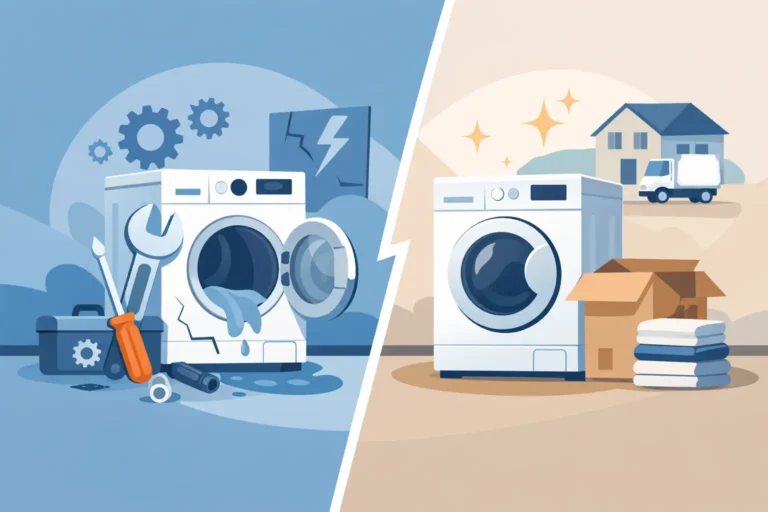
A washer that stops mid-cycle can turn one small chore into a week of laundry piling up. Before you shop for a new machine or assume the old one is finished, pause and get a clear diagnosis. A good washer replacement decision is rarely based on age alone. It comes down to what failed, what the repair will cost, how the machine has been treated, and how much dependable service it may still have left.
For homeowners, renters, landlords, and property managers, the goal is the same: get laundry moving again without spending more than necessary. Sometimes a repair is the sensible, budget-friendly answer. Other times, replacement prevents repeat service calls, water damage risks, and more disruption down the road.
Start Your Washer Replacement Decision With the Problem
A washer can appear to have a major failure when the actual issue is fairly contained. A machine that will not spin may have a worn lid switch, drive belt, drain pump, or suspension problem. Water left in the tub could point to a clogged drain hose or a failing pump. A washer that will not start may have an electrical, control, latch, or outlet issue rather than a failed motor.
That is why an in-home diagnosis matters. Replacing a washer before identifying the problem can mean paying thousands of dollars to solve a repair that may have been manageable. On the other hand, a technician can identify when several costly components are failing together and tell you plainly when putting more money into the machine is no longer wise.
Do not keep running a washer that is leaking heavily, smelling hot, making grinding noises, or tripping breakers. Shut it off, turn off the water supply if there is a leak, and arrange service. Continuing to use it can turn a washer repair into damaged flooring, cabinet damage, or a larger electrical concern.
When Repair Usually Makes Sense
Repair is often the practical choice when the washer has been dependable, the problem is limited to one part, and the repair cost is well below the cost of a comparable replacement. Many common failures can be corrected without replacing the entire appliance, including drain pump issues, door or lid latch problems, inlet valve failures, hoses, belts, certain sensors, and worn suspension components.
Age matters, but it is not a final verdict. A well-maintained washer can outlast another machine of the same age that has endured chronic overloading, hard water buildup, poor drainage, or repeated unbalanced loads. Some older machines are also simpler to repair and may be worth keeping if the needed parts are available and the rest of the unit is in good condition.
A repair can be especially worthwhile when you like the washer’s capacity and features, it fits a tight laundry space, or replacing it would require changing a matching dryer, moving hookups, or modifying cabinetry. For a rental property, a prompt repair may also be the fastest way to restore a tenant’s routine and avoid vacancy-related frustration.
The best repair recommendation includes more than a price. You should understand what failed, what the repair addresses, whether other parts show signs of wear, and what kind of warranty comes with the work. Clear, honest pricing helps you decide without pressure.
Signs Replacement May Be the Better Call
Replacement becomes more reasonable when a washer is nearing the end of its expected service life and develops an expensive failure involving a major component. Problems with a transmission, tub bearing assembly, motor, control board, or multiple systems can add up quickly, particularly when the machine has already needed several repairs in recent years.
Watch for a pattern, not just one bad day. If your washer has recurring leaks, frequent error codes, loud bearing noise, repeated spinning issues, or repairs that solve one problem only for another to appear soon after, the machine may be telling you it is no longer a dependable investment.
Rust and structural damage also deserve attention. Surface discoloration is one thing, but rust around the cabinet base, tub, or key support areas can lead to leaks and instability. A cracked outer tub, persistent water damage, or a washer that walks aggressively across the floor may require more than a simple adjustment.
Replacement can also make sense if repair parts are discontinued or delayed for an older model. Even a reasonable repair is not very helpful if your household, tenants, or laundry business will be without a machine for weeks waiting on an unavailable part.
Consider the full cost, not just the purchase price
A new washer has costs beyond the sticker price. Delivery, installation, haul-away, new hoses, possible drain or electrical updates, and time away from work can all affect the real total. If you are replacing a stacked unit or a built-in laundry setup, access and fit should be checked before ordering.
At the same time, choosing repair only because it is cheaper today can be frustrating if the unit is likely to fail again shortly. Ask the technician to compare the current repair against the washer’s overall condition and likely remaining lifespan. The right answer is sometimes repair, sometimes replace, and sometimes repair now while planning a replacement later.
A Practical Rule for Comparing Repair and Replacement
There is no single percentage that works for every washer. You may hear that a repair should never cost more than half the price of a new machine, but that rule can be too simple. A $500 repair may be a poor choice for an aging basic washer, yet a sensible one for a newer premium model that fits your home and has many good years left.
Instead, compare four things: the repair estimate, the cost of a truly comparable replacement, the washer’s maintenance and repair history, and the urgency of getting laundry back in service. A household with two small children may value a fast, dependable fix differently than a homeowner who can use a nearby laundromat for a few days. A property manager may need to weigh tenant satisfaction and the cost of repeat visits across multiple units.
For coin-operated laundry equipment, the calculation is even more direct. Downtime means lost revenue and unhappy customers. Repair is often worthwhile when it returns a commercial machine to reliable service quickly, but repeated breakdowns can affect operating costs, customer confidence, and the reputation of the property.
Questions to Ask Before You Approve the Work
Before deciding, ask for the diagnosis in plain language. What caused the failure? Is this a one-part repair or are there several concerns? Are the parts readily available? What is the total repair cost, including labor? Does the work include a warranty? And based on the technician’s experience, would they repair this same washer in their own home or property?
Those questions put useful information in front of you without forcing a rushed choice. A trustworthy appliance professional should explain the trade-offs, not simply steer you toward the highest-priced option.
Protect the Washer You Keep or Replace
Whether you repair your current washer or install a new one, a few habits can reduce future trouble. Use the right amount of high-efficiency detergent for your machine, avoid packing the drum too tightly, and make sure loads are balanced. Check supply hoses periodically for bulges or corrosion, clean the drain pump filter when your model has one, and leave the door or lid open after a load when appropriate to help moisture dry out.
If you notice a small leak, banging during spin, or clothes coming out wetter than usual, do not wait until the washer quits completely. Early service is often simpler and less expensive than an emergency repair after water reaches the floor.
For customers in Murrieta, Menifee, Temecula, Long Beach, and nearby communities, Don’s Appliances can provide a hands-on diagnosis and practical guidance based on the machine in front of you. You deserve a recommendation that respects your home, schedule, and budget. The best next step is not guessing whether your washer is done – it is getting the facts you need to make a decision you will feel good about.
