
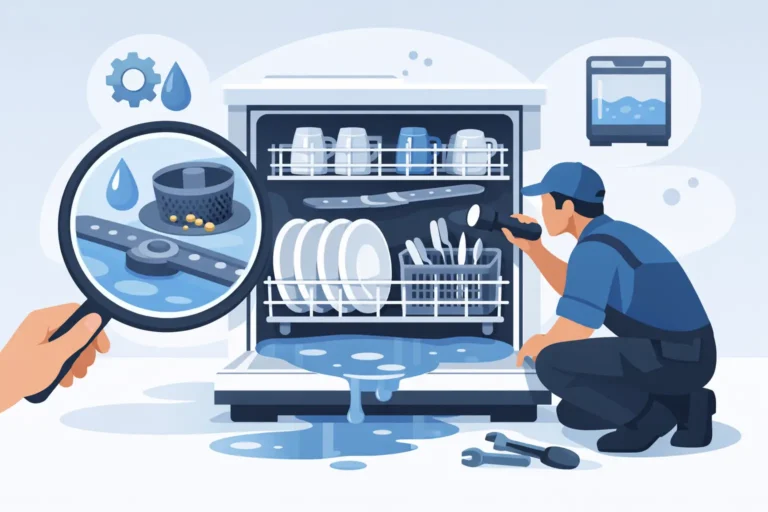
A few tablespoons of clean water in the dishwasher sump, beneath the filter, can be normal. An inch of cloudy water across the bottom of the tub is not. If you are asking why dishwasher leaves water after a completed cycle, the appliance usually has a drainage blockage, an installation issue, or a part that is no longer moving water out as it should. The good news is that many causes are straightforward to identify before a small kitchen inconvenience turns into odors, leaks, or a dishwasher that stops mid-cycle.
Why a Dishwasher Leaves Water After a Cycle
Your dishwasher cleans with water, then uses a drain pump to push that water through the drain hose and into the disposal or sink drain connection. When any point in that path is blocked, kinked, installed incorrectly, or mechanically failing, water remains in the bottom of the machine.
Timing gives a helpful clue. Water that appears immediately after the cycle often points to a drain-pump or hose problem. Water that returns later, after the dishwasher seemed empty, can indicate dirty sink water flowing backward into the tub. That distinction matters because a dishwasher repair will not solve a clogged kitchen drain, and clearing a filter will not repair a worn-out pump.
Start With These Safe Checks
Before checking anything inside the dishwasher, turn the appliance off. If you need to remove parts or inspect under the sink, switch off power at the breaker as well. Never reach into standing water around electrical connections.
Clean the filter and sump area
Most modern dishwashers have a removable filter on the tub floor. Food scraps, paper labels, broken glass, grease, and even small bones can collect there. A clogged filter limits water flow and may prevent the drain pump from clearing the tub.
Remove the lower rack, unlock the filter according to the markings, and rinse it under warm running water. Use a soft brush for greasy buildup, then look into the sump area below it for visible debris. Do not force anything into the pump opening. Glass fragments and sharp objects are common, and an object that is out of reach may need professional removal.
If the filter was heavily clogged, reinstall it properly and run a rinse or drain cycle. A loose or incorrectly seated filter can also let debris reach the pump, so make sure it locks back into place.
Check the garbage disposal and sink drain
If your dishwasher drains through a garbage disposal, run the disposal with cold water for several seconds. Food buildup inside the disposal or a slow kitchen sink drain can keep dishwasher water from escaping.
This is especially common after a new disposal installation. The dishwasher inlet has a small knockout plug that must be removed before water can enter the disposal. If that plug is still in place, the dishwasher may fill normally but leave water at the end of every cycle. This is an installation correction, not a dishwasher defect.
Avoid relying on chemical drain cleaners. They can damage plumbing components, create a safety hazard for the person servicing the drain, and do little for a blocked dishwasher filter or failed drain pump.
Look under the sink at the drain hose
The drain hose should rise high beneath the countertop before it connects to the disposal or drain line. This high loop helps prevent wastewater from flowing back into the dishwasher. Some homes use an air gap instead, which is the small fixture mounted beside the faucet.
Look for a hose that is sharply bent, crushed behind cabinets, or sagging low under the sink. A kink can restrict drainage, while a missing high loop can allow dirty sink water to return to the dishwasher. If the air gap is clogged, water may back up through it or spill onto the counter during draining.
A hose can also clog internally with grease and residue. Because disconnecting it can release dirty water and may involve tight cabinet spaces, it is often best handled during a service visit.
Listen to What Happens When It Drains
Set the dishwasher to cancel or drain, if your model has that option, and listen from a safe distance. A steady humming sound with little or no water movement may mean the pump is trying to run but is blocked or worn out. No sound at all can point to a failed pump, wiring issue, door-latch condition, or electronic control problem.
A rough grinding noise is another reason to stop the cycle and schedule service. Something may be lodged in the pump, or the pump impeller may be damaged. Continuing to run the dishwasher can turn a recoverable obstruction into a larger repair.
Not every drainage concern is the pump. Some dishwashers pause briefly before draining, and certain cycles retain a small amount of water below the filter to keep seals from drying out. What is not normal is visible standing water in the tub, dirty water on dishes, a sour odor, or water that returns after the machine has drained.
Common Parts That Cause Drainage Problems
When basic checks do not solve the issue, a technician can test the parts that control drainage without guesswork. The drain pump is a frequent culprit, particularly on older units or machines that have repeatedly drained food particles and grease. Its job is simple but essential: move water out of the tub at the right time.
The check valve can also be responsible. This small component helps prevent water from flowing backward through the system. If it sticks open or becomes obstructed, wastewater may come back into the dishwasher after the cycle is finished.
On some models, a diverter motor, control board, wiring connection, or door switch can interrupt the drain command. These problems are less visible, which is why replacing parts based only on an error code or an online guess can waste money. A hands-on diagnosis identifies whether the issue is truly inside the dishwasher, at the hose, or in the home’s plumbing.
When Standing Water Means You Should Call for Repair
A clean filter and clear disposal are worthwhile first steps. Beyond that, calling for professional help is the practical choice when the dishwasher repeatedly leaves water, makes grinding sounds, leaks, trips the breaker, displays an error code, or has a drain hose that cannot be safely accessed.
For renters, report the problem to your landlord or property manager before attempting repairs. For landlords and property managers, a drainage issue deserves quick attention. A nonworking dishwasher affects tenant satisfaction, but the bigger concern is a backup that damages flooring, cabinets, or the unit below.
At Don’s Appliances, our technicians explain what they find in plain language and provide clear, honest pricing before repair work moves forward. For homeowners in Murrieta, Long Beach, Menifee, and Temecula, that means you can make a sensible repair-versus-replacement decision instead of paying for parts that do not address the real cause.
Keep the Problem From Returning
Dishwashers are built to handle normal dish residue, not large food particles, grease deposits, or loose packaging labels. Scrape plates well before loading them, clean the filter regularly, and run the disposal before starting a cycle if both appliances share the same drain connection. You do not need to prewash every dish, but keeping heavy debris out of the dishwasher protects the filter and pump.
If your kitchen sink begins draining slowly, address it before it becomes a dishwasher backup. And after any disposal replacement or dishwasher installation, confirm that the drain connection, knockout plug, and high loop were handled correctly. A small installation detail can make the difference between a dishwasher that drains reliably and one that leaves a puddle after every load.
Standing water is frustrating, especially when dinner dishes are waiting and the kitchen starts to smell less than fresh. A quick filter check may solve it, but repeated drainage trouble is your dishwasher asking for a proper diagnosis before the problem spreads beyond the tub.
