
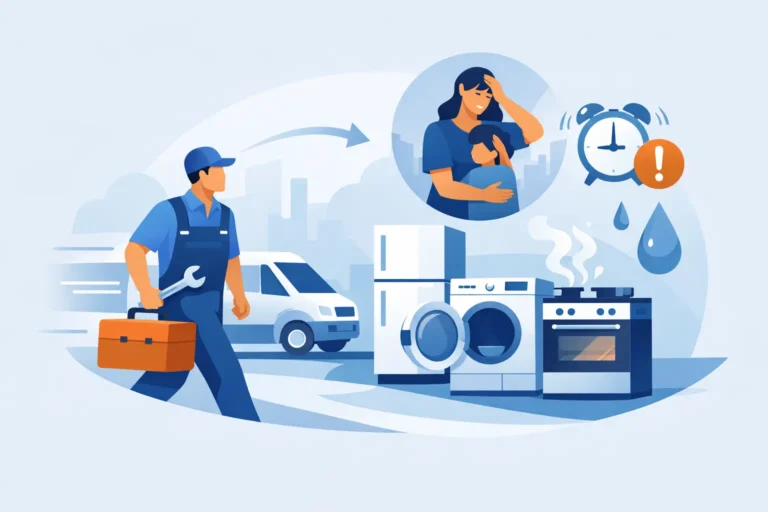
A refrigerator that stops cooling on a Friday afternoon is not a problem that can wait until next week. The same goes for a washer that leaves a load full of water, an oven that will not heat before family dinner, or a wall heater that quits on a cold night. Same day appliance repair is about more than convenience. It can help protect your food, prevent water damage, keep your household moving, and reduce disruptions for tenants or customers.
The right response depends on what failed, what risks are involved, and whether a quick repair is the most cost-effective option. A fast appointment should still include careful diagnostics, clear explanations, and honest guidance about whether repairing the appliance makes sense.
When Same Day Appliance Repair Is the Right Call
Some appliance failures create a nuisance. Others can become expensive if they are left alone. Calling for prompt service is often wise when the appliance supports a daily essential, shows signs of a leak, or could create a safety concern.
A refrigerator or freezer that is no longer holding a safe temperature deserves quick attention. Food can spoil sooner than many people expect, especially when the door has been opened repeatedly while checking the problem. If the refrigerator is warm but the freezer still seems cold, or if you hear clicking, buzzing, or unusual fan noise, a technician can determine whether the issue involves airflow, a compressor component, a control, or another part of the cooling system.
Water should also move an appliance repair to the top of the list. A dishwasher leaking onto the kitchen floor, a washer overflowing, or a refrigerator producing water around its base can damage flooring, cabinets, drywall, and nearby belongings. Turning off the appliance and its water supply, when it is safe to do so, can limit the damage while you arrange service.
Heating failures deserve the same urgency. A dryer that will not heat means laundry piles up quickly. A wall heater that will not operate can make a home uncomfortable, particularly for seniors, children, or anyone with health concerns. An oven or stove with an electrical smell, visible sparking, or a suspected gas issue should be shut down and addressed promptly.
For landlords and property managers, speed has another meaning. A failed refrigerator, range, washer, or dryer can affect tenant satisfaction and create a maintenance issue that grows more difficult by the day. Laundromat owners and other commercial laundry operators can lose income every hour coin-operated equipment is down. Fast service helps protect both operations and relationships.
What to Do Before the Technician Arrives
A few simple steps can make the visit safer and help the technician begin diagnosing the issue without delay. First, protect people and property. If you smell gas, see smoke, notice sparks, or suspect an electrical hazard, turn the appliance off if it is safe and follow appropriate emergency safety procedures. Do not keep testing an appliance that appears unsafe.
For leaks, place towels around the affected area and shut off the appliance water valve if you can identify it. Do not pull a heavy appliance away from the wall if doing so could strain a hose, damage flooring, or create another hazard.
Next, take note of what happened. Was there a loud noise? Did the appliance stop during a cycle? Is there an error code on the display? Did the problem begin after a power outage, installation, or move? These details can be useful, but there is no need to troubleshoot the machine yourself. A clear description of the symptoms is enough to help schedule the right type of service.
If possible, remove food from a warming refrigerator and place it in a cooler with ice. For a washer that stopped mid-cycle, avoid forcing the door or lid open. For an oven problem, wait until the appliance is cool before clearing the area around it. Small precautions can prevent a broken appliance from turning into a larger household problem.
Fast Service Should Still Start With Real Diagnostics
A quick appointment should not mean guesswork. Many appliance symptoms can point to several different causes. A dryer that does not heat might have an airflow problem, a failed heating component, a thermostat issue, or an electrical supply concern. A dishwasher that does not drain could have a blockage, a pump problem, or a control issue.
A qualified technician should inspect the appliance, identify the likely cause, explain the recommended repair in plain language, and discuss the cost before moving ahead. That process matters because the cheapest-looking repair is not always the best value, and replacing an appliance without a diagnosis can be just as costly.
At Don’s Appliances, the goal is to give customers a practical answer, not pressure them into a decision. Friendly technicians who respect your home and schedule can help you understand what failed, what the repair involves, and whether it is a sensible investment.
When Repair Makes More Sense Than Replacement
A broken appliance does not automatically need to be replaced. If the unit has been reliable, is in otherwise good condition, and needs a repair that restores normal operation, fixing it can be a smart way to protect your budget. This is especially true when replacing the appliance would require delivery coordination, installation changes, cabinet adjustments, or a long wait for a new model.
Age matters, but it is not the only factor. A well-maintained appliance with a straightforward part failure may still have years of useful life. On the other hand, replacement may be the better route when an older machine has repeated failures, the repair is unusually expensive, or a major component has failed and the unit is already near the end of its expected service life.
For rental properties, the decision may also depend on availability and tenant needs. A repair that gets a refrigerator or range operating quickly may be the best immediate solution, even if a replacement is planned later. For commercial laundry equipment, downtime, parts availability, and revenue loss should all be part of the calculation.
Common Problems That Should Not Be Ignored
Some issues seem minor at first but can become more disruptive over time. A refrigerator running constantly may be working too hard to maintain temperature. A dryer that takes two or three cycles to dry clothing may have an airflow restriction or a heating problem. A dishwasher leaving water in the bottom can eventually lead to odors, poor cleaning results, or a complete failure to drain.
Pay attention to changes in normal operation. New banging, grinding, squealing, clicking, burning smells, repeated tripped breakers, puddles, weak heat, and inconsistent temperatures are all reasons to schedule service. The earlier a technician can find the source of the problem, the more options you may have.
That said, not every issue requires an emergency visit. A refrigerator ice maker that has stopped producing ice, for example, may be inconvenient but not urgent if the refrigerator is cooling normally and there is no leak. A cosmetic issue or a single weak burner may be able to wait for the next available appointment, provided there are no electrical or gas safety concerns.
How to Get More From a Same-Day Visit
Make the appliance accessible before the technician arrives. Clear dishes from the sink area for dishwasher service, move laundry baskets away from the washer and dryer, and make sure pets are secured. If you rent, have the property manager’s approval ready when needed. For commercial or property-management service, share the machine number, unit number, and the effect the outage is having on tenants or operations.
It also helps to have the appliance brand and model number available. The model tag is often inside a refrigerator compartment, around the oven door frame, along the washer opening, or on the dryer door area. This information can help identify compatible parts, though the technician will still need to inspect the appliance in person.
Ask questions during the visit. You deserve to know what caused the issue, whether there are warning signs to watch for, and what the repair warranty covers. Clear, honest pricing and a one-year warranty provide peace of mind after the work is completed.
A broken appliance can interrupt a normal day quickly, but you do not have to make a rushed decision alone. When food, laundry, heat, water, tenants, or business operations are on the line, prompt professional help can restore order while giving you a clear path forward.
